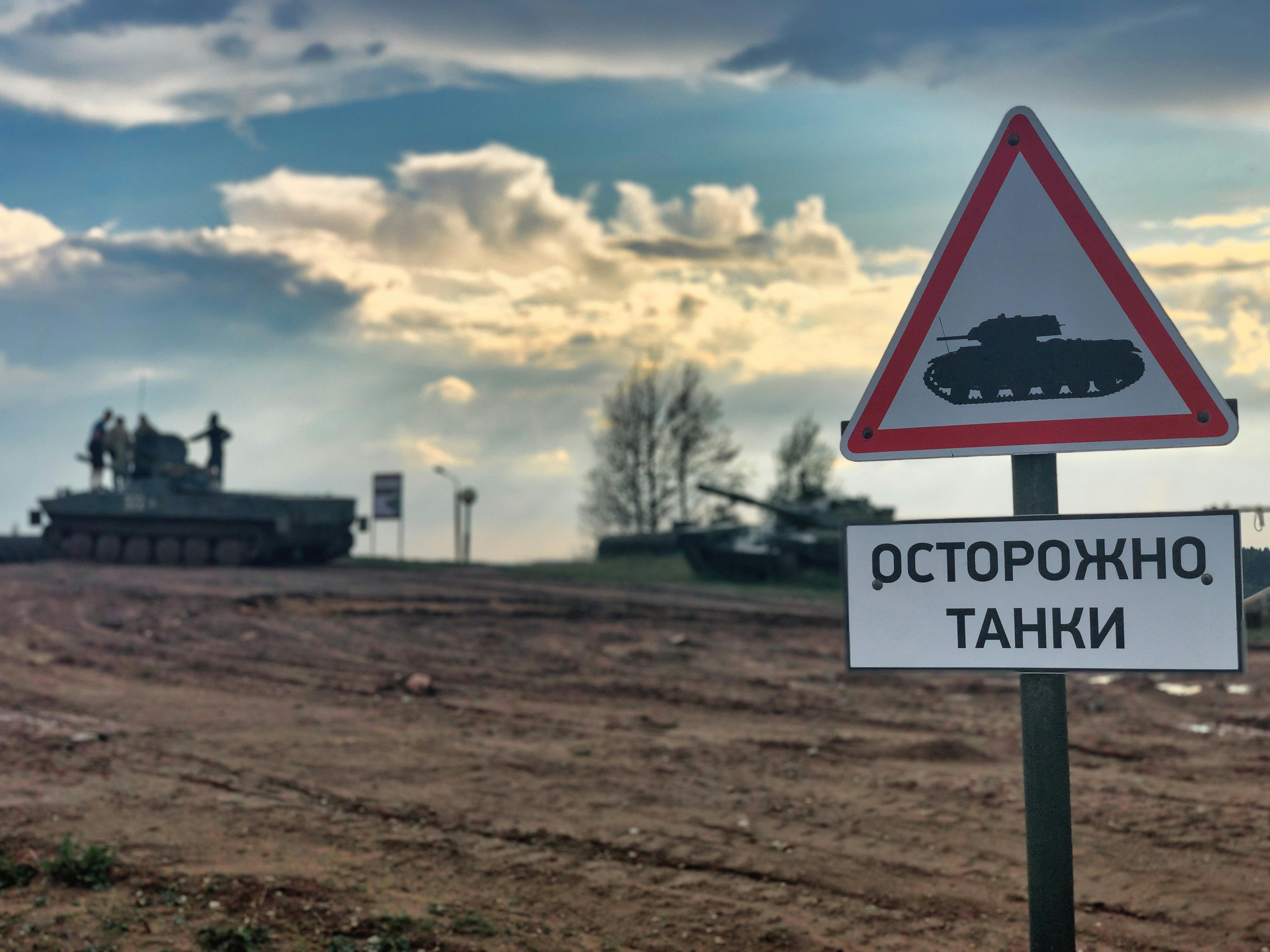
The Hardware Ask: Decoding Maduro’s Wishlist from Moscow
When President Maduro formalized his appeal to President Putin in mid-October 2025, he was quite specific in his requests, painting a clearer picture of what he *needs* versus what he *wants*. This is where the realistic assistance ceiling becomes visible.
Maintenance and Deterrence Upgrades
Maduro’s actual, urgent needs point toward system sustainment—the lifeblood of an aging military facing potential US strikes:
Moscow’s confirmed recent actions—the landing of two military cargo planes and the reported delivery of *Pantsir-S1* and *Buk-M2* systems—align perfectly with these lower-tier, force-sustaining requests. This is the probable sweet spot for Russian assistance: providing enough *Russian military hardware* to make a US strike messy, but not enough to warrant a declared Russian war against US forces.. Find out more about Limits of Russian military intervention in Venezuela guide.
The Advanced Missile Conundrum
The narrative around the *Oreshnik* and *Kalibr* missiles, championed by figures like lawmaker Zhuravlyov, serves a different, more political purpose. While the transfer of such long-range, precision-strike weapons would dramatically change the *strategic calculus* for the US in the Caribbean—effectively challenging US dominance with systems capable of striking US assets hundreds of miles away—it is the *least likely* form of aid in a full crisis scenario. Deploying them would be an immediate, direct escalation that Russia seems determined to avoid given its current geopolitical baggage. It’s a card Moscow keeps close to the vest, using the *threat* of its deployment to temper US action, which is far less risky than the actual *physical delivery* and operation of the systems by Russian personnel or under Russian command.
The Diplomatic Floor: New Treaties Don’t Equal Blank Checks
The deepening relationship is undeniable. President Putin recently signed the law ratifying the Treaty between the Russian Federation and the Bolivarian Republic of Venezuela on Strategic Partnership and Cooperation, signed back in May 2025. This agreement solidifies ties across economic, political, and military spheres, explicitly opposing unilateral sanctions. This treaty confirms the *long-term* commitment to the relationship, particularly in energy and finance, with plans for a separate Russian-Venezuelan financial system.
Partnership vs. Protectorate. Find out more about Limits of Russian military intervention in Venezuela tips.
However, analysts must separate diplomatic formality from material capacity. The treaty confirms a strategic partnership, but it does not contain an Article V-style mutual defense clause akin to NATO’s core commitment. It is a declaration of solidarity and economic intent, not a formal military guarantee against direct aggression from a nuclear-armed peer’s military.
For President Maduro, the legal text of the treaty does not translate into an immediate commitment of Russian fighter squadrons or the deployment of a protective naval task force. The treaty ratifies a foundation for future cooperation and resistance to sanctions, but it does not provide the immediate, decisive, kinetic shield that the Venezuelan establishment is currently facing from US Southern Command forces. Recognizing the difference between a statement of *alignment* and a guarantee of *survival* is a critical piece of *practical tips* for the current Venezuelan leadership. History shows that when Moscow’s core interests are not directly threatened, its support for distant allies, however cherished, remains calculated and contingent on its capacity to project force without incurring unacceptable losses.
The Role of Other Partners
It is also essential to view Russia’s potential role within the wider context of Caracas’s outreach. Maduro has also appealed to China and Iran for assistance. Iran is reportedly being asked for GPS scramblers and drones. This diversification of appeals underscores the reality that Caracas knows no single ally can fully substitute for the security vacuum—and that Russia, despite its historical closeness, has its hands full. While China is Venezuela’s major economic partner, its military involvement remains far less overt than Russia’s. The overall picture is one of a regime seeking layered, limited support from multiple partners to *raise the attrition* rate for any US operation, not one expecting a single savior to repel the invasion force.
Actionable Takeaways: Navigating the New Reality of Russian Support. Find out more about Limits of Russian military intervention in Venezuela strategies.
For those observing this volatile situation—whether in finance, security, or international law—the projections must be adjusted for the realities of late 2025. Tempering expectations is not pessimism; it is sound analysis based on verifiable constraints.
Here are the key insights to consider when modeling future events:
This situation represents a pivot point in the strategy of *US foreign policy doctrine* regarding near-abroad challenges when a major global adversary is otherwise engaged. It tests the limits of deterrence and the willingness of a rival to stretch its limited expeditionary capacity.
Final Analysis: The Guarantor’s Limits in a Multipolar World
In the final analysis, President Maduro should recognize that the geopolitical landscape has fundamentally shifted. Moscow cannot afford to be the unwavering savior of every allied autocracy when its main strategic attention and military mass are committed to a protracted, existential struggle on its own periphery. The partnership is deep, cemented by a new treaty, but the material capacity and strategic appetite for a major intervention designed to decisively repel a direct US military action are simply not present in the Kremlin’s current disposition. The current arrangement is strategically important for both parties—Venezuela secures marginal military reinforcement and political backing, while Russia secures a vital foothold and an ongoing distraction for the US. But it is not a mutual defense pact backed by immediate, decisive force projection across oceans. Caracas should understand that Putin is unlikely to be his ultimate guarantor of power against a focused, overwhelming US military effort in 2025. The relationship endures; the level of acceptable risk for Moscow has, however, dropped precipitously.
What lessons can we draw from this tense moment regarding international commitments and great power competition? We invite you to contribute to the conversation. How long can Russia sustain this delicate balancing act between Kyiv and Caracas? What does the US buildup truly signal about its long-term *regional security posture*?
If you are interested in a deeper dive into how nations manage concurrent, high-stakes military commitments, review our analysis on concurrent global military strategy. And for more on the strategic implications of the US naval posture, follow the ongoing coverage of US military Caribbean presence. Don’t forget to subscribe to our updates for the very latest analysis on this unfolding situation.
TODAY’S DATE: November 5, 2025. All information and analysis presented here are grounded in the geopolitical reality and military positioning reported up to and including this date.