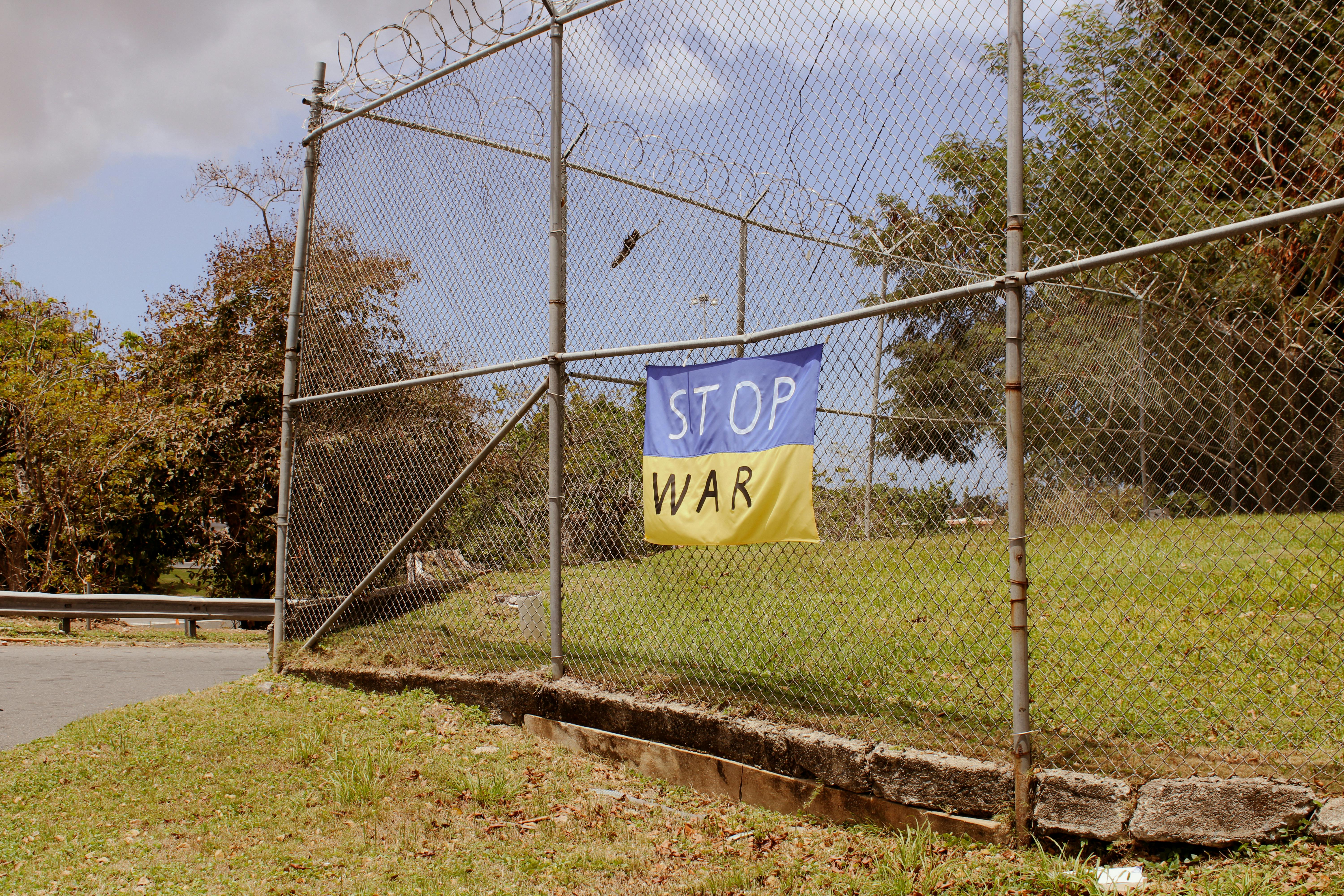
The Unseen Battlefield: Governing Under Siege
The administrative machinery of any nation at war is never far from pressure, but the events of the last week have placed the Ukrainian executive branch in a particularly precarious position. When the focus needs to be absolute—every decision regarding ammunition supply, troop rotation, and international appeals must be instantaneous—the leadership is being forced to turn inward. This internal focus on accountability, while perhaps vital for long-term health, drains political oxygen from the external fight.
Domestic Political Distractions in the Ukrainian Government
The governance structure in Kyiv is currently grappling with a significant corruption scandal centered around the energy sector, the very sector currently under intense Russian aerial assault. Prime Minister Yuliia Svyrydenko announced the suspension of Justice Minister German Galushchenko on Wednesday, November 12, following an investigation launched by anti-corruption bodies into alleged high-level schemes. Within hours, President Zelenskyy elevated the situation, calling for both Galushchenko and the Energy Minister to step down, stating that for an issue of trust, the decision needed to be “prompt, the fastest”. This public fallout, stemming from a probe into alleged massive kickbacks tied to contracts for protecting energy infrastructure, creates several problems:
- Distraction: High-level meetings that should be focused on securing winter aid are instead consumed by managing political fallout and ensuring the independence of the investigation.
- Narrative Warfare: The adversary gains a political opening, seeking to portray the Ukrainian government as unstable and inherently compromised, potentially complicating diplomatic and financial appeals.. Find out more about Internal political distractions Ukrainian government during war.
- Systemic Strain: Addressing a long-standing systemic issue like corruption during a full-scale invasion is necessary, but the timing places immense strain on the executive branch’s concentration.
The fact that the National Anti-Corruption Bureau (NABU) could conduct a 15-month investigation, involving over 1,000 hours of wiretaps, and bring senior officials into question is, as one analyst noted, a “silver lining” showing the effectiveness of independent institutions. However, the immediate effect is a political vacuum and the need to swiftly appoint replacements to key posts, like the temporary assignment of the Justice Minister’s duties to Lyudmila Sugak.
The Significance of the Captured Settlements
The political narrative is always tied to the map. While the leadership manages the internal cleanup, the external reality includes confirmed losses. The reports confirm that Russian forces have captured **three settlements** amid the recent intensification of fighting in the southeast. For a nation fighting for its survival, these incremental losses shift the domestic focus from strategic goals to immediate, hard-fought survival. The leadership must constantly reassure the public that the overall strategic situation remains manageable, even as the front line recoils under sustained pressure.
The Grinding Reality of Extended Front Lines
The sheer geographic scale of this war is an operational challenge that favors the side with deeper reserves. The front line stretches for hundreds of miles, a vast operational zone that places an unsustainable burden on **Ukrainian mobilization capacity** [cite: internal link for anchor text: Ukrainian mobilization capacity]. Every unit requires rotation, medical evacuation, and continuous reinforcement—a logistical nightmare across such a massive area.
The Pressure of Extended Front Lines and Attrition. Find out more about Internal political distractions Ukrainian government during war guide.
The fighting, particularly in the Zaporizhzhia sector, is characterized not by swift territorial recapture but by **grueling battles** for every meter of ground. This static, high-intensity contest inherently favors the side capable of absorbing higher casualties—the essence of a war of attrition. For Ukraine, this means:
- Constant Reserve Drain: Maintaining strong defensive postures simultaneously in the south, east, and northeast means reserves are continually drawn down and repositioned.
- Logistical Strain: The need to sustain medical pipelines and rotate exhausted units across a vast area strains the entire rear-echelon support structure under the threat of long-range strikes.
- Shifting Defense: The nature of the defense pivots from active maneuvering to a desperate holding action, focusing solely on denying the enemy easy progress.
This is the brutal calculus of the **Russian war of attrition**. Moscow’s strategy is a relentless application of firepower and mass, betting that Kyiv’s capacity to absorb losses—in both replacement troops and Western-supplied ammunition—will eventually fail first. Localized gains are merely pieces in this larger game of exhaustion.
Contrasting Frontline Situations: Fog vs. Firepower. Find out more about Internal political distractions Ukrainian government during war tips.
The fighting is not uniform. The tactical doctrines employed by Russian forces are adapting to local conditions, creating distinct challenges for Ukrainian defenders: * The Eastern Siege (Pokrovsk): The campaign around Pokrovsk, dubbed the “gateway to Donetsk,” is a methodical, resource-heavy siege operation. Here, the assault relies heavily on massive concentrations of artillery and drone reconnaissance to systematically soften defenses before specialized units—including elite drone operators and *spetsnaz*—are committed to break through strongpoints. Humanitarian aid delivery to civilians in Pokrovsk has become virtually impossible due to the intensity of fire. * The Southern Thrust (Zaporizhzhia): The recent advances in the south, where five villages were lost and the situation “significantly worsened,” were linked to tactical surprises, specifically leveraging **meteorological factors**.
The Role of Meteorological Factors in Infiltration
The sudden imposition of heavy fog is a classic, non-technological equalizer on the modern battlefield. In a conflict dominated by drone surveillance and precision targeting, a visual blackout nullifies many high-tech advantages. This environmental cover reverts the advantage to smaller, highly trained ground units capable of close-quarters maneuver. Russian forces capitalized on this fleeting opportunity to infiltrate established defensive lines in Zaporizhzhia. This tactic highlights a critical pressure point: the constant need to maintain vigilance against non-conventional methods, even when the primary threat appears distant. Furthermore, it illustrates the strain on **Ukrainian defensive technologies** [cite: internal link for anchor text: Ukrainian defensive technologies], as close-quarters fighting enabled by fog challenges the integration of high-tier drone and sensor systems. The enemy appears to be intentionally targeting the operational envelope of Ukrainian drone and artillery crews to degrade the very systems needed to counter infiltration missions.
The Situation in Kherson Province
Even previously liberated territory requires constant commitment. Reports from the southern Kherson Oblast confirm the complexity of the front line there. Despite the 2022 counteroffensive success, Russian forces maintain a significant presence—some estimates suggest around thirty thousand troops—behind the Dnieper river line from which they regularly launch attacks [cite: provided premise for context]. This demands that Ukrainian resources remain tied down, complicating strategic planning for the entire southern theater.
The Technological and Economic Escalation Cycle
While ground forces fight for meters, a high-stakes technological and economic conflict rages in the rear. This interplay—military momentum racing against economic strangulation—defines the overall strategic pacing of the conflict.
The Efficacy of Long-Range Ukrainian Strikes. Find out more about Internal political distractions Ukrainian government during war strategies.
Kyiv has countered the war of attrition with a sophisticated technological strategy focused on the enemy’s industrial base. On this very day, November 13, the Ukrainian General Staff confirmed a massive series of long-range strikes using new domestically produced weapons, including the **Flamingo** missile, which has a claimed range of nearly 1,900 miles. Targets for this coordinated attack included:
- The Morskoy Oil Terminal in occupied Crimea.
- An oil depot near Berdyansk in occupied Zaporizhzhia.
- The Oryol Thermal Power Plant deep inside recognized Russian territory.
This campaign targets the **Russian military-industrial complex** [cite: internal link for anchor text: Russian military-industrial complex], aiming to introduce bottlenecks into their production capacity and force Moscow to divert crucial defensive resources away from the front lines. Such attacks directly complement the external economic pressure being applied.
The Economic Impact of New Sanctions. Find out more about Internal political distractions Ukrainian government during war overview.
The non-military pressure point is the imminent full effect of coordinated Western action. The United States imposed full blocking sanctions on Russia’s two largest oil producers, Rosneft and Lukoil, on October 22, 2025, followed by complementary EU measures. These sanctions target the core revenue streams funding the military effort. Crucially, the wind-down licenses for many of these sanctioned entities are expiring today, November 13, 2025, or on November 21. The global market is reacting to this pivot: while Russian exports have continued largely unabated through October by piling up oil “on water,” the market anticipates a major curtailment once these full sanctions become effective in the coming days.
The Objective Behind Sanction Implementation
The diplomatic calculus underpinning these financial measures is clear: to compel a fundamental reassessment within the Kremlin regarding the economic sustainability of the high-intensity conflict. The strategy is a race: Moscow is trying to solidify its territorial gains—the one-fifth of Ukraine it currently holds—before the full weight of this impending sanctions regime truly settles upon its finances [cite: provided premise for context]. Kyiv and its allies are betting that the operational strain on Ukraine’s military can be sufficiently mitigated while the Kremlin’s economic headwind accelerates.
Tactical Adaptations and the Road Ahead
The conflict is now defined by this high-speed, high-cost race. The ability of Ukrainian forces to survive the current tactical onslaught depends on maintaining the technological edge while the political and economic environment shifts in their favor.
Contrasting Operational Doctrines
The difference between the Pokrovsk siege and the Zaporizhzhia infiltration shows an army adapting its doctrine to the circumstances:
- Siege Warfare: Massive, sustained application of firepower, utilizing specialized units to achieve grinding, high-cost advances in hardened areas.. Find out more about Russia exploits dense fog Ukraine infiltration tactics definition guide.
- Infiltration Tactics: Exploiting environmental factors like fog to achieve localized tactical surprise and rapidly transition to kinetic, close-range infantry action.
- Domestic Stability is Key: The internal investigation into high-level corruption is a necessary, though politically costly, pivot. Kyiv must resolve this swiftly to maintain focus and international credibility.
- Weather is a Weapon: Low visibility conditions, like the recent fog, temporarily negate technological superiority, empowering Russian infantry infiltration and demanding constant revision of local defensive posture.
- Attrition is the Current Reality: Expect continued “grueling battles” favoring the side with deeper reserves, making sustained defense the immediate goal across the south and east.
- Economic Pressure is Lagging: The impact of the major US/EU oil sanctions on Rosneft and Lukoil is imminent, creating a narrow window where Ukraine must hold the line before the financial pressure on Moscow forces a strategic shift.
This variation tests Ukrainian defenses in distinct ways, requiring an incredibly flexible response tailored to the specific threat profile of each sector. The failure to achieve swift counterattacks in the south suggests that for now, Russia’s attrition model is achieving localized success, forcing Ukraine into a desperate holding action.
The Role of International Support in Deciding Outcomes
Ultimately, the trajectory of the conflict hinges on a balancing act. It is the relative success of two opposing forces: Russia’s ability to sustain its attrition war against the strain of new sanctions, versus Ukraine’s ability to sustain its defense against persistent ground assaults while waiting for that economic pressure to bite. The flow of Western materiel and financial assistance to Kyiv is, therefore, not merely supportive—it is potentially decisive in whether Ukraine can absorb the current pressure long enough for the Kremlin’s calculus to shift [cite: provided premise for context]. The continuation of Western resolve, cemented by actions like the recent oil sector sanctions, is a critical, non-kinetic component of Ukraine’s entire defense posture.
Conclusion: Key Takeaways for Navigating the Storm
As of this November 13, 2025 update, the situation is defined by severe stress on multiple fronts. Actionable Insights for Understanding the Current Picture:
The war is a contest of endurance, pitting Ukrainian defense supported by external economic coercion against Russia’s strategy of relentless expenditure. Every decision made in Kyiv, from managing an energy corruption probe to deploying reserves in Zaporizhzhia, will be magnified by the weight of the external conflict. What is your assessment of the timing? Can Ukraine’s military hold the line long enough for the Rosneft/Lukoil sanctions to force a change in Moscow’s strategic calculus? Share your analysis in the comments below.