LIVE: Kyiv Under Siege as Deadly Russian Attack Targets Capital Infrastructure
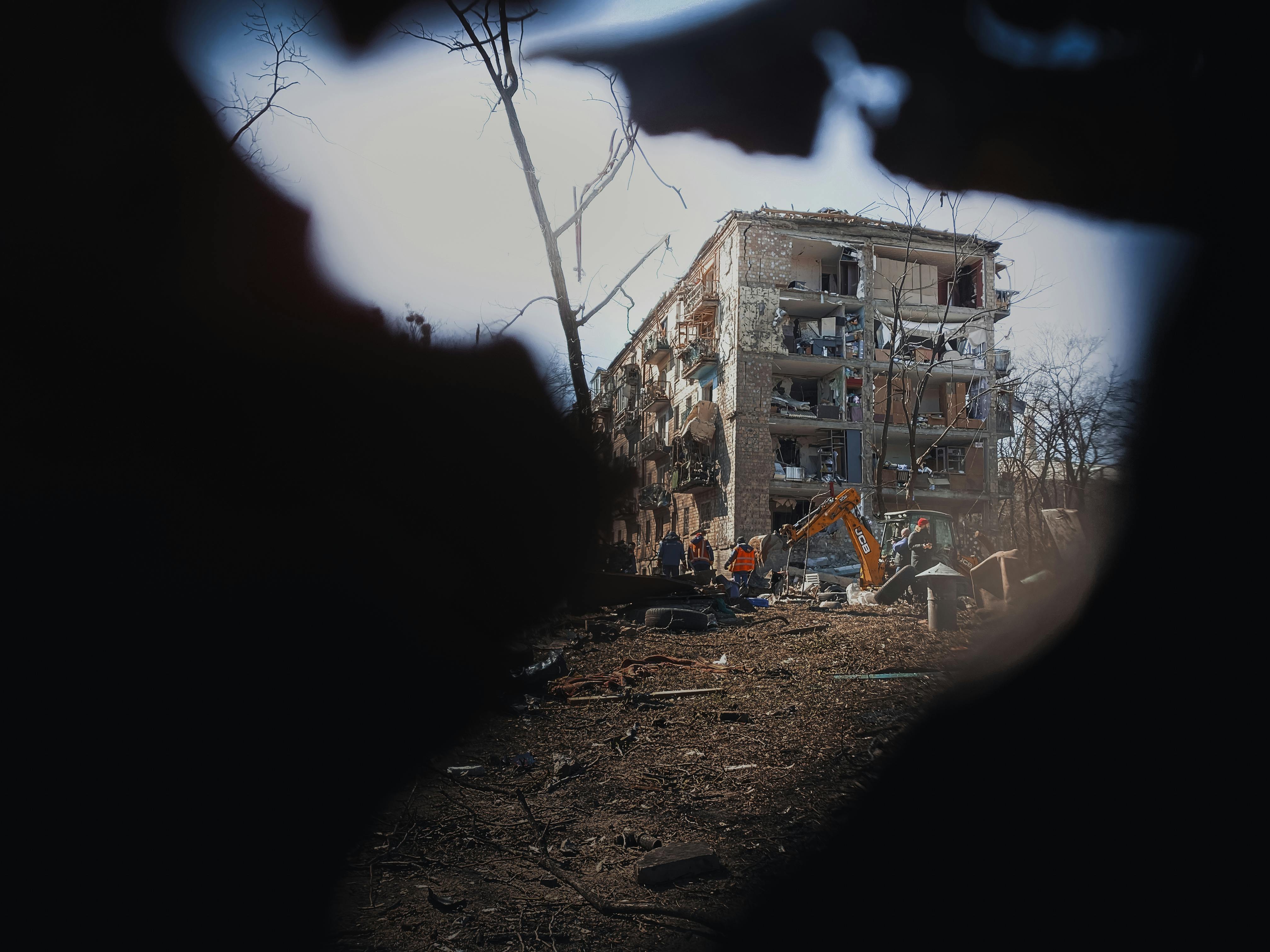
On November 14, 2025, Ukraine’s capital, Kyiv, endured one of the most extensive and devastating air assaults of the nearly four-year conflict. Beginning at dawn, the coordinated barrage of drones and missiles struck nearly every district of the city, inflicting a significant human toll and inflicting acute damage to the foundational systems that maintain urban life. The event, which drew immediate international condemnation, was viewed by analysts not merely as a tactical strike but as a deliberate, large-scale attempt to sow pervasive instability and erode the national will in the face of winter.
The Capital City’s Infrastructure Under Siege
Beyond the immediate human tragedy, the attack represented a sustained campaign against the foundational systems necessary for the capital to function as a center of governance and population. The objective appeared to be creating an environment of pervasive instability, rendering normal life impossible, regardless of military outcomes on the front lines. This deliberate degradation of municipal services aims to drain the national reserves and divert resources towards emergency repairs and civilian protection, creating a multi-front war economy.
Damage to the Power Grid and Heating Networks
The assault on energy infrastructure was evidently systematic, building upon previous large-scale strikes in early November 2025 that targeted energy and gas facilities across Ukraine. Substations and key transmission points were struck by precision munitions, causing cascading failures that plunged vast sections of the city into darkness. Mayor Vitali Klitschko confirmed that Kyiv’s heating system sustained damage, with service interrupted in at least one district, raising acute concerns as the nation enters the colder months. This was compounded by direct damage to localized heating infrastructure, as previously mentioned. Repair crews faced an immediate “race against time” scenario; restoring power and heat to residential areas quickly became the highest priority, even as the military command assessed the need to conserve resources for air defense batteries and essential government continuity operations. The sheer scale of the necessary repairs suggested a prolonged period of disruption, putting immense pressure on the national energy company to implement rolling blackouts or rely heavily on emergency generators for critical sites, further straining fuel supplies. Analysts have previously noted that targeting the power grid ahead of winter is a key Russian strategic goal intended to break Ukrainian resistance by forcing millions to suffer without heat or electricity.
Critical Failures in Communication and Transport Arteries
The attack did not spare the city’s nervous system: its communication and transportation pathways. While specific details on fibre optic junctions were sparse in the immediate aftermath, the widespread nature of the strike meant localized communication disruptions were inevitable. Mobile network towers, fibre optic junctions, and major switching centers were reportedly hit in various districts, resulting in spotty or completely absent cellular service across large areas, which severely hampered emergency coordination and personal reconnection efforts. On the transport front, impacts near major road junctions or, critically, railway infrastructure, caused blockages and necessitated emergency rerouting or complete shutdowns of commuter and supply lines. Damage to bridges or major thoroughfares by even large pieces of debris slowed the movement of emergency supplies and heavy equipment needed for clearance operations. The disruption to movement isolated certain neighborhoods, turning localized damage into broader logistical crises for aid distribution.
Political Repercussions and Official Statements
Such a devastating, wide-scale attack on the nation’s capital inevitably triggered immediate and forceful reactions from the highest levels of government, setting the tone for the domestic and international response in the days following the event. The narrative spun by official channels sought to project resilience while simultaneously demanding concrete action from international partners.
Reaction from the Executive Leadership in Kyiv
The nation’s leadership responded with unequivocal condemnation, labeling the strikes as acts of terror and war crimes, emphasizing the deliberate targeting of civilian residences rather than legitimate military objectives. President Volodymyr Zelenskyy confirmed that Russia launched approximately 430 drones and 18 missiles in the strike, including “ballistic and aeroballistic missiles,” calling it a “wicked” and “deliberately calculated attack”. Statements from the highest office stressed that such brutality would not break the national resolve but would instead strengthen the commitment to defense and eventual victory. These addresses were carefully calibrated to reassure the populace of continued governance despite the chaos, while simultaneously laying the groundwork for urgent international appeals, focusing on the immediate need for advanced air defense capabilities to prevent future occurrences. A commitment was made to document every instance of damage and every casualty for future accountability proceedings. This demand for immediate aid was echoed by officials who noted Ukraine was actively working with the U.S. to secure additional Patriot air defense systems following related energy strikes earlier in the month.
Immediate Condemnation and Stance from Moscow
Conversely, official pronouncements emanating from the opposing capital offered a starkly different interpretation of the events. The response from the Kremlin or its designated spokespersons typically framed the actions not as unprovoked aggression against civilians, but as necessary, legitimate retaliatory strikes against military or dual-use targets within a capital city wrongly characterized as purely civilian. This rhetorical duality underscores the intractable nature of the conflict’s present phase, where objective reality for one side is framed as military necessity by the other. In the context of early November 2025, Russian authorities had claimed their strikes targeted military-industrial complexes and energy facilities supporting them, while Kyiv, conversely, had been publicly affirming it was not striking Russian infrastructure during specific recent periods, highlighting the deep disconnect in narrative control. Such statements from Moscow often included dismissive commentary regarding Western narratives, asserting that the ongoing military objectives remained unchanged and that continued resistance would only lead to further such countermeasures.
Analysis of Strategic Intent and Military Implications
Beyond the immediate chaos, military analysts and observers immediately began dissecting the attack to understand the deeper strategic calculus guiding the aggressor’s actions. The choice of targets, the timing, and the specific mix of weaponry suggested layered objectives that extended beyond mere tactical success on the front lines. The overarching strategy appeared rooted in a war of attrition, aiming to deplete Ukrainian resources and resolve.
Targeting of Critical Infrastructure Versus Civilian Morale
A central question in the analysis was the precise balance between infrastructural damage and psychological impact. While strikes on power and heating systems demonstrably degrade the state’s ability to function and support its forces, the visible destruction of apartment blocks and the undeniable civilian toll serve a potent psychological purpose. Military strategists often employ such attacks to sow widespread fear, erode public support for the government, and force the redirection of military funds from the front to urban air defense. The analysis suggested this particular assault heavily weighted the morale component, aiming to achieve a psychological breakthrough by demonstrating the capital’s continued vulnerability despite extensive prior investment in its defenses. This aligns with the documented long-term Kremlin strategy since October 2022 of attempting to subdue the civilian population through bombardment of critical infrastructure. The attack on Kyiv on November 14, 2025, followed a period where Ukrainian forces had increased their own strikes on Russian oil and energy infrastructure, suggesting the Kyiv bombardment may also have been framed by Moscow as a direct response or escalation.
Air Defense Performance and Ongoing Threat Assessment
The intensity of the assault provided a real-world stress test for the capital’s layered air defense shield. Reports on the volume of enemy munitions successfully intercepted versus those that landed provided crucial, albeit painful, metrics. According to reports on the prior major attack on November 8, Ukrainian forces downed 406 out of 458 drones and nine out of 45 missiles, indicating a high but not absolute rate of interception. Military experts would immediately assess which specific interceptor systems performed best against the varied incoming threats—ballistic versus drone—and where the most significant gaps in coverage persisted. This event would undoubtedly trigger immediate requests for supplementary air defense units and munitions from allies, as any successful breach, regardless of the overall success rate, demonstrated a clear path for future penetrations that needed to be urgently sealed off. The threat assessment would shift from general readiness to a specific focus on countering the precise mix of weaponry observed in this massive wave. It is notable that President Zelenskyy had, just days prior to this event, appointed a new commander for Ukraine’s Unmanned Air Defense Systems service, indicating an ongoing focus on optimizing air defense capabilities.
The Broader International Geopolitical Landscape
An attack of this magnitude on a capital city, particularly one enjoying significant Western backing, inevitably sends shockwaves through international capitals, forcing allies to re-evaluate commitments and adversaries to recalibrate their strategies. The event occurred against a backdrop of complex diplomatic maneuvering, which this strike directly impacted.
Diplomatic Fallout and Emergency Security Consultations
Almost instantly, emergency diplomatic channels were activated across NATO headquarters, the European Union structures, and key allied capitals. These consultations were twofold: first, to coordinate a unified, strong denunciation of the act; and second, to rapidly formulate a response package. This response often centered on securing the immediate shipment of requested air defense interceptors, medical supplies, and financial aid to stabilize the government amidst the utility crises. Furthermore, the event served to galvanize previously hesitant political factions in allied nations, pushing them toward adopting more aggressive sanction regimes or finally approving long-debated military support packages, using the visceral reality of the Kyiv attack as political leverage. This action follows a period where EU officials were emphasizing the need for Ukraine to continue anti-corruption efforts while assuring aid would continue to flow.
Shifting Western Support Narratives Amid Escalation
The incident forced a subtle, yet significant, shift in the public narrative surrounding international support. The focus moved away from long-term strategic planning or generalized commitments and sharpened onto immediate, tangible aid designed to mitigate current suffering and secure the immediate future of the capital. Discussions intensified regarding the speed of delivery for advanced defensive systems. Moreover, in an environment where peace talks were a recurring, albeit stalled, topic—especially following high-level meetings between US and Russian leadership in August 2025—this demonstration of intent by the aggressor seemed to strengthen the resolve of those advocating for continued, robust military assistance rather than pressuring for premature concessions, viewing the strike as proof that military pressure, not diplomatic appeasement, was the primary language being used. The context of ongoing attrition warfare on the front lines, where Russia seeks to disperse Ukrainian forces, reinforced the view that military means, including enhanced defense, remained paramount.
A City’s Enduring Spirit and Resilience Narrative
In the immediate aftermath of the destruction, the focus of local reporting and public sentiment inevitably turned to the incredible human capacity to begin rebuilding and to support one another even before the dust fully settled. This narrative of defiance, woven through the fabric of the community, serves as a powerful counterpoint to the aggression experienced.
Community Mobilization and Mutual Aid Networks
The breakdown in formal systems galvanized informal ones. Within hours, neighborhood groups were coordinating efforts far more efficiently than any centralized emergency response could manage initially. Residents organized spontaneous clean-up brigades, sharing limited resources like battery-powered lanterns, food rations, and bottled water. Neighbors sheltered those whose homes were rendered uninhabitable, prioritizing the safety of children and the elderly from their own buildings and blocks. This rapid, decentralized network of mutual support demonstrated a profound social cohesion, turning immediate neighbors into an immediate, self-sufficient response unit when formal structures were temporarily crippled. The scenes reported—workers cleaning debris outside damaged apartment buildings—were interspersed with stories of resilience and immediate neighborly aid.
The Psychological Landscape of Prolonged Urban Warfare
Living under the constant threat of such massive strikes imposes a unique and heavy psychological burden that transcends simple fear. The emotional toll is one of cumulative exhaustion, hyper-vigilance, and a profound sense of injustice over the deliberate targeting of non-combatant life. While the physical cleanup began, the deeper psychological work of processing the trauma—the grief for lost lives, the disruption to routine, and the erosion of the sense of personal safety within one’s own home—became the next critical, invisible battle. This long-term mental health crisis for the urban population represents another facet of the war’s enduring impact, one that requires sustained national and international attention long after the physical rubble is cleared. The trauma is compounded by the realization that the attack was comprehensive, hitting residential buildings in virtually every district.
Looking Ahead: Pathways to De-escalation or Further Conflict
As the initial shock subsided and damage assessments concluded, the strategic calculus shifted toward what the next phase of the conflict would look like, with the events in the capital heavily influencing projections for the coming weeks and months.
Prospects for Future Negotiation Frameworks
The brutal nature of the recent attack cast a long shadow over any current or future attempts at peace negotiations. For one side, such an overwhelming display of force is often intended to weaken the opponent’s resolve to negotiate from a position of perceived strength; for the other, it serves as irrefutable evidence that no negotiated settlement based on trust is currently viable. The incident effectively reset the baseline expectation for any potential dialogue, making any forthcoming proposal require significantly greater security guarantees for the nation’s core territory and population centers before serious consideration could be given. The window for easy diplomatic resolutions appeared to narrow further following this demonstration of kinetic intent, as the focus shifted to tangible security assurances rather than diplomatic gestures.
The Long-Term Outlook for Urban Security and Reconstruction
Looking toward the future, the event underscored that the battle for the capital’s long-term security is now an ongoing fixture of the conflict, irrespective of territorial gains or losses elsewhere. The city must now plan for a future where massive aerial assaults are a recurring possibility, necessitating massive, costly investments in deep underground sheltering, hardened utility infrastructure, and a permanent, robust, multi-layered air defense umbrella. The financial and material requirements for this enduring security posture—coupled with the need to repair the immediate, extensive damage—present a monumental reconstruction challenge that will shape the nation’s economic priorities for the foreseeable future, even if active fighting were to cease. The scars of this massive assault will remain long after the physical repair crews have departed, serving as a permanent testament to the nature of this phase of the conflict, where the defense of the capital has become synonymous with the nation’s endurance.