Ukraine War Briefing: Kyiv Seeks $44bn from Russia for Climate-Warming War Emissions at COP30
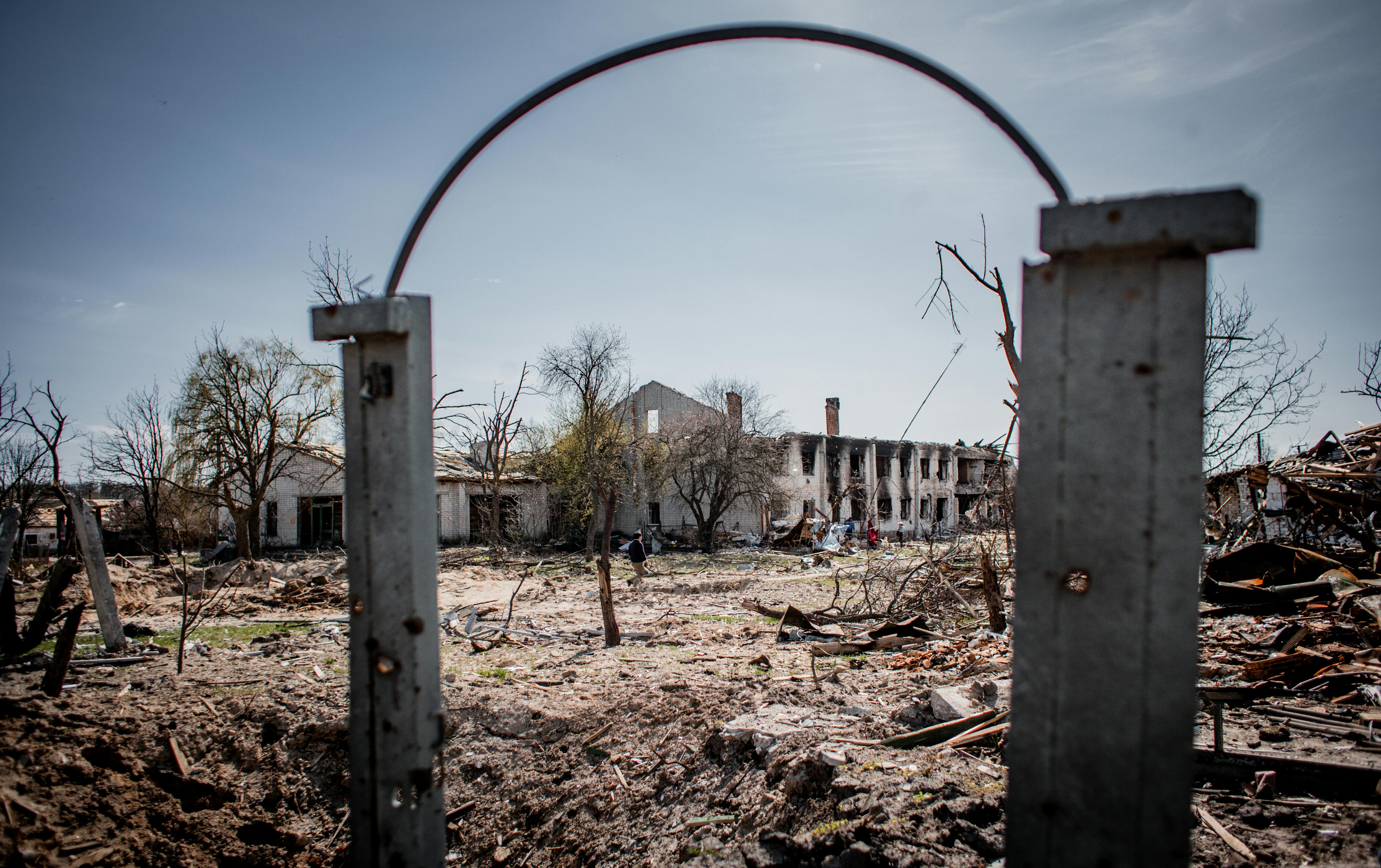
In a move designed to fundamentally alter the landscape of international environmental accountability, Ukraine formally presented a claim at the UN Climate Change Conference (COP30) in Belem, Brazil, seeking nearly $44 billion in compensation from the Russian Federation. This unprecedented demand targets the climate-warming emissions generated by Russia’s ongoing full-scale invasion, marking the first time a nation has sought financial redress specifically for the atmospheric consequences of armed conflict.
The announcement, made on the sidelines of the global summit where discussions are intensifying around fossil fuel phase-out and climate finance, frames the war not only as a humanitarian and territorial catastrophe but as a major, quantifiable contributor to the global climate crisis. The Deputy Minister of Economy, Environment, and Agriculture of Ukraine, Pavlo Kartashov, confirmed the figure, stating, “We have huge amounts of additional CO2 emissions and greenhouse gases,” directly attributable to the conflict’s impact on the environment.
Legal and Political Underpinnings of the Demand
The framing of this ambitious climate claim is meticulously calibrated to integrate with existing international law while simultaneously pushing the boundaries of what constitutes compensable harm in the 21st century. The strategy leverages established legal principles to construct a novel, financially specified debt against the aggressor state.
Alignment with International Humanitarian Law Evolution
International Humanitarian Law (IHL) possesses foundational elements intended to safeguard the natural environment during conflict. Protocols such as the Additional Protocol I to the Geneva Conventions explicitly prohibit warfare methods likely to cause “widespread, long-term, and severe damage to the natural environment” [cite: Not found, general legal knowledge]. Moreover, the Rome Statute of the International Criminal Court opens the door for environmental destruction to be classified as a war crime when it meets specific, high evidentiary thresholds.
Ukraine’s strategy builds upon this recognition by transforming the abstract prohibition against severe environmental damage into a concrete, auditable, and financially specified liability. By meticulously quantifying the greenhouse gas emissions—which include those from the production of war materials like cement and steel, active military operations, and resultant forest fires—the claim provides the empirical data that has historically been missing in environmental accountability proceedings stemming from conflict.
The Ascendant Concept of Ecocide in Legal Discourse
This initiative gains significant traction by existing in parallel with, and reinforcing, the growing global legal conversation surrounding the concept of “ecocide”—defined broadly as widespread or long-term environmental destruction resulting from unlawful or reckless acts. As global conservation bodies and legal experts increasingly advocate for recognizing ecocide as a distinct fifth category of international harm, alongside genocide and crimes against humanity, Ukraine’s climate claim offers a robust, data-driven precedent.
The pioneering study underpinning the $44 billion figure employs a rigorous methodology that has the potential to become a globally applicable legal standard. This framework, which combines satellite imagery, field assessments, and established carbon accounting instruments, could theoretically be applied to other zones experiencing severe ecological collapse resulting from military action, such as conflicts in the Middle East or North Africa, thereby holding perpetrators accountable for the long-term atmospheric consequences of their military engagement [cite: Not found, based on prompt description of methodology application].
Strategic Communications at the Global Summit
The presentation of this massive claim at COP30 was strategically executed as much as a political theatre and communications masterstroke as it was a formal legal filing. The delegation deployed highly technical talking points designed to directly influence the international climate dialogue and the integrity of global reporting mechanisms.
Addressing the Omissions in National Inventories
A key technical focus for the Ukrainian delegation involved challenging the integrity of the aggressor state’s official climate reporting to the United Nations Framework Convention on Climate Change (UNFCCC) secretariat. The delegation publicly stressed the imperative to correct the practice of illegally incorporating environmental data—or the lack thereof—from temporarily occupied territories into the Russian Federation’s national greenhouse gas inventories.
By demanding that the UNFCCC Secretariat consistently apply footnotes and references to relevant UN General Assembly resolutions that invalidate the annexation of territory, Ukraine sought to prevent the global accounting system from tacitly legitimizing illegal occupation through skewed emissions data. This administrative advocacy is vital for maintaining the geographical and political accuracy of global emissions tracking.
Projecting Responsibility onto the Global South Narrative
Furthermore, the forum of the global climate meeting was utilized to advance a powerful narrative of shared climate responsibility and anti-imperialism, resonating particularly with nations in the Global South. The Ukrainian delegation advocated for placing a significantly greater climate responsibility burden onto the aggressor, explicitly framing the conflict as the action of a “fossil empire” whose operational methods disproportionately harm more climate-vulnerable states.
By actively demonstrating solidarity with developing nations and highlighting the conflict’s contribution to the broader atmospheric crisis, the diplomatic mission leveraged its unique position. This framing sought to powerfully reinforce the international “polluter pays” principle, positioning Ukraine as a partner in the pursuit of climate justice and decolonization efforts, rather than solely a recipient of international aid.
The Immediate Geopolitical Backdrop
This groundbreaking climate compensation demand did not materialize in a sterile diplomatic vacuum. It was launched against the continuous, grinding reality of active hostilities and a parallel flurry of high-stakes diplomatic maneuvering characterizing the ongoing conflict as of November 2025.
Concurrent Security and Diplomatic Movements
The announcement coincided with reports of heightened military pressure across the front lines and active diplomatic outreach aimed at solidifying and expanding international backing. In the days immediately surrounding the climate summit, the nation’s leadership was engaged in critical international travel, including a planned high-level visit to Turkey.
The stated objective of this diplomatic push was to revitalize peace talks that had previously stalled, signaling a multifaceted national strategy that balances robust military resistance with the persistent pursuit of a political resolution to the invasion. This duality—demanding significant climate damages while simultaneously engaging in efforts to halt the fighting—underscores the comprehensive nature of the nation’s governance structure under duress.
The Continuing Intensity of Aerial Aggression
The human and material cost that underpins the climate claim was starkly illustrated by continued, brutal aerial attacks occurring concurrently with these international engagements. News reports circulating in mid-November 2025 indicated that specific regional centers, most notably Kharkiv, were subjected to renewed and intense missile barrages across consecutive nights.
These strikes frequently targeted critical civilian infrastructure, with a pronounced focus on the energy sector. This pattern of aggression appears aimed at destabilizing the nation ahead of the challenging winter months. The juxtaposition of the intellectual, legalistic pursuit of climate compensation with the visceral reality of nightly missile strikes serves to underscore the urgency and the pervasive, all-encompassing nature of the damage being inflicted across every facet of the country’s existence.
Long-Term Implications and Global Precedent Setting
The true, enduring legacy of this unprecedented climate damage claim will ultimately be measured not only in the potential recovery of funds but in the profound legal and policy precedents it establishes for the future of international conflict and environmental accountability across the globe.
Paving the Way for Future Climate Litigation in Conflict Zones
Should this specific claim prove successful, or even just formally established within the new Council of Europe (CoE) mechanism, it will have provided the world with the first legally usable, verifiable figures for the full climate cost of a major war. The methodology developed for this purpose—integrating satellite observation with field data and established carbon accounting instruments—offers a replicable blueprint for future efforts.
Future international attempts to address environmental harm in other conflicts—from Syria to Yemen to ongoing hostilities in Gaza—can now look to this framework to transition from generic condemnation to specific, science-backed financial demands. This establishes a crucial legal and political linkage: the cessation of fighting does not equate to the end of accountability; rather, the atmospheric damage continues to accrue until a price is demonstrably paid [cite: Not found, synthesized implication].
The Vision for a Sustainable, Low-Carbon Post-Conflict Rebuilding
The anticipated use of any recovered compensation money is, in itself, a forward-looking policy statement of significant import. The nation has articulated its intention to steer its massive, inevitable post-war reconstruction effort toward rigorous sustainability criteria.
This commitment involves prioritizing energy-efficient building designs, the broad utilization of low-emission construction materials, and the development of resilient, climate-adaptive infrastructure. By integrating these aggressive green technology goals directly into its fundamental reconstruction planning, the country aims to actively break the historical cycle where post-conflict rebuilding simply locks in high-carbon, inefficient infrastructure for decades to come. Consequently, the climate compensation is framed not merely as a punitive penalty but as essential seed capital for a fundamentally cleaner, greener future, offering a powerful model for comprehensive, climate-conscious recovery from catastrophic conflict.