The Power to Deploy: Unpacking the Legal and Historical Foundation of Congressional War Powers in 2025
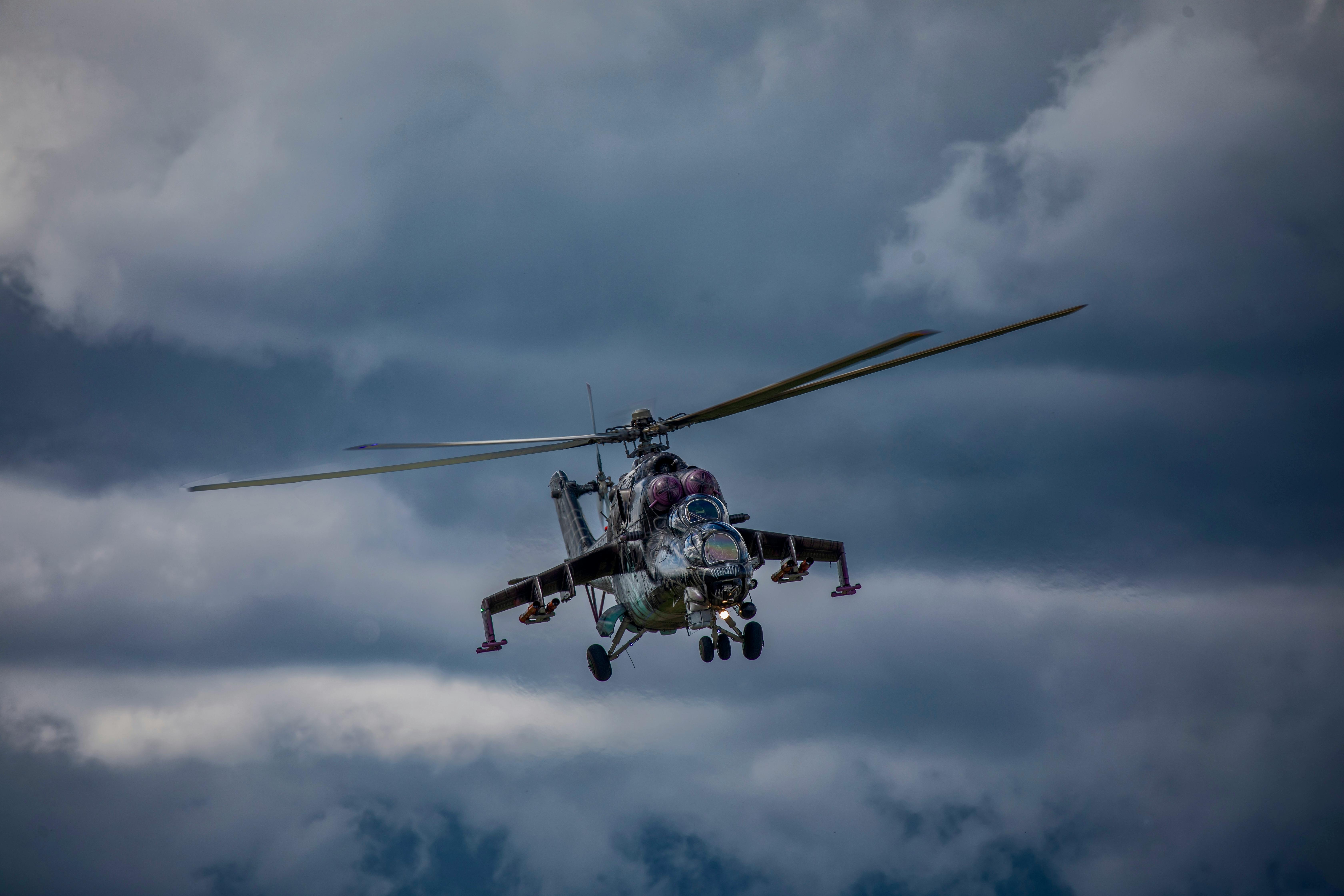
November 19, 2025. As the current administration escalates military postures in the Caribbean—targeting alleged narco-terrorist vessels and keeping the world guessing about the next move near Venezuelan territory—the debate over executive versus legislative authority has reached a fever pitch. This is not a new argument played out on a new stage; it is a direct, high-stakes confrontation with the very structure of American governance. The legislative maneuver currently underway in Congress is not an attempt to invent a novel limitation on presidential action; rather, proponents are demanding adherence to a specific, landmark statute created decades ago to rectify what the legislature perceived as a dangerous over-extension of presidential authority following decades of undeclared conflicts. The historical context surrounding this law informs the urgency of today’s standoff, as lawmakers fear that the ongoing, lethal military actions set a dangerous new operational norm for American engagement abroad. This post cuts through the immediate political noise to examine the bedrock law at the center of this constitutional tug-of-war, the legal definitions being debated, and the volatile geopolitical fallout of continued unilateral action.
The Legislative Bedrock: Examining the War Powers Act of 1973
The statute underpinning the current Congressional challenge—and the source of much of the tension felt on Capitol Hill—is the War Powers Resolution of 1973. Enacted in the shadow of the protracted and largely unauthorized military commitments in Southeast Asia, this landmark piece of legislation was a direct legislative response intended to rebalance the often-tipping scale between the executive and legislative branches concerning the initiation and continuation of armed conflict. The spirit of the law is simple, though its application is anything but: Congress, which holds the sole constitutional power to declare war, sought to ensure it retained a meaningful say in the *commencement* of hostilities.
What does this resolution actually mandate? It lays out clear, though frequently contested, requirements for the Commander in Chief. Generally, the President must consult with Congress “in every possible instance” before introducing armed forces into hostilities. In emergency situations—the very kind that precipitates these debates—the clock starts ticking immediately. The administration must provide a formal report to Congress within 48 hours. More critically, under the statute, the President must terminate the use of armed forces within a short, specified timeframe, typically sixty days, unless Congress has explicitly authorized the continuation of the hostilities through a formal resolution or declaration. As of this week in November 2025, with the Senate having recently blocked a measure to specifically halt the ongoing Caribbean strikes, the question becomes whether the initial 60-day window, which began with the first reported strike in September, has officially closed, forcing a constitutional reckoning.
The opposition’s argument is clear: the current administration has failed to meet the spirit of the consultation requirements and, by operating without explicit authorization for weeks past the statutory deadline, has already violated the letter, or at least the clear intent, of this legislative restraint. This perceived failure necessitates the enforcement mechanism now being pursued by certain lawmakers.
The Constitutional Philosophy: A Recapture of Shared Authority
To truly appreciate the weight of the 1973 Act, one must look past the statute itself and acknowledge the profound constitutional philosophy driving its creation. The Framers, deeply wary of monarchical or unchecked executive power, intentionally divided the war-making capacity. Article I grants Congress the power to “declare War,” while Article II designates the President as Commander in Chief. This division was not accidental; it was a safeguard. The Founding Fathers, having just overthrown a monarchy, believed that committing American sons and daughters to the meat grinder of war was too consequential a decision to be placed in the hands of a single individual, regardless of how capable or respected that individual might be.. Find out more about House Democrats press for vote to bar military action.
The decades preceding 1973 saw Presidents deploying the military repeatedly without formal declarations of war—Korea, Lebanon, and most notably, Vietnam. This led to what many in Congress viewed as a systemic erosion of their own constitutional mandate. The War Powers Resolution was, therefore, an act of self-preservation for the legislative branch, a forceful attempt to reclaim a portion of the constitutional framework for war that had been steadily ceded to the Executive over time. For those demanding adherence now, it is a matter of principle: Congress must debate and vote before the nation is plunged into conflict.
- The Core Principle: The Constitution vests the power to *declare* war solely with Congress.
- The Legislative Intent: The 1973 Act aimed to prevent the Executive from using military force indefinitely without legislative consent.
- The Current Tension: Lawmakers argue the ongoing strikes against maritime assets without an Authorization for Use of Military Force (AUMF) or a Congressional vote exceed the President’s limited, emergency self-defense authority.
This historical context of legislative recapture is essential for understanding the rhetoric surrounding the current operations—it is framed by proponents as defending the very blueprint of American governance against creeping executive overreach in foreign policy.
The Battle Over Semantics: Defining “Hostilities” and “Armed Conflict”. Find out more about House Democrats press for vote to bar military action guide.
The most immediate and perplexing legal hurdle in the present debate revolves around semantics—the precise definition of the words that trigger the statute’s requirements. The key question is this: Do the kinetic strikes against vessels in the Caribbean, conducted under the banner of combating “narco-terrorism,” legally qualify as “hostilities” or “armed conflict” as defined by the operative statute?
The Executive Branch’s legal counsel has reportedly argued a controversial line of reasoning: the actions, while involving the use of lethal force resulting in casualties, do not rise to the level of “hostilities” that formally trigger the notification and withdrawal requirements of the 1973 statute. The legal argument, whispered by anonymous officials, suggests these operations remain within the scope of executive policing or counter-terrorism authority that is supposedly less constrained by the War Powers Resolution. This echoes past legal rationales, such as those used during the 2011 operations in Libya.
Conversely, the legislative advocates vehemently reject this interpretation. They assert that the intentional destruction of property and the documented killing of individuals through military means—air strikes on vessels confirmed by the Department of War—unequivocally constitutes the commencement of hostilities. This interpretation demands immediate compliance with the consultation and authorization timelines. This definitional dispute is crucial; the entire legislative effort hinges on convincing a sufficient number of lawmakers that the threshold for Congressional involvement has already been unequivocally crossed by the administration’s own actions.
Consider the specifics: Since September, the Pentagon claims to have executed multiple strikes on alleged drug-trafficking boats, resulting in dozens of casualties. If the administration’s interpretation holds, it means that any use of lethal force by the Navy or Air Force against targets outside a formal declaration of war can be legally framed as mere law enforcement, effectively rendering the 1973 Act toothless. This is precisely why lawmakers are pushing for resolutions asserting that the administration’s actions *do* constitute hostilities, making the continuation past the 60-day mark a clear violation.
Geopolitical Earthquakes: The Repercussions of Unchecked Executive Action
Beyond the domestic constitutional implications—the struggle over who controls the deployment of American forces—the escalating military posture against a nation like Venezuela carries substantial, palpable risks for broader geopolitical instability. The unilateral initiation of lethal action in the region, without clear international consensus or the full backing of the legislative branch, threatens to undermine carefully constructed diplomatic relationships across the hemisphere. The consequences of this policy extend far beyond the immediate maritime theater; they have the potential to reshape long-term security dynamics in the entire region.. Find out more about House Democrats press for vote to bar military action tips.
Regional Stability and the Domino Effect on Neighboring States
The nation currently facing increased U.S. military pressure is a significant player in its immediate geographic sphere. Any sustained, hostile military action against its maritime interests or sovereign territory by the United States is bound to cause widespread alarm among its neighbors. This isn’t a conflict taking place in a vacuum. The Caribbean and South American political landscape is a complex web of historically cautious neutrality and ideological opposition to the intervening executive’s policies.
The fear, often voiced in diplomatic backchannels, is that sustained unilateral action compels neighbors to react in ways that destabilize the area further. States that have historically maintained a cautious distance may feel compelled to either offer political or material support to the targeted government or, conversely, harden their own defensive postures, fearing they could be next on a list of adversaries targeted under similar pretexts, such as the ongoing “war on cartels”. This situation risks fragmenting regional organizations—those entities built specifically to foster dialogue and de-escalation—and could invite other international actors to increase their own presence, transforming what is ostensibly a targeted security operation into a flashpoint for wider, more complex international confrontation. This directly contravenes the stated goals of regional stability that the executive branch frequently espouses in its public communications.
For those interested in how regional organizations react to perceived American interventionism, understanding the dynamics of diplomacy and regional alliances is key. The reaction in capitals from Bogotá to Brasília is being closely watched, as any formal alignment against the U.S. presence would exponentially increase the political cost of Operation Southern Spear.
Economic Fallout: Investment, Markets, and Energy Access
The instability created by military escalation carries immediate and long-term economic consequences that will impact American interests far beyond the mere cost of the military deployment itself. When a major world power engages in unilateral, lethal military action against the maritime assets of a state, it instantly creates a climate of profound uncertainty for international commerce and investment across that entire region. Global markets are notoriously sensitive to this type of geopolitical volatility.. Find out more about House Democrats press for vote to bar military action strategies.
What does this uncertainty translate to on the ground? We are already seeing projections that point toward:
- Insurance Rate Hikes: Increased risk premiums for commercial shipping transiting the Caribbean basin.
- Decreased Trade Flows: Shippers rerouting cargo to avoid perceived hotspots, increasing transit times and costs for goods moving through the Americas.
- Chilling Effect on FDI: A significant deterrent to prospective Foreign Direct Investment (FDI) in neighboring economies, even those not directly involved in the military action. Capital abhors uncertainty, and unilateral military action signals maximum uncertainty.
Moreover, the narrative surrounding these strikes is complicated by reports suggesting that underlying motives may extend beyond purely disrupting drug routes. Are the executive’s actions linked to securing future economic gains? Reports referencing promises of future access to the target nation’s vast energy reserves raise serious ethical and economic questions for observers. Is the administration risking regional peace and stability to secure favorable economic outcomes for specific domestic corporate interests? This entanglement—the potential marriage of national security justification with regime change for economic benefit—further solidifies the opposition’s narrative that the true motives are murky.
This complex interplay—constitutional crisis, geopolitical risk, and economic maneuvering—is precisely what forms the foundation for the continued legislative pressure exerted by the House opposition in the year two-thousand-twenty-five. Anyone tracking the long-term effects must look beyond the immediate military headlines and study the shifting currents in global finance and regional trade agreements. For a deeper dive into how these security concerns affect trade, you might research our analysis on global trade risk assessment.
The Judicial Wildcard: When Courts May Intervene
While the immediate battle is taking place on the floor of the House and in the Senate cloakrooms, the ultimate arbiter of a constitutional clash is often the federal judiciary. The War Powers Resolution itself provides limited avenues for judicial review, often requiring a specific member of Congress to sue the executive branch to force compliance. This path is often politically fraught and slow, which is why Congress often prefers the legislative route.
However, the very nature of the current conflict—air strikes on foreign vessels resulting in the death of foreign nationals, justified under an interpretation that deliberately avoids the statutory trigger—opens avenues for other legal challenges. One potential route involves invoking international law principles, arguing that the strikes, undertaken without a recognized act of self-defense or a Congressional mandate, violate the UN Charter prohibition on the use of force. Furthermore, any challenge to the legal basis of the strikes themselves could invite the Supreme Court to weigh in on landmark court rulings on executive power, potentially setting a new precedent for 21st-century warfare.
Precedent and Future Implications: What Happens Next?
Whether the administration successfully defends its interpretation or Congress manages to force a vote, the outcome of this confrontation will dictate the **presidential authority after Vietnam** for decades to come. If the executive branch prevails by successfully defining these lethal operations as merely “policing actions,” future administrations, regardless of party affiliation, gain a vast, unwritten license to deploy combat forces without seeking a declaration or formal AUMF.
This sets the stage for several potential outcomes:. Find out more about War Powers Act of 1973 requirements enforcement definition guide.
- Legislative Stalemate: The Senate continues to block resolutions, effectively ceding the power to the Executive, upholding the *status quo* of reduced Congressional oversight.
- Judicial Review: A member of Congress successfully sues, forcing a court to rule on whether the strikes meet the statutory definition of “hostilities.”
- Congressional Assertion: A future, successful legislative maneuver, perhaps an amendment to major defense legislation, finally forces a repeal or amendment of old AUMFs, thereby tightening the leash on the Executive in future conflicts.
- Contact Your Representatives: Know where your elected officials stand on reasserting Congress’s role. Did your Senator vote to block the recent War Powers Resolution? If so, ask them directly why they believe the 60-day limit should be ignored in the current situation.
- Demand Clarity on Definitions: Write to your representatives urging them to push for clear, non-ambiguous statutory language that defines “hostilities” in modern military terms, closing the semantic loophole the Executive Branch is currently exploiting.
- Follow the Legal Filings: Pay attention to any suits filed by members of Congress challenging the legality of the ongoing operations. These legal challenges will be the true test of the War Powers Resolution’s strength in 2025. You can track updates on the legal justifications by reviewing reports on the landmark court rulings on executive power.
- Watch Regional Stability: Do not let the focus remain solely on Washington. Monitor the diplomatic statements and security postures of neighboring states in the Caribbean and South America in response to the **US military Caribbean deployment**. Their reaction is a real-time metric of the geopolitical cost.
For citizens concerned with maintaining the separation of powers—the very essence of our system—understanding the nuance of the **constitutional framework for war** is no longer an academic exercise; it is a civic necessity. The actions taken in the Caribbean today are laying the groundwork for the constitutional realities of tomorrow.
Actionable Takeaways: Engaging with the War Powers Debate
The complexity of this issue should not paralyze engagement. The debate over congressional war powers is one of the most critical discussions occurring in Washington right now, profoundly impacting American security and constitutional integrity. Here are concrete steps you can take to engage with this vital issue:. Find out more about Debates on defining “hostilities” and armed conflict insights information.
The founders established a system designed to be slow, deliberately difficult, and prone to argument when it comes to war. That friction is not a bug in the system; it is the primary feature protecting American lives and adherence to law. The current situation tests that feature to its limits. The push for adherence to the War Powers Resolution enforcement is, at its heart, a defense of that original design.
What are your thoughts on the Executive Branch’s argument that these maritime strikes do not constitute “hostilities”? Do you believe the 1973 Act’s 60-day clock has definitively expired given the administration’s actions since September? Share your perspective in the comments below.