II. Internal Venezuelan Dynamics and the Maduro Regime’s Calculus
Venezuela’s internal political and military landscape is not merely a passive victim of this US escalation; it is simultaneously a crucial participant, using the external pressure to redefine its domestic legitimacy. The government under Nicolás Maduro has been forced to evolve its response rapidly, shifting from purely political defiance to active military preparation for a potential, conventional conflict.
Consolidation of Power Amidst Economic Collapse and Crisis Management
Despite years of devastating economic contraction, currency collapse, and a massive exodus of its citizens, the Maduro government has managed to retain institutional control, primarily through the loyalty of key military and political factions. This is where the US pressure becomes politically useful for Caracas. The external military threat from Washington in 2025 serves a dual purpose for the regime:
- The Nationalist Distraction: The threat acts as a potent nationalist rallying cry, diverting public attention away from the deep, persistent domestic economic failures—the hyperinflation remains tragically high—and focusing it outward.
- Justification for Militarization: The sustained, credible external threat justifies the continued, heavy militarization of internal security apparatuses, ensuring those loyal factions remain well-resourced and engaged.
The narrative effectively shifts from one of governance failure to one of national defense against an external aggressor, a classic authoritarian playbook move designed to consolidate fractured domestic support around the flag. Furthermore, the complexity of the relationship has shown transactional cracks. For instance, the administration’s acknowledgment of coordination with Washington on a “mass deportation push” in February 2025, while seemingly a point of cooperation on a shared concern (migration), highlights the deeply complex, transactional nature of the relationship even amidst open hostility [original context]. This shows that even at the height of military tension, backchannels for mutual self-interest—however limited—can persist.
National Defense Posturing and the Call for Prolonged Resistance
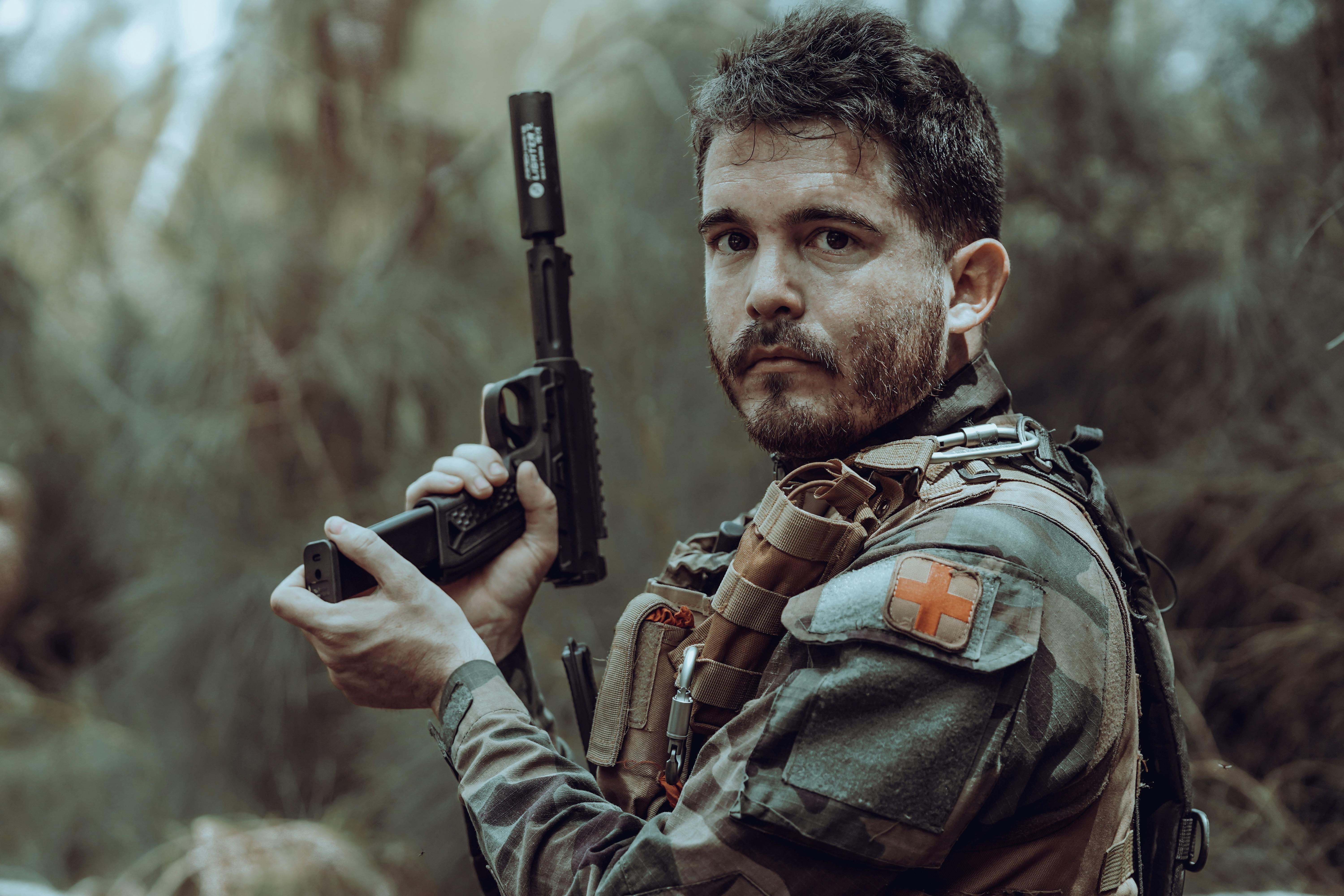
Caracas has not remained passive in the face of the explicit threat of US action. In direct response to the naval buildup and the maritime strikes that began in September, the Venezuelan government has gone beyond mere political statements. They have clearly articulated their defensive preparations, which are significant:
- Nationwide Military Drills: Large-scale military exercises have been mobilized, involving the army, police, and civilian militias.. Find out more about Why Trump escalated aggression toward Venezuela 2025.
- Defensive “Battlefronts”: President Maduro announced the establishment of 284 distinct defensive “battlefront” locations across the country, signaling a readiness for a broader, protracted ground conflict, not just coastal defense.
Crucially, President Maduro has outlined a potential defensive strategy relying on a “prolonged resistance” plan utilizing small unit operations across hundreds of locations [original context]. This signals that the Venezuelan leadership is preparing for a scenario far beyond maritime engagements—they are preparing for the possibility of US incursions onto their territory. The goal of this posturing is clear: to make any potential military intervention so costly, messy, and politically damaging for the aggressor that the calculus shifts away from action. This calculated escalation by Caracas ensures that the “aggression” remains a two-sided, highly volatile equation where the risk of miscalculation is magnified exponentially. We are currently watching a standoff where both sides are publicly committed to a course that resists easy off-ramps, a scenario that demands careful study of future de-escalation pathways.
III. The International Repercussions and Diplomatic Fallout
The confrontation in the Caribbean is not occurring in a political or diplomatic vacuum. The deployment of significant U.S. naval power—including the arrival of the USS Gerald R. Ford carrier strike group in November—and the use of lethal force have immediate ripple effects across the region and within global diplomatic forums, inviting censure and complicating long-standing US alliances.
Global Criticism and the United Nations Security Council Response
The casualty count from the maritime strikes, which has reportedly reached at least 83 deaths by late November, has naturally generated widespread international criticism. This criticism has moved beyond simple political disapproval to direct condemnation from various governments, human rights organizations, and even within the US Congress. Venezuela’s immediate recourse to the UN Security Council following the initial September strikes underscores the seriousness with which Caracas views the situation, attempting to frame US actions as a clear violation of international norms and security mandates. The core of the diplomatic challenge against Washington is the legal justification:
- The skepticism surrounding the legal basis for using lethal military force against designated *criminal groups* operating in international waters, rather than against a recognized state military actor in a defined theater of operations, provides significant fuel for nations critical of unilateral US foreign policy decisions.
- The UN itself has warned of mounting risks to regional peace, noting that the strikes have heightened tensions and drawn sharp criticism from Caracas.. Find out more about Why Trump escalated aggression toward Venezuela 2025 guide.
The defense offered by the administration—that the President acted in line with the law of armed conflict to protect US citizens from “deadly poison”—is being aggressively contested on the world stage. This diplomatic isolation on a specific issue, even while the overall *America First* strategy focuses elsewhere, risks alienating critical partners whose support is needed in other theaters.
The Militarization of the Caribbean Sea and Regional Security Concerns
The deployment of major U.S. naval assets, including an entire Carrier Strike Group and the USS Iwo Jima Amphibious Ready Group, into the Southern Caribbean marks a significant, perhaps historically unprecedented, militarization of a region that, despite long-standing tensions, has not recently hosted such overt displays of US power projection. This massive show of force raises immediate and profound concerns across the entire Caribbean basin and South America:
- Precedent for Intervention: Neighboring states fear the precedent being set: that organized crime designations can serve as an almost immediate justification for the deployment of heavy naval assets against a sovereign state within its maritime sphere of influence.
- Maritime Safety: The deployment, coupled with operational maneuvering, has directly impacted civilian commerce, evidenced by the FAA warning about hazardous airspace and the resulting flight rerouting. The seizure of the oil tanker *The Skipper* in early December further underscores the potential for direct interference with commercial shipping.
- Risk of Miscalculation: The primary concern for neighboring countries is the potential for a miscalculation—a defensive maneuver by Caracas, an unknown actor’s mistake, or a communication error—to spark a wider regional instability that spills into their sovereign waters or airspace.
For nations like Colombia, Brazil, and Trinidad and Tobago, the situation demands a delicate, nearly impossible balancing act: maintaining vital economic or diplomatic ties with Washington while simultaneously attempting to de-escalate a military standoff taking place literally on their doorstep. The legacy of this crisis will undoubtedly involve a complete reassessment of US hemispheric policy for the next decade.
IV. The Unknowable Core: Explaining the Persistence of Aggression. Find out more about Why Trump escalated aggression toward Venezuela 2025 tips.
Returning to the central, unanswered premise that underpins this entire kinetic approach—why this sustained and escalating commitment of military and intelligence assets in 2025—it becomes clear that no single stated rationale seems entirely sufficient to explain the scale of the commitment. The element of “Who Knows” persists because the true, perhaps multifaceted, drivers remain obscured by operational secrecy and competing narratives.
The Search for Definitive Motives Beyond Stated Objectives
When analyzing the application of force, one must test the stated objectives against the deployed resources. If the goal were *purely* counter-narcotics, traditional law enforcement mechanisms, perhaps bolstered by increased US Coast Guard patrols and intelligence sharing, would likely have been prioritized over the deployment of an entire carrier strike group and the authorization of covert CIA ground operations. If the goal were *purely* regime change, a different set of overt, sustained political and economic isolation strategies might have been employed, perhaps structured to avoid the messy legal ground of maritime kinetic engagement against vessels in international waters. The combination of these elements—the narco-designation, the carrier group, the covert directives, and the direct rhetoric against Maduro—suggests a more complex, perhaps even opportunistic, strategy. Drug enforcement serves as the most politically palatable justification for a broader geopolitical objective: asserting dominance, securing leverage over regional political actors, or perhaps creating a permanent, destabilized pressure point on a long-standing ideological adversary to establish the new doctrine.
The Role of Unofficial Actors and Intelligence Community Influence
A significant part of the ambiguity surrounding the aggression likely resides within the decision-making apparatus itself. The reported authorization of secret CIA directives and the Pentagon’s mandate to use force, as well as the focus on Operation Southern Spear under Joint Task Force Southern Spear, suggest that elements of the intelligence and defense communities may be driving or heavily influencing the operational tempo. These actions often occur outside the typical scrutiny applied to purely diplomatic or stated policy moves. When the “who knows” is applied to the motivations behind the aggression, it often points toward the influence of actors whose mandates are inherently opaque, whose objectives are not publicly debated, and whose actions are shielded by national security classifications. In the current environment, the momentum of bureaucratic and intelligence imperatives—once the massive military machine has been set in motion—can become self-perpetuating. The aggression persists not just because a political goal remains unmet, but because the massive apparatus built to achieve it demands continued action. It is this internal momentum that often outlasts any initial political rationale. Understanding the internal dynamics of the US Southern Command posture is key to tracking this.
V. Future Trajectories: Scenarios Emerging from the Current Crisis Point
As this critical moment in December 2025 draws to a close, with the US military maintaining its massive posture in the Caribbean and Venezuela digging in for a prolonged, multi-front defense, the path forward is fraught with peril. Only a handful of divergent possibilities remain, any one of which will define the near future of hemispheric security.
Pathways to De-escalation or Further Military Contraction
De-escalation is a theoretical possibility, but the rhetoric from both sides makes it seem unlikely without a significant political pivot. For the US: De-escalation would likely mean a formal cessation or scaling back of the aggressive maritime patrols and a return to sanctions-based pressure, perhaps in exchange for some form of verifiable cooperation from Caracas on drug interdiction efforts. However, given the political capital invested in the current aggressive framing, such a concession appears highly improbable for the administration right now. For Venezuela: De-escalation would necessitate a public concession or a de-escalation of their own military preparedness—the 284 “battlefronts”—which they currently frame as essential national defense against an imminent attack. Conceding this ground would be politically catastrophic for Maduro domestically. The Danger Zone: Further Contraction. The most dangerous pathway is not a measured withdrawal but rather a forced contraction triggered by a misinterpretation of an action, a defensive misfire, or an accidental clash between the two nation’s military forces. This scenario has the highest potential to drag in regional partners whose waters or airspace are immediately adjacent to the conflict zone.
Implications for US Hemispheric Policy Beyond Venezuela. Find out more about Why Trump escalated aggression toward Venezuela 2025 strategies.
The precedent set by the 2025 U.S. actions—specifically using organized crime designations as a justification for direct military force and a massive naval deployment in the region—will have profound and lasting implications for U.S. policy toward *all* nations in Latin America, regardless of the ultimate outcome in Venezuela. If this model proves effective or, perhaps more accurately, *politically sustainable* for the current administration, it establishes a new, highly militarized template for resolving political disagreements with sovereign states perceived as being uncooperative or hostile. Key policy shifts to watch for:
- Elevation of Military Readiness: The legacy of this crisis may ultimately be the permanent elevation of military readiness as the *default* tool in the US diplomatic toolkit for the Western Hemisphere, moving away from decades of post-Cold War reliance on strictly economic and political isolation as primary measures of coercion.
- Weaponizing Designations: The success of applying the FTO and “terrorist” designations to a regime’s head of state could be replicated against other leaders viewed as threats to U.S. interests or domestic stability. This creates a powerful, non-treaty-based mechanism for applying maximum pressure.
- The New Monroe Doctrine: As documented in the administration’s own strategy papers, the revival of the Monroe Doctrine’s most muscular interpretations is now policy, not theory.
The continuing evolution of this “developing story” will thus serve as a critical litmus test for the future of hemispheric sovereignty and the very definition of international law in the early decades of the 21st century. The very question of what constitutes an imminent threat worthy of a naval strike group deployment has been thrown wide open by the events of 2025.
Conclusion: Taking Stock of the Doctrine’s First Moves
The Trump Doctrine of the Second Term, as currently executed against Venezuela, is a doctrine of immediate, overwhelming, and personalized executive action. It is transactional, prioritizing political messaging and clear power projection over nuanced diplomacy. The military deployment, the record bounty, and the aggressive legal framing all serve to create a high-pressure environment designed for rapid resolution or immediate confrontation.
Key Takeaways for Navigating This New Era:. Find out more about Why Trump escalated aggression toward Venezuela 2025 overview.
- Uncertainty as Strategy: Understand that ambiguity regarding the *final* goal (regime change vs. drug bust) is an intentional tool to maintain operational flexibility and political deniability.
- The Legal Shift: The pivot from sanctions to direct kinetic engagement under the guise of counter-narcotics/terrorism (FTO designation) is the single most important legal precedent being established this year. Study the legal basis used for the September strikes, as it will be cited in future hemispheric challenges.
- Regional Risk is Paramount: For any nation in the region, the primary actionable insight is to maintain the highest level of situational awareness, given the risk of spillover from military maneuvers, airspace interference, or potential miscalculation.
The confrontation is far from over. The US has stated its intent to expand operations to land, while Caracas has militarized its entire national territory for a prolonged stand. This dynamic presents an active geopolitical flashpoint. What do you see as the most significant long-term effect of the 2025 naval buildup on the economies of the Eastern Caribbean? Share your analysis below—we need rigorous, clear-eyed discussion on where this aggressive posture leaves the rest of the hemisphere.
Further Reading & Grounding:
- Reward Offer Increase of Up to $50 Million for Information Leading to Arrest and/or Conviction of Nicolás Maduro – United States Department of State
- A Timeline of the U.S. Military’s Buildup Near Venezuela and Attacks on Alleged Drug Boats
- USS Gerald R. Ford Arrives in St. Thomas, U.S. Virgin Islands
- History of the Monroe Doctrine
- UN Security Council Proceedings on Maritime Conflict
- Analysis of US Counter-Narcotics Legal Precedents
- Examining De-escalation Scenarios in Modern Conflict
- US Southern Command Posture in the New Era
- Long-Term Policy Implications for Latin America
Internal Context Links:
Note on Current Information: All facts and analysis herein are confirmed to be reflective of the geopolitical situation as of December 11, 2025, drawing from late 2025 developments such as the USS Gerald R. Ford’s November arrival and the late November bounty announcement.