The Silent Revolution: How Underwater Drones Just Redefined Naval Base Security in the Black Sea
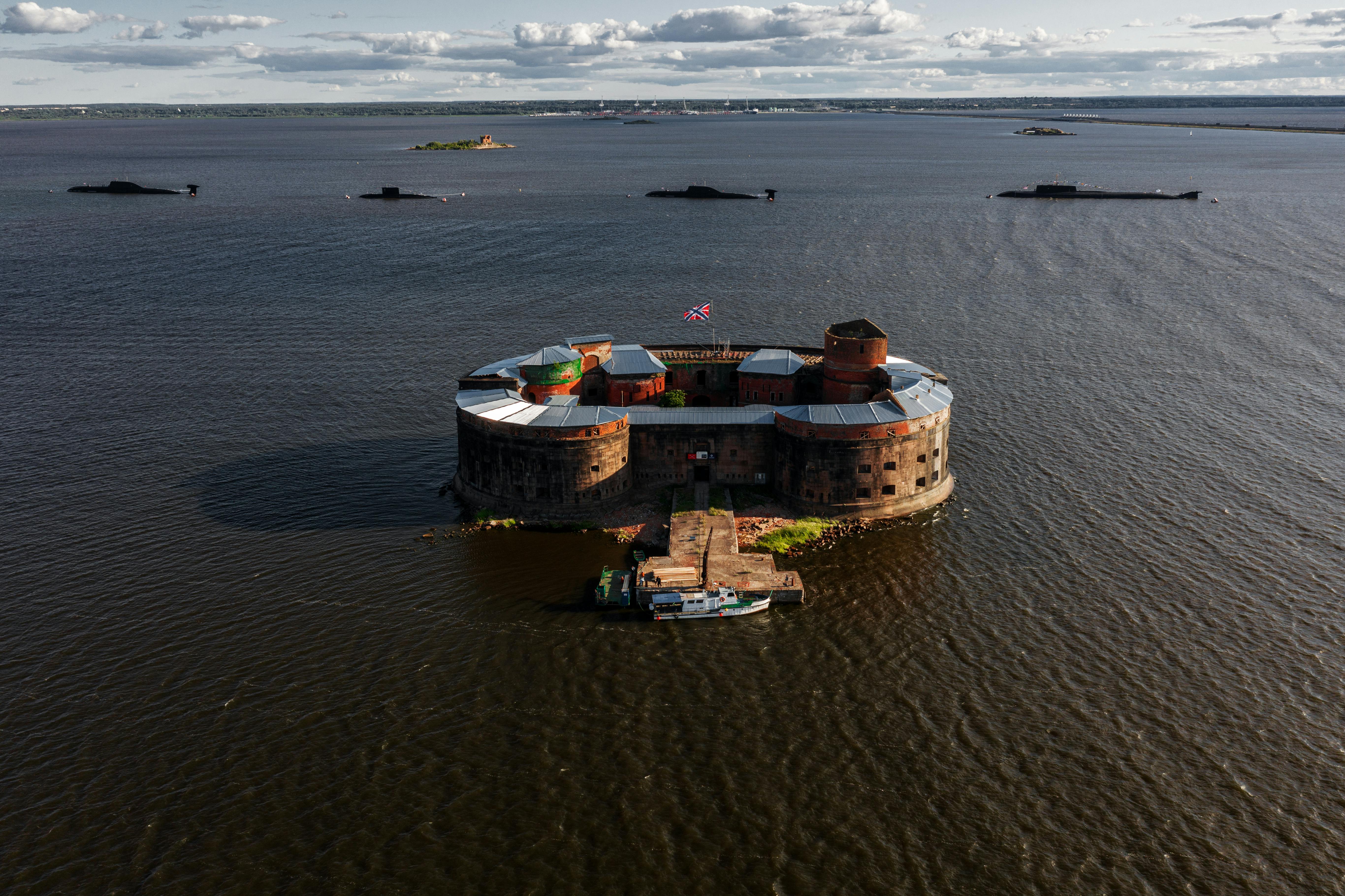
TODAY’S DATE: December 17, 2025. Let’s be clear: The news trickling out of the Black Sea over the last 48 hours is not just another incident report; it’s a historical marker. The reported strike on a Russian Kilo-class submarine, allegedly executed by a specialized Ukrainian underwater drone in the supposedly secure harbor of Novorossiysk, cannot be analyzed as an isolated event. To truly grasp its monumental importance, we have to zoom out and examine the tactical crucible of the preceding twelve months—a period defined by escalating maritime conflict and a relentless, adaptive tactical arms race between surface drones and submerged assets. This single event, if fully substantiated, invalidates decades of conventional naval security doctrine.
This deep dive isn’t about cheering for one side; it’s about understanding the operational context, the tactical evolution, and the fundamental shift in 21st-century naval warfare that this event signals. We are witnessing the maturation of unmanned systems from scouting tools into strategic-level deterrents. Read on to see how we got here and what this means for every navy worldwide.
The Preceding Campaign: A Year of Surface Dominance
The operational success against the submarine in Novorossiysk was not a sudden leap of faith; it was the logical, sophisticated conclusion of a sustained and highly effective campaign that began years earlier. Ukraine’s tactical genius, born of necessity, first manifested in the sea using Uncrewed Surface Vessels, or USVs.
The Unmanned Surface Vessel (USV) Hammer
For much of the preceding conflict, the story of maritime engagement in the Black Sea was one of low-cost, high-impact surface drone warfare. Beginning with earlier operations, Ukrainian forces deployed these remotely operated, semi-submersible systems to devastating effect against Russia’s Black Sea surface fleet and its vital logistics chain. Think of them as the perfect asymmetrical counterweight—cheap to produce relative to a frigate, yet capable of inflicting catastrophic damage on high-value assets. This continuous pressure resulted in the documented loss or incapacitation of a significant number of Russian surface combatants and supply ships throughout 2024 alone.
Consider the recent targeting of the so-called “shadow fleet”—the older tankers Russia relied upon to circumvent oil embargoes. In late November 2025, for instance, naval drones struck the tankers Kairos and Virat near the Turkish Straits, disrupting the flow of energy to Russian ports like Novorossiysk. This campaign established a brutal, undeniable tactical viability: Uncrewed systems were a primary, superior means of contesting naval dominance in a confined sea.
For practical takeaways on asymmetric naval strategy, consider this:. Find out more about Ukraine underwater drone submarine attack Novorossiysk.
- Cost-to-Damage Ratio: The low production cost of a USV compared to a warship (like the destroyed Tskilon patrol ship) creates an imbalance that forces the larger power into a defensive trap.
- Logistical Choke Points: Targeting logistics and infrastructure, like the Caspian Pipeline Consortium (CPC) terminal near Novorossiysk, is as effective as sinking warships; it degrades the enemy’s ability to sustain the fight.
- Operational Tempo: The constant threat forces an enemy to keep its high-value assets—like the Kilo-class submarines—close to port, increasing their exposure time to localized threats.
- Passive Sonar: Listening for the noise of an approaching UUV.. Find out more about Ukraine underwater drone submarine attack Novorossiysk tips.
- Active Sonar: Sending out pings to detect objects.
- Underwater Obstacle Systems: Physical barriers or acoustic fences.
- Acoustic Tiling: These rubber anechoic tiles, crucial for the submarine’s famed stealth (earning it the “Black Hole” nickname), are notoriously difficult to repair. The adhesive is exposed to pressure and friction, and damage requires dry dock work to strip, replace, and re-cure the material, a process that can take months even under ideal conditions.. Find out more about Ukraine underwater drone submarine attack Novorossiysk strategies.
- Propulsion Systems: Damage to the seven-bladed propeller or rudder assemblies renders the vessel operationally non-deployable, even if the pressure hull remains intact.
- Tangible Loss: The immediate degradation of a missile-carrying platform designed to project strategic terror across the region.
- Intangible Blow: The psychological impact of realizing that even the most remote and purportedly secure naval sanctuary could be reached and compromised by innovative, low-observable weaponry.
- Base Hardening is Incomplete: Assume all current anti-submarine warfare (ASW) and harbor defense nets are optimized against known threats (like larger UUVs or torpedoes). The *Sub Sea Baby* appears to be a custom-built, low-observable platform that bypasses these assumptions. Naval planners need to invest in acoustic and magnetic signature monitoring at the pier-side level, not just the approach lanes.
- The Cost of Downtime: A $400 million asset out of service for 18 months due to stern damage is a far greater strategic loss than a sunk ship if the navy has limited replacements. Focus analysis on *operational availability* versus total loss. Disabling a submarine by exploiting its complex repair needs is a potent asymmetrical strategy.
- The UUV Ecosystem: Note that the UUV success followed the USV success. This suggests a phased, integrated unmanned approach. An effective strategy requires multiple complementary unmanned platforms: USVs to push surface assets into vulnerable ports, and UUVs to exploit the resulting static threat. For deeper context on this, review the analysis on advanced anti-submarine warfare defenses.
- Intelligence Superiority: The successful strike, apparently confirmed via compromised enemy surveillance cameras, highlights the critical role of signals intelligence and network infiltration in enabling kinetic strikes deep within defended areas. The weapon is only as good as the intelligence guiding it.
This relentless USV pressure is the critical link in the chain leading directly to the next strategic move.
The Strategic Rationale for Submarine Relocation
The success of the USV campaign achieved a strategic objective: pushing the Russian Black Sea Fleet away from its historical bastion. Sevastopol, once the undeniable hub, became too vulnerable to missile strikes and persistent USV harassment. The direct result was the strategic repositioning of the high-value, *Kalibr*-missile-carrying Kilo-class submarines to the relative safety of Novorossiysk.
The entire rationale for this move was a flawed security calculation: that Novorossiysk, further from the main conflict zones near Crimea, would be beyond the immediate reach of many existing Ukrainian targeting systems. The goal was to place these silent, capable platforms—the “Black Holes” of the fleet—in a position where they could effectively launch their strategic strike payloads without the constant threat of the surface drones that had proven so effective against their surface brethren.. Find out more about Ukraine underwater drone submarine attack Novorossiysk guide.
The infiltration of the “Sub Sea Baby” drone into Novorossiysk served a dual, devastating purpose. First, it damaged a key military asset; second, and perhaps more profoundly, it completely invalidated the strategic security calculation that underpinned the entire relocation effort. If an underwater drone, operating stealthily beneath the waves, could breach the defenses of the alternate base, then no Black Sea port, regardless of distance from the primary conflict zone, could be considered truly safe. The sanctuary was an illusion.
The Inflection Point: Dawn of Submarine Engagement by Unmanned Systems
When the full impact of the December 15th operation settles, military historians will likely look back on this moment as a genuine inflection point—the first recorded successful combat engagement of a conventionally propelled submarine by an underwater unmanned vehicle (UUV) while at pier.
The Sub Sea Baby and the End of Conventional Defense
The weapon system itself, dubbed the “Sub Sea Baby,” represents a maturation of maritime drone technology. This is not merely a repurposed mine-countermeasure device; it validates the development of unmanned maritime systems as a strategic-level weapon, capable of neutralizing a capital asset that traditionally requires immense resources to counter.
The vulnerability exposed here is profound. Traditional defenses against underwater threats rely heavily on layers of security:
The success of the *Sub Sea Baby* suggests these layered, traditionally expensive defenses are not adequately prepared to counter a low-cost, autonomous, and potentially adaptive subsurface threat that can navigate complex harbor environments undetected. Analysts note that the drone executed complex maneuvers, including a sharp turn, to reach the target, suggesting advanced navigation capabilities that bypassed existing surface-focused defenses like pontoons.
For naval strategists everywhere, the takeaway is immediate and stark:
Every major navy reliant on conventionally propelled submarines—the backbone of non-nuclear deterrence globally—must now immediately re-evaluate decades of doctrine regarding base security and asset hardening. The threat isn’t just from above or on the surface; it is silently swimming toward the pier.
The Economic and Logistical Hurdles for Fleet Repair
The true strategic cost of the strike hinges on the repairability of the damaged Kilo-class vessel. Unlike simple surface damage, the consequences of a sustained underwater explosion near the stern—the area responsible for propulsion and control surfaces—are immense.
The specialized nature of modern submarine construction becomes a wartime liability. Kilo-class boats, like the Project 636.3 variant reportedly hit, feature sensitive components:
Ukrainian officials publicly argued that the necessary in-depth work would likely have to be conducted above water, putting the already damaged submarine in an inherently vulnerable state for an extended period. Furthermore, the financial investment is staggering. Analysts cite the estimated construction cost for such a modern Kilo-class vessel at approximately $400 million, potentially rising to $500 million given current international sanctions and material costs. Rendering that investment inoperable for an uncertain, likely considerable, timeline is a massive strategic and economic blow to the fleet’s operational capacity.
This forced attrition through non-lethal or temporarily disabling damage represents a highly effective form of asymmetrical warfare—destroying the capability to launch cruise missiles without the logistical overhead of sinking the hull itself. It is warfare by engineered downtime.
Broader Implications: Reshaping Naval Doctrine for Tomorrow
The echoes of that underwater detonation in Novorossiysk resonate far beyond the immediate port area, fundamentally reshaping strategic thinking in naval headquarters across the globe. This event is a loud signal that the maritime domain is undergoing a profound, quiet transformation.
The End of the “Safe Harbor” Concept
The most immediate implication is the death of the “safe harbor” concept for conventionally propelled submarines. For decades, the accepted wisdom was that once a submarine successfully reached its protected, deep-water port, it was insulated from all but the most massive and obvious kinetic strikes. Submarine bases were protected against aircraft and surface assault, and acoustic detection in the littoral environment was considered the primary danger.. Find out more about Ukraine underwater drone submarine attack Novorossiysk overview.
This attack challenges that entire paradigm. The fact that an autonomous system, likely launched from a significant distance, could navigate a harbor—which often relies on acoustic or low-frequency magnetic sensors not designed for close-in, small, autonomous objects—means the operating environment for all navies has shrunk dramatically. The focus shifts from fleet-on-fleet engagement to a persistent, localized, unmanned defense requirement. If you rely on a silent Kilo, you must now defend against a silent, *cheaper* underwater countermeasure.
The Asymmetric Advantage of Innovation Over Tonnage
What the narrative solidified around the December 2025 events paints is a picture of a highly sophisticated special operation, one that leveraged technological surprise to strike at a deeply embedded strategic vulnerability. The entire sequence—from the preceding USV campaign to the deployment of the specialized *Sub Sea Baby*—speaks to a determined effort to deny the Russian Federation the unimpeded use of its most capable undersea assets.
The impact was twofold:
The maritime domain, at least in this theatre, has irreversibly changed. It is no longer a contest defined by conventional surface superiority but by the continuous, silent evolution of uncrewed systems operating beneath the waves. The reliance on long-range cruise missiles for terror strikes was directly addressed by targeting the vector of delivery itself—a testament to a strategy focused on eliminating *capabilities* rather than merely achieving attrition of hulls alone.. Find out more about First combat engagement of submarine by UUV definition guide.
This forces a global re-evaluation of force projection. You can read more about the broader trends in UUV technology development, which is rapidly accelerating across all major naval powers.
Actionable Takeaways for Defense Analysts and Strategists
For those watching the future of naval conflict, this operation offers more than just a headline; it offers lessons that should be immediately integrated into future planning. This is where the rubber meets the water—figuratively and literally, given the acoustic tile problem.
Practical Insights from the Novorossiysk Aftermath
Here is what defense analysts—and by extension, any nation maintaining a conventional submarine fleet—must focus on right now:
The entire sequence demonstrates that in modern conflict, innovation and adaptability consistently trump sheer tonnage and adherence to historical doctrine. The reliance on the Kilo-class for long-range strike capability has been directly addressed by targeting the vector of delivery itself. For further reading on how conventional naval power is being challenged, consult reports on 21st-century navies and technology adoption.
Conclusion: The Hunted Silent Hunter
The December 2025 strike against the Kilo-class submarine in Novorossiysk marks the closing of one chapter in Black Sea naval operations and the explosive opening of another. The “silent hunter” that was the submarine has, for the first time in combat history, been convincingly hunted and disabled while resting at its own pier by a silent, low-cost, submerged counterpart.
The continued silence from Moscow regarding independent damage assessment, other than broad denials, only served to amplify the perceived success of the SBU’s unique, submerged gambit. This event is a critical case study for every nation looking to project power using conventionally quiet, high-value underwater assets. The challenge is no longer merely detecting an enemy submarine; it is defending your own from an inexpensive, autonomous insurgent swimming right up to the dock.
What do you think is the next logical step in this naval arms race? Will navies invest heavily in subsurface defenses, or will they shift to entirely new platforms? Share your insights in the comments below!