The Perpetual Crisis: Understanding Pakistan’s Security Dilemma in Afghanistan as of March 2026
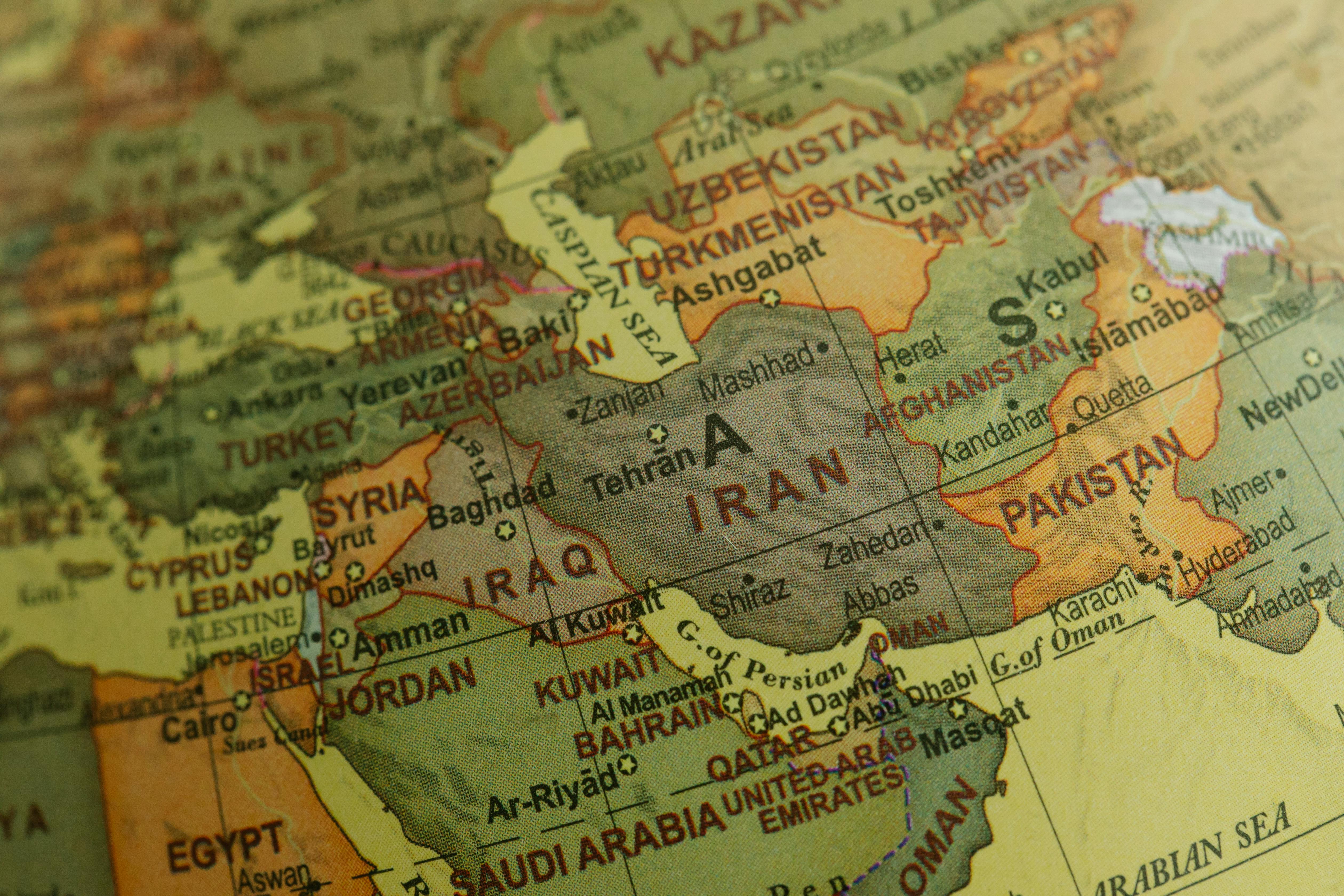
The relationship between Pakistan and Afghanistan, always more complex than mere neighborly coexistence, has entered a phase of overt, state-to-state military confrontation as of late February and early March 2026. What was for years a simmering tension involving proxy actors and deniable hostilities has boiled over into a kinetic exchange, with Pakistan launching Operation Ghazab Lil-Haqq (The Righteous Fury) across Afghan territory. This dramatic escalation, defined by cross-border strikes and retaliatory ground offensives, forces a deeper examination of the enduring cycle of insecurity that perpetually binds Islamabad to Kabul—a cycle rooted in contested history, militant ideology, and geopolitical anxiety.
The Eruption of Open War: Developments in Early 2026
The situation ruptured in late February 2026, moving the relationship beyond the recurring, yet relatively contained, border skirmishes that characterized much of 2025. On the night of February 26, 2026, Afghan forces reportedly launched a major offensive against Pakistani military outposts in six border provinces. This action was immediately preceded by significant Pakistani military action, which had been building since earlier in the month, following a deadly suicide bombing at a Shiite Mosque in Islamabad on February 6, 2026, an attack claimed by the Islamic State in Iraq and the Levant-Khorasan (ISKP).
Pakistan’s response was swift and severe. On February 27, 2026, Pakistan officially declared a state of “open war” with Afghanistan. The military launched Operation Ghazab Lil-Haqq, a massive operation involving air strikes targeting assets in Kabul, Kandahar, Paktia, and other provinces. While Islamabad asserted its strikes were targeted at militant camps belonging to the Tehrik-i-Taliban Pakistan (TTP) and ISIS-K, Afghan authorities condemned the action as a violation of sovereignty, claiming civilian areas and a religious school were hit. The back-and-forth exchange of fire and drone activity has continued into the first week of March 2026, with both sides claiming significant enemy losses, though independent verification remains challenging.
The Preceding Trend of Escalation
This “open war” status did not emerge in a vacuum. It represents the collapse of diplomatic efforts that had followed earlier, intense clashes in 2025. A fragile ceasefire, brokered by Qatar and Turkey following deadly fighting in October 2025, ultimately faltered because of deep, unresolved mistrust. As of early 2026, Pakistan’s frustration has been manifest in strident demands for verifiable guarantees from the Afghan Taliban regarding the use of their soil for militant activity. The Pakistani military leadership had, as recently as February 11, 2026, warned of punitive action if the Taliban did not curb militant groups before the start of Ramadan.
The Core Drivers of Islamabad’s Insecurity Cycle
The recent kinetic conflict is merely the most acute expression of three reinforcing, structural drivers that sustain Pakistan’s perpetual state of insecurity vis-à-vis its western neighbor. These drivers are interconnected, creating a self-perpetuating feedback loop that resists easy resolution through military force alone.
The Enduring Threat of Militant Sanctuaries
The most immediate and visceral driver is the presence and operational capability of anti-Pakistan militant groups on Afghan soil, primarily the TTP. Since the Afghan Taliban returned to power in August 2021, TTP attacks within Pakistan have surged dramatically. Conflict monitoring data indicates that TTP attacks more than doubled in 2025 compared to 2021, resulting in the deaths of over 2,400 Pakistani security personnel in 2025 alone—the highest toll in a decade.
The TTP-Taliban Nexus
Pakistan’s foundational grievance is the Afghan Taliban’s perceived—or actual—reluctance to sever ties with the TTP. While the Afghan Taliban denies providing sanctuary or support, leaders acknowledge the “obvious affinity and shared ideology” between the two groups, who both seek to establish an Islamic Emirate based on a Deobandi interpretation of Sharia law. The TTP leadership has utilized Afghanistan as a secure base to plan, resource, and execute complex attacks across Pakistan, including major incidents in Islamabad and Wana in late 2025. For Islamabad, this sanctuary constitutes an existential threat, fundamentally challenging the state’s internal security architecture.
The ISIS-K Complication
The security picture is further complicated by the presence of the Islamic State – Khorasan Province (ISIS-K). The sophisticated propaganda and operational capacity of ISIS-K are growing, and the fear for Pakistan is that aggressive kinetic action against the TTP could inadvertently cause hardcore TTP factions to defect, thereby reinforcing the ranks of ISIS-K. This internal jihadist fragmentation risks transforming a bilateral problem into a multi-sided regional security nightmare.
The Structural Flaw: The Contested Durand Line
Underpinning the episodic violence is a chronic, structural dispute over the international boundary itself: the Durand Line. This 2,611-kilometer frontier, demarcated by British colonial administrator Sir Mortimer Durand in 1893, is recognized by Pakistan as the permanent international border but has never been formally acknowledged by successive Afghan governments.
This unresolved sovereignty dispute transforms routine border management into a flashpoint. Friction repeatedly arises over:
- The construction of border posts and security fencing.
- Claims of territorial encroachment by either side.
- Control over vital trade crossings, such as Torkham and Spin Boldak/Chaman, which also involve customs revenues.
The very geography of the line, which bisected Pashtun tribal lands, embeds a historical and ethnic grievance into the modern political landscape, making any unilateral assertion of control—such as fence-building—a casus belli. The recent conflict saw direct ground offensives and the capture/abandonment of border outposts, proving the line remains practically volatile.
Geopolitical Undercurrents: The India Variable
Pakistan’s perception of insecurity is magnified by a growing geopolitical dimension, specifically the perceived warming of relations between the Afghan Taliban and New Delhi. Islamabad views any Afghan pivot towards India through a zero-sum lens, reinforcing deeply held fears of strategic encirclement—India to the east and a potentially India-friendly Afghanistan to the west.
The normalization process between Kabul and New Delhi has been marked by significant diplomatic milestones in 2025, including the reopening of India’s embassy in Kabul in October 2025 and high-level meetings between Indian and Taliban officials. While the material influence of India inside Taliban-led Afghanistan may be limited, the symbolism is potent for Pakistani security planners. Pakistani officials have repeatedly alleged Indian support for anti-Pakistan militant groups, claims New Delhi consistently rejects. This perception of a potential India-Afghanistan alignment adds an extra layer of threat perception, reducing Pakistan’s tolerance for ambiguity in its Afghan policy and potentially justifying more aggressive, pre-emptive military postures.
Islamabad’s Self-Fulfilling Prophecy: Policy and Consequence
The confluence of these factors has trapped Pakistan in what can be characterized as a cycle where its defensive and retaliatory actions simultaneously deepen regional instability and erode its diplomatic standing. For decades, Pakistan’s Afghan policy has oscillated between instrumentalizing militant groups for perceived strategic depth and subsequently attempting to repress them when they turn inward—a pattern described as strategic ambivalence.
The Failure of Coercive Diplomacy
Pakistan’s attempts to manage the security threat have relied heavily on coercive signaling, including the closure of vital border crossings and the repatriation of Afghan refugees, actions which have historically soured relations. Furthermore, Pakistan has often externalized its internal failures, at times attempting to deflect blame for TTP attacks onto India, labeling the militants as an “Indian proxy” group—rhetoric that lacks external corroboration.
The reliance on punitive military action, such as the series of airstrikes in 2022, March 2024, October 2025, and now February/March 2026, has proven insufficient to dismantle the TTP sanctuary network while actively provoking the Afghan Taliban. The Taliban views these strikes as clear violations of its sovereignty, which necessitates retaliation to assert its own control and legitimacy on the border. The consequence of this hardline, non-cooperative approach is that regional mediation efforts, even those led by influential actors like China, Qatar, and Turkey, struggle to gain traction against Pakistan’s maximalist demands. The risk is that Pakistan’s heavy-handedness risks driving the Afghan Taliban closer to the TTP and fostering resentment among border communities Islamabad hopes to pacify.
The Economic and Strategic Spillover
The continuing conflict imposes tangible costs. The direct military engagement is costly, and the ongoing regional instability, particularly when juxtaposed with the fallout from the concurrent US war against neighboring Iran, threatens Pakistan’s already fragile economy. Rising oil prices fueling inflation—already high at 7 percent as of early 2026—compound the domestic strain.
Furthermore, this bilateral rupture complicates the strategic calculus of major external powers. For China, a key strategic partner, the instability undermines the vision of an integrated South Asia anchored by the China-Pakistan Economic Corridor (CPEC). Beijing’s aim to integrate Afghanistan into the Belt and Road Initiative (BRI) is jeopardized when both Islamabad and Kabul appear as unreliable partners unable to secure the necessary investment environment. The war along the Durand Line is therefore a direct test of whether economic integration can stabilize a region where deep-seated ideological and sovereignty conflicts remain entrenched.
Conclusion: A Predicament Bound by Geography and History
The year Two Thousand Twenty-Five reveals a Pakistan ensnared in a self-fulfilling prophecy of insecurity, where its responses to threats emanating from Afghanistan simultaneously deepen the regional instability and restrict its own diplomatic maneuverability. Until both capitals can navigate the deep structural challenges posed by the contested border and the enduring presence of ideologically aligned militant networks, this confrontation, regardless of the current intensity, is destined to remain a chronic, unresolved feature of South Asian geopolitics, perpetually undermining collective security across the wider neighborhood. The kinetic exchanges of February and March 2026 confirm that the foundational issues—the Durand Line, the TTP sanctuary, and the geopolitical contest for regional influence—have not been managed, only suppressed, awaiting the next inevitable trigger for renewed conflict.