The Proxy War Echo: Zelensky Fears Trump’s Iran War Could Hurt Ukraine
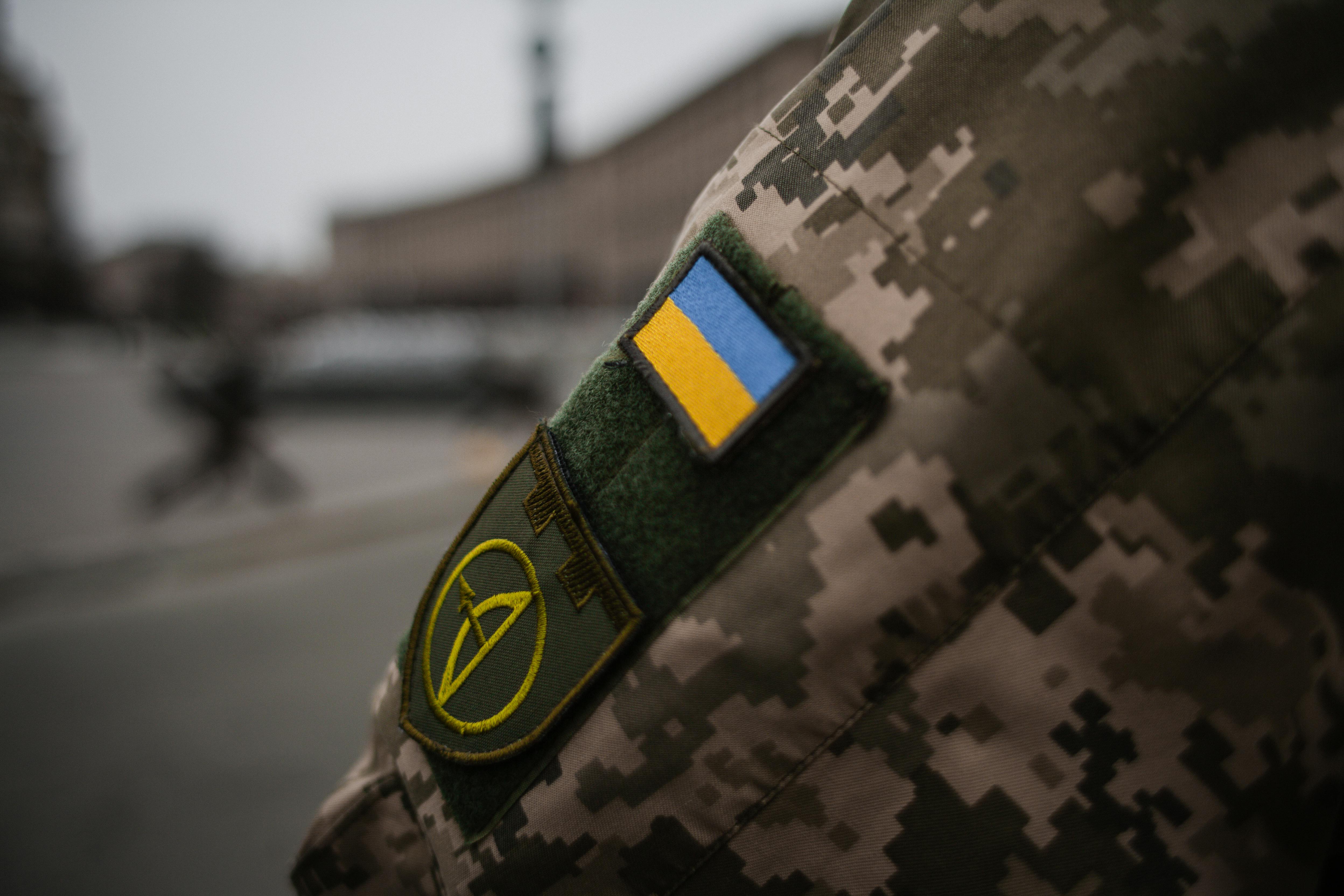
President Volodymyr Zelensky of Ukraine has openly voiced concern that the escalating military confrontation in the Middle East, specifically the recent US-Israeli strikes against Iran beginning February 28, 2026, could severely undermine Kyiv’s defense capabilities and diplomatic standing. While President Zelensky on March 3, 2026, commended the military action against a regime he describes as aspiring to build a nuclear weapon, the attendant geopolitical shift creates a complex threat matrix for Ukraine. This new reality introduces resource competition for critical defense assets, intense diplomatic pressure to accept territorial concessions, and a fundamental stress test on the reliability of long-term Western security guarantees.
The Proxy War Echo: Degrading Iran’s Support for the Kremlin’s Aggression
The most immediate strategic implication of the Middle Eastern conflict, from a purely military-material perspective, is twofold: the potential disruption of Iran’s military-industrial base, and the competitive strain on global air defense stockpiles. While the resource drain is a clear and present danger, the potential strategic upside—the degradation of Iran’s ability to fuel the Russian war effort—offers a small, conditional glimmer of hope that tempers the overall strategic dread. If the military action achieves its objectives against Iranian military and drone production capabilities, it could have a tangible, positive secondary effect on the battlefield in Ukraine.
Diminished Iranian Capacity to Arm Russian Forces
The most significant material benefit would be the forced reduction in the flow of lethal aid from Tehran to Moscow. Russian forces have become heavily reliant on Iranian-supplied Unmanned Aerial Vehicles (UAVs), often referred to as Shahed-type drones, for their campaign of terror against Ukrainian energy grids and civilian infrastructure. However, recent analysis suggests that Russia’s dependency has been in decline, as Moscow has worked to internalize the production of systems previously sourced from Tehran. Despite this, the military partnership remains significant, evidenced by Russia’s ongoing supply of advanced hardware to Iran, such as Mi-28 attack helicopters delivered as of January 2026, and a recent multi-million euro deal for “Verba” MANPADS. If the recent US-Israeli strikes successfully incapacitate manufacturing facilities, logistics hubs, or command structures responsible for this military-industrial relationship, the immediate replenishment pipeline for Russia’s drone arsenal would be severely compromised. This would force the Kremlin to rely more heavily on its own, often less capable or slower-to-produce, domestic equivalents, thereby reducing the intensity and effectiveness of Russian aerial attacks on Ukrainian cities. This strategic degradation provides a genuine, albeit indirect, form of military assistance to Ukraine.
Degradation of Drone and Missile Transfer Networks
The impact extends beyond just drone factories. The conflict targets the broader network supporting Iranian proxies across the region, which often overlap with channels used to transfer components or complete systems to Russia. A successful operation would disrupt the global logistical pathways Iran utilizes for illicit arms transfers. This disruption would not only starve Russia of its current supply but also complicate any future attempts by Tehran to rebuild that capacity while under direct military pressure. From Kyiv’s perspective, the goal is to fracture the very basis of the Moscow-Tehran military axis, making the cost of continued partnership for Iran prohibitively high, hopefully leading to a long-term reduction in material support for the invasion of Ukraine. On the flip side, the conflict introduces a major risk: the global premium on air-defense interceptors—missiles desperately needed by Ukraine to defend against Russian strikes—is increasing due to simultaneous demand from the Middle East.
Diplomatic Realignment and the Search for Peace Frameworks
The current geopolitical volatility is also accelerating diplomatic timelines, pushing all parties toward decisive action or irrevocable impasse. The international community, perhaps sensing a window of opportunity or a risk of further escalation, is intensifying efforts to shape a resolution to the conflict in Ukraine, often under terms dictated by the new American administration’s priorities.
Territorial Concessions as a Condition for Stalled Peace Talks
The ongoing, high-stakes negotiations—which involve Washington, Moscow, and potentially Kyiv—are increasingly being framed around the core issue of territorial compromise. Reports indicate that Moscow is considering suspending peace negotiations unless Ukraine agrees to formal recognition of its territorial gains, particularly in the Donetsk region. A potential decisive round of trilateral talks was slated for early March 2026 in Abu Dhabi. There is a pervasive fear that any deal brokered under the duress of the Middle Eastern conflict will inevitably involve significant concessions of currently held Ukrainian territory as the price for an immediate cessation of fighting and the resumption of US aid. President Zelensky has repeatedly emphasized that his side will not voluntarily withdraw from land they currently control, viewing such a move as a constitutional impossibility and a moral failure, stating that small border territories cannot be exchanged for the larger Donbas region. However, the pressure to accept a framework that freezes the conflict, even at a territorial loss, is intensifying as the perceived reliability of unconditional Western backing faces its greatest stress test yet. The Middle East crisis acts as a powerful external motivator, pushing Washington to seek a quick “win” or resolution in Europe to manage its broader portfolio.
The Unilateral Suspension of Intelligence and Aid Sharing
The recent breakdown in relations, which included a contentious Oval Office meeting between Presidents Trump and Zelenskyy followed by the US ordering a “pause” on military aid, represents the most severe action short of a total withdrawal of support. More recently, in early March 2026, the US also halted intelligence sharing, cutting off the flow of vital targeting data that supports strikes on Russian territory, in what appears to be a direct effort to pressure Kyiv toward a peace deal. This action suggests that the relationship is already operating on a transactional, high-risk basis. The Middle Eastern conflict provides the administration with both the justification and the opportunity to solidify this new, conditional arrangement. If aid is already paused for review, the rationale for quickly resuming full support to Ukraine becomes harder to articulate to a domestic audience preoccupied with a new war. The pause itself signals to Kyiv that the foundational trust necessary for sustained, long-term military partnership is fragile, and that external crises will always prompt a re-evaluation of commitments.
Historical Parallels and Future Uncertainty in Western Commitments
Ultimately, the fear harbored by the Ukrainian leadership is a deep-seated uncertainty about the longevity and reliability of the grand coalition supporting their defense. The Middle Eastern development serves as the ultimate stress test for the concept of enduring, fixed Western commitments to Ukraine’s territorial integrity.
Eroding Trust in Long-Term Security Guarantees
The core promise sought by Kyiv—robust, long-term security guarantees—is inherently undermined when the guarantor nation finds itself drawn into a simultaneous, potentially protracted conflict. Security guarantees are only as strong as the resources and political will dedicated to enforcing them. If the US focus shifts, the perceived value and enforceability of any future agreement, even those discussed regarding post-ceasefire security, diminishes. This forces Ukrainian strategists to ask uncomfortable questions: If a US President views the commitment to Ukraine as negotiable under pressure from a Middle Eastern crisis, what guarantees can be considered truly ironclad? This erodes the political foundation upon which long-term national planning, reconstruction efforts, and military recruitment depend. Past events, such as the earlier debate where President Trump suggested walking away from support or demanding land concessions, already introduced this element of doubt.
The European Coalition’s Role in a Post-US Pivot Scenario
In the event of a significant, sustained pivot of American focus and resources toward the Middle East, the responsibility for maintaining sufficient military support would inevitably fall more heavily onto the European allies. While European leaders have demonstrated increasing unity and capability—exemplified by their attendance at talks alongside Zelenskyy in August 2025—the scale of US military and financial support has, to date, been irreplaceable. The contingency planning in Kyiv must therefore account for a scenario where Washington either steps back from a leadership role or actively pressures for a final settlement. This would leave Ukraine reliant on a European coalition that is itself grappling with its own economic pressures, internal political divides, and the need to simultaneously bolster its own defense capabilities against a resurgent Russia. The current crisis accelerates the timetable for Ukraine to contemplate a future where its security architecture must be fundamentally rebalanced away from an over-reliance on a single, potentially distracted, global superpower. This multifaceted threat matrix, combining resource competition, diplomatic pressure, and the risk of strategic abandonment, forms the complex and evolving challenge at the core of the current geopolitical narrative surrounding Ukraine.