The Unseen Frontline: How Pakistan-Afghanistan Conflict Paralyses Central Asian Trade and Strains Domestic Stability
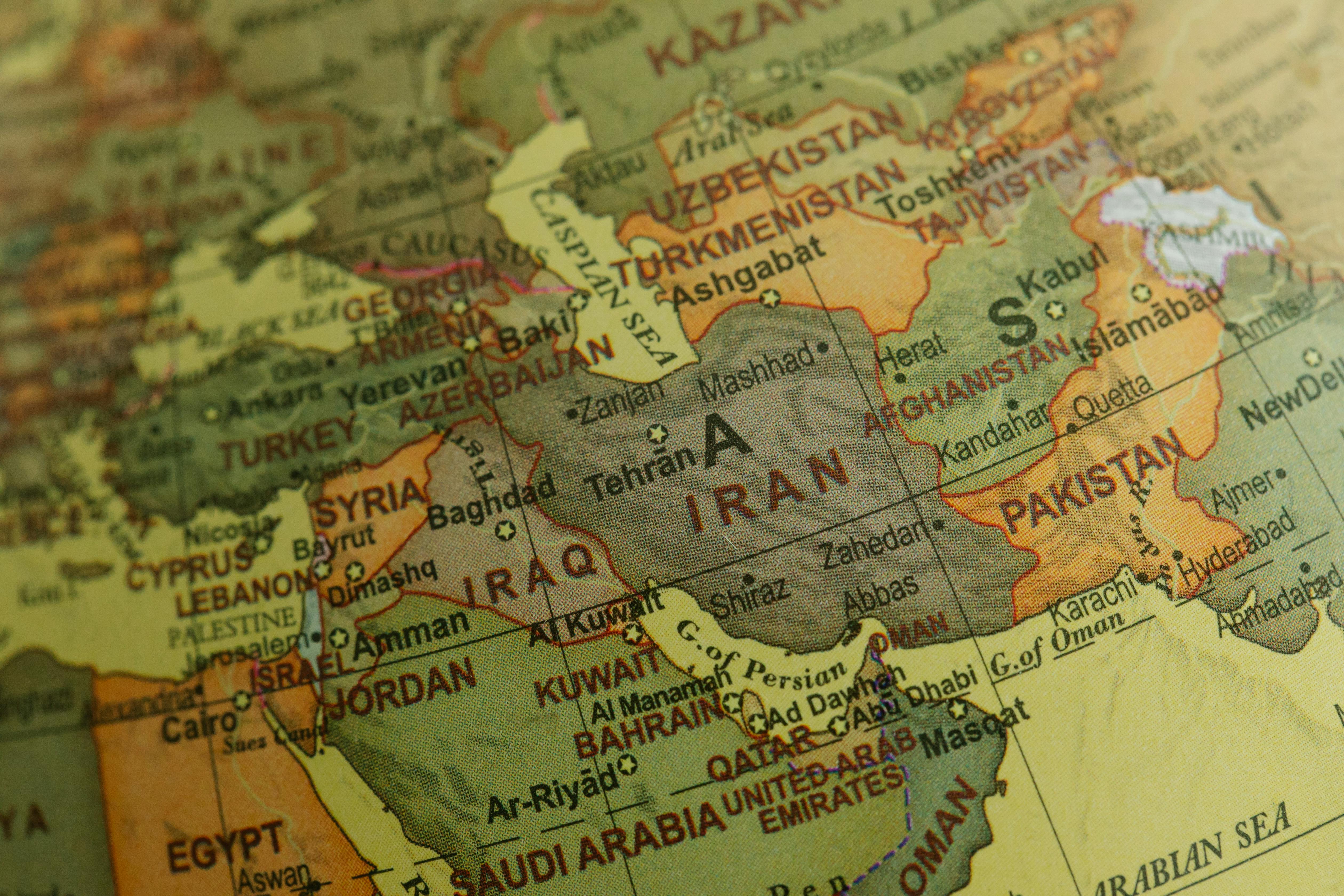
The ongoing, high-stakes confrontation between Pakistan and the Taliban administration in Afghanistan has escalated past sporadic border skirmishes into a state of intense military coercion, officially described by Islamabad as an “open war” as of late February 2026. This latest, severe phase of hostilities, marked by retaliatory airstrikes deep inside both nations’ territories, has precipitated the near-total paralysis of critical overland trade routes, shattering the fragile economic equilibrium of the region. While the immediate focus often rests on the military dimensions and the risk of regional spillover, the most profound and immediate structural damage is being inflicted upon the commercial lifelines that connect Central Asia to the Arabian Sea. More critically, the ripple effects are no longer a distant concern for transit partners; they are now manifesting as a corrosive domestic pressure point within the capitals of both conflict parties, forcing a recalibration of internal political calculus.
The Gridlock on the Durand Line: Trade Paralysis and Central Asian Reorientation
The arterial network of trade between South Asia and Central Asia, largely channeled through the Pakistan-Afghanistan corridor, is currently experiencing a systemic shock. The escalation in late February 2026 led to the immediate and indefinite closure of the primary commercial arteries, notably the Torkham and Chaman (Spin Boldak) crossings. These crossings, foundational to regional commerce for decades, are now effectively frozen to all commercial and pedestrian movement.
The Central Asian Pivot: Adjusting to a Structural Shock
For the landlocked nations of Central Asia—Uzbekistan, Tajikistan, and Turkmenistan—the repeated, weaponized use of border closures has forced a strategic reassessment. Confidence in the Afghan-Pakistani transit route as a predictable conduit to South Asian and maritime markets has significantly eroded. Central Asian governments are no longer viewing the instability as a temporary disruption awaiting diplomatic repair but as a structural condition that demands long-term adaptation.
- Diversification of Corridors: There is an observable strategic shift toward resilience and redundancy, primarily by intensifying the use of alternative overland corridors through Iran and, where possible, leveraging existing Central Asian rail and road networks.
- Infrastructure Prioritization: Central Asian states are reportedly strengthening their own border infrastructure and surveillance systems in anticipation of sustained instability along their southern frontiers.
- Geopolitical Realignment: The crisis accelerates a broader Eurasian reordering, pushing Afghanistan to deepen economic ties with Iran, India, Russia, and Central Asian partners, moving it away from the Pakistan-centric China-Pakistan Economic Corridor (CPEC) framework.
- Inflation in Perishables: The disruption to essential imports and transit goods has directly fueled domestic inflation. Traders report that the prices of fruits and vegetables, which previously flowed from or through Afghanistan, have skyrocketed. Tomatoes, for example, have reportedly seen price increases of as much as 400 percent in some Pakistani markets as of late February 2026.
- Customs Revenue and Community Funds: Beyond direct exports, the loss of transit fees and customs revenue—funds that were historically shared with surrounding communities—represents a direct hit to provincial economies, particularly in Khyber Pakhtunkhwa.
- Bilateral Trade Decline: Total bilateral trade between the two nations fell by $695 million in 2025 compared to 2024, settling at $1.766 billion, a decline of approximately 40 percent. Afghanistan’s exports to Pakistan shrank from $817 million in 2024 to $505 million in 2025.
- Supply Chain Integrity: The closure has ruptured supply chains for essential imports such as fuel, wheat, flour, and medicine. The diversion to more expensive Central Asian and Iranian routes mitigates the immediate cutoff but increases the landed cost of every commodity, exacerbating pre-existing inflationary pressures.
This reorientation, while necessary for survival, is inherently more costly. Longer transit corridors necessitate increased logistical expenditure, translating directly into higher final market prices for goods entering or exiting Afghanistan. The viability of massive infrastructure projects, such as those linked to CPEC that depend on a secure Kabul-to-Peshawar corridor, is now fundamentally compromised by the inflated risk premiums and political volatility.
Domestic Repercussions Within the Conflict Parties
The economic pain arising from the paralyzed trade is not being absorbed exclusively by the transit economies. It is registering sharply within the domestic financial and political systems of both Afghanistan and Pakistan, placing novel pressures on leadership to find a pathway toward de-escalation.
Internal Political Discourse Regarding Economic Costs
In both Islamabad and Kabul, the mounting ledger of economic damage is injecting a pragmatic, cost-benefit analysis into what has largely been a security-dominated political narrative. The economic consequences are no longer abstract calculations but tangible impacts on national revenue, supply chains, and household budgets.
The Calculus in Islamabad: Export Losses and Inflationary Pressure
For Pakistan, the immediate, quantifiable loss is staggering. Industry estimates suggest Pakistani exporters are losing approximately $177 million (PKR 50 billion) every month that the primary trade arteries remain shut. The broader bilateral trade volume fell by an estimated 40 percent in 2025 following earlier disruptions, a trend that has only worsened since the late-February escalation.
The economic impact manifests acutely in specific sectors:
This economic reality is fueling internal debate. While leaders frame military action as necessary to address militant sanctuaries, the sustained economic hit creates a domestic constituency that is increasingly vocal in demanding stabilization measures, subtly eroding the political mandate for maintaining the current high-tension status quo.
The Strains in Kabul: Supply Chain Collapse and Economic Isolation
For Afghanistan, a landlocked nation already grappling with immense humanitarian challenges, the trade blockade represents an existential threat to commercial continuity. The nation is critically dependent on Pakistan for transit trade, making the border closures exceptionally debilitating.
The statistics for 2025, even before the most recent and severe blockade, painted a dire picture of declining reliance on Pakistan:
The humanitarian dimension of this economic fallout is severe. With an estimated 95% of Afghan households already facing food insecurity before the current complete blockade, the rising cost of essential goods due to trade suspension directly threatens to push more families into hunger and famine-like conditions. This creates immense pressure on the Taliban administration’s ability to govern and maintain internal stability.
Pressure on Local Industries and Employment Sectors
The immediate consequence of the border gridlock is the severe distress suffered by ancillary industries directly dependent on the flow of goods across the Durand Line. These sectors now form a powerful, grassroots constituency advocating for pragmatic economic recovery over continued security posturing.
Logistics and Border Economy Collapse
In the Pakistani border city of Peshawar, for instance, the impact on the logistics ecosystem is stark. A representative for customs clearing agents at Torkham estimated in January 2026 that the sustained closure had resulted in the unemployment of up to 3,000 local workers and more than 1,000 customs agents alone. Hundreds of trucks, loaded with both perishable and non-perishable cargo, remain stranded, leading to spoilage, contract losses, and a growing “Logistics Risk Window” where stationary equipment deteriorates.
Similarly, Afghan traders and transporters face massive, daily financial hemorrhaging. The sheer volume of stranded containers—reportedly exceeding 5,000 at the border as of late February 2026—represents an immense immobilization of capital and a direct threat to the viability of countless small and medium enterprises that underpinned the cross-border economy.
The Shifting Dialogue
This tangible, grassroots economic dissatisfaction is subtly reshaping the internal dialogue in both nations. Where discussions might have previously centered purely on security justifications—countering the TTP in Pakistan’s narrative or defending sovereignty in Kabul’s—the debate is now inevitably shifting toward the pragmatic necessity of stabilizing local economies. Leaders, constrained by the need to project strength on one hand and manage an internal economic crisis on the other, find their calculus complicated by the growing number of constituents whose immediate survival is linked to the reopening of the border.
Escalation and the Limits of Leverage: Looking Ahead to March 2026
The current situation—a declaration of “open war” punctuated by strategic air strikes and the complete shutdown of trade—represents a dangerous maturation of the conflict from border skirmishes to state-on-state coercion. The structural challenges remain formidable: Pakistan’s security calculus is shaped by decades of insurgency and the perceived sanctuary provided to militants like the TTP, while the Taliban administration is constrained by ideological commitments and a limited capacity to enforce discipline across all provincial elements.
The instruments wielded by external powers, such as China whose vision for CPEC connectivity is now imperiled, are primarily economic, yet the drivers of this conflict are deeply rooted in militant, political, and sovereign disputes. This mismatch between economic interest and political reality defines the current limits of regional influence. While the immediate suffering is economic, the long-term risk is the cementation of a durable border militarization regime, locking in hostility and depressing any near-term prospect for economic stabilization or regional interdependence. The unfolding situation confirms a clear trajectory: the Afghanistan-Pakistan conflict has transcended a bilateral security matter to become a central, determining factor in the economic health and political stability of the broader Central and South Asian theatre as of this date, March 5, 2026.