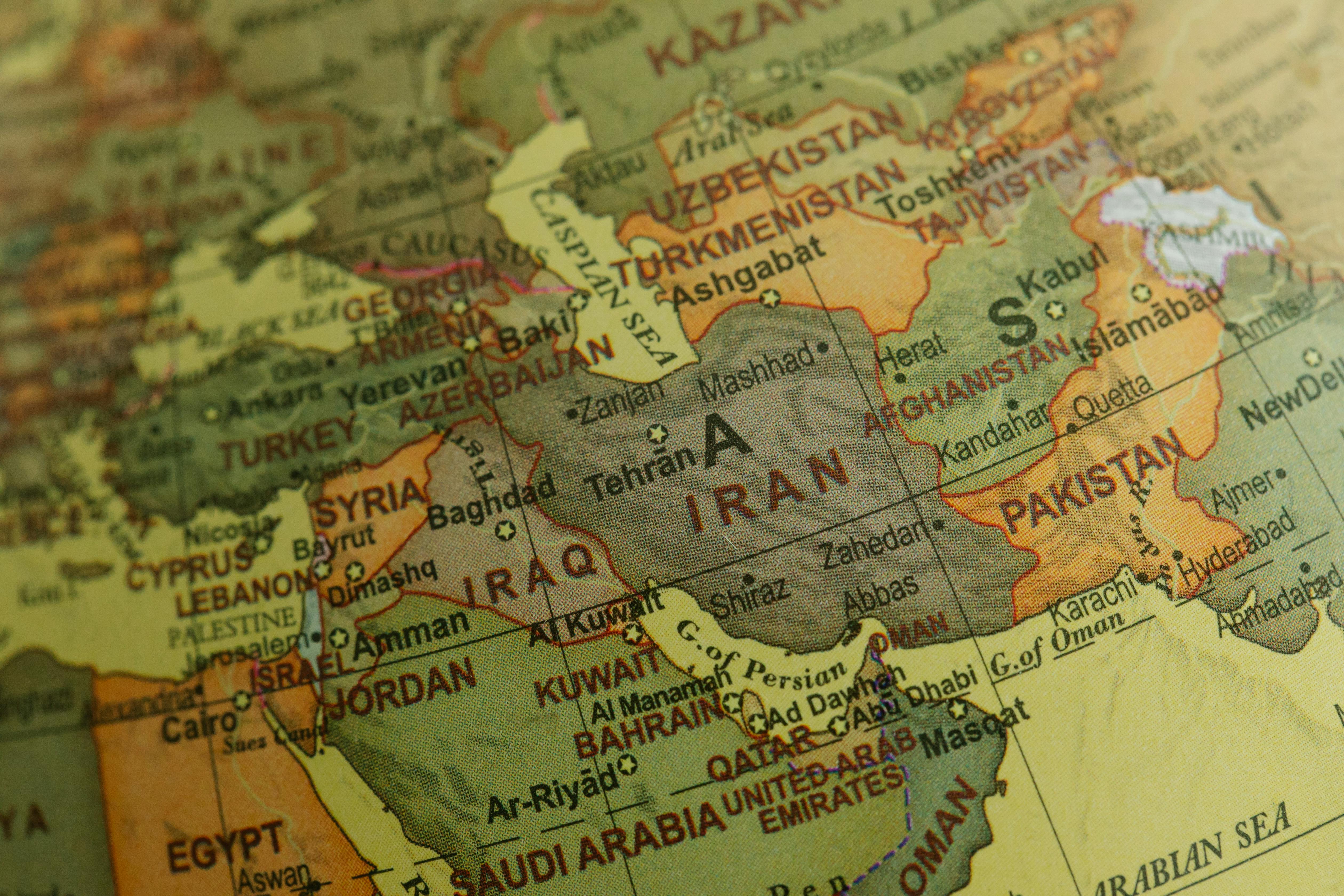
Regional Intersections: The Role of External and Internal Security Concerns
Pakistan’s delicate diplomatic tightrope walk could not be performed in a strategic vacuum. Every move was constrained, and every benefit weighed against, persistent, volatile security realities on its own frontiers. The country’s foreign policy calculus is fundamentally anchored by internal and immediate external pressures that dictate the credible limits of its external military projection.
The Perpetual Western Border: Ongoing Instability with Afghanistan
Along its western frontier, Pakistan remained mired in a state of sustained, low-level conflict and instability stemming from elements operating across the border with Afghanistan. This enduring challenge meant that a significant portion of Pakistan’s military focus and resources—including intelligence assets, logistical chains, and deployable quick-reaction forces—remained tethered to internal security and border management. This logistical reality intrinsically limited its ability to credibly commit substantial, sustained forces to a potential external conflict involving Iran and the Gulf monarchies. Furthermore, any perceived over-commitment to the Saudi-led regional security structure risked alienating factions within Afghanistan or failing to adequately address emerging threats originating from that ungoverned space. This internal security anchor fundamentally dictated the upper limit of Islamabad’s external strategic posture, compelling extreme caution in its engagement with the Gulf conflagration. To commit fully to the SMDA in a kinetic scenario would have meant dangerously thinning its border security, a risk few nations are willing to take.
The Shadow of the Eastern Neighbor: Managing the India Dynamic Post-Conflict. Find out more about Pakistan Saudi Iran defense pact activation ambiguity.
The shadow of the conflict with India, particularly following the significant military engagement reported in May 2025, continued to shape Pakistan’s defense and diplomatic planning. Any perceived distraction or overextension of Pakistani military assets toward the Middle East could be interpreted by New Delhi as a strategic opening or a moment of vulnerability to be exploited. This inherent strategic vulnerability necessitates a constant balancing act, even as the country pursues high-level Gulf security arrangements. Moreover, India’s own growing strategic partnership with Iran, particularly concerning crucial connectivity projects like the Chabahar Port, added a complex layer to Pakistan’s engagement with Tehran. Pakistan’s vocal support for Iranian sovereignty, while necessary for its relationship with Tehran, risked creating diplomatic friction with New Delhi, which was simultaneously navigating its own complicated relationship with Washington and the Gulf states amidst the wider regional chaos. Thus, the tightrope walk involved managing not two, but three or four intersecting geopolitical relationships simultaneously, all heightened by the current military crisis. The successful navigation of the SMDA challenge hinged on projecting strength outward while ensuring the eastern flank remained stable—a near-impossible feat without calculated restraint. A closer look at the strategic implications for South Asia can be found in analyses of **South Asian defense planning**.
The Economic Bedrock: Migrant Flows and Remittances Under Duress
Beneath the layers of strategic signaling and diplomatic maneuvering lies an immutable economic reality that places a firm, pragmatic constraint on every decision made in Islamabad: the nation’s deep financial reliance on its expatriate workforce residing in the Gulf Cooperation Council (GCC) states.
The Expatriate Community: A Critical Source of National Financial Stability. Find out more about Pakistan Saudi Iran defense pact activation ambiguity guide.
Millions of Pakistani nationals form the essential labor backbone of the region, and the billions of dollars in remittances they send home constitute an indispensable component of the nation’s foreign exchange reserves and overall economic stability. Any major regional conflict, leading to economic contraction, mass labor repatriation, or disruption of financial transfer systems, poses an existential threat to Pakistan’s domestic economy, independent of any direct military action. This economic lifeline forces Islamabad to prioritize the protection of its workers and the continuation of remittances above ideological alignment or rigid treaty obligations. The stability of the Gulf was, therefore, not a foreign policy preference for Pakistan; it was an internal economic imperative. The recent tension highlighted this fragility, especially given that the KSA alone had extended significant financial support recently.
Impact on Labor Mobility and Future Economic Engagement
Beyond immediate remittances, the crisis threatened the long-term structure of labor mobility between South Asia and the Gulf. If the conflict resulted in a prolonged downturn or a fundamental restructuring of the security environment, the established channels for Pakistani labor export—a foundational element of the nation’s employment strategy—could be jeopardized. The nation’s strategic goal was to translate its new, proactive diplomatic relevance into tangible economic dividends. The premise was that security guarantees should translate into favorable trade terms, increased investment flows, and easier access for labor. However, if Pakistan was perceived as being dragged into an intractable regional quagmire or failing to secure stability, these prospective economic benefits could rapidly diminish. Therefore, every diplomatic communication carried a dual purpose: assessing the strategic alignment offered versus the economic risk incurred. Calculating how much strategic loyalty could be extended without jeopardizing the foundation of the nation’s financial architecture was a key, ongoing calculation. Actionable takeaway: For nations whose stability rests on remittances, foreign policy must always be conducted with an eye on the next quarterly balance of payments.
Shifting Alliances: The Trilateral Framework and Distrust Vectors. Find out more about Pakistan Saudi Iran defense pact activation ambiguity tips.
The current crisis underscored the vulnerability inherent in relying too heavily on any single patron or alliance structure, driving home the necessity for Pakistan to nurture a more resilient, layered security framework within the broader Muslim world, moving beyond historical dependencies.
The Saudi-Pakistani-Turkish Security Recalibration Effort
Recent high-level security architecture discussions have pointed toward an evolving effort to build a more robust regional structure. These discussions centered on expanding the existing Saudi-Pakistani SMDA to potentially include Turkey, creating a significant trilateral security grouping. This proposed framework, built on collective-defense principles, aimed to combine Saudi capital and political heft with Pakistan’s established military deterrence perception and Turkey’s mature defense industrial base. The current flare-up served as a crucible, proving the concept’s necessity by demonstrating the region’s vulnerability to unilateral external action. Progress in this trilateral structure, however, is anticipated to manifest first in quiet, measurable industrial partnerships and joint exercises rather than overt collective military action, signaling a slow, deliberate recalibration of regional security away from historical dependency patterns. This effort reflects a strategic desire to create security arrangements that are less susceptible to the shifting priorities of distant global powers. Those following global defense trends should pay close attention to these developing **trilateral defense structures**.
Intra-Islamic Bloc Friction: Sunni-Shia Dynamics Under the Microscope
The inherent sectarian dimension—contrasting the Sunni-majority alignment of Pakistan and Saudi Arabia against Shia Iran—remains a deep-seated, structural impediment to a truly harmonious regional order. While the immediate crisis demanded pragmatic cooperation to secure the Saudi territory guarantee, the underlying ideological and sectarian fault lines are historically prone to exploitation by regional rivals. Iran’s historical distrust of Pakistan’s deep association with the Kingdom, a key rival in the regional influence competition, continued to inform Tehran’s strategic assessments throughout the flare-up. For Pakistan, navigating this requires careful management to ensure that necessary cooperation with Riyadh does not solidify an identity as being fundamentally *against* Iran, especially given the critical shared border and historical ties. The current events tested the ability of pragmatic statecraft to overcome these deep-seated religious and political schisms, demanding that diplomacy focus sharply on shared, immediate security threats rather than long-term ideological competition. For those studying the mechanics of religious-political statecraft, this scenario presents a crucial case study in prioritizing national interest over sectarian solidarity when the stakes are existential. Analyzing **Sunni-Shia dynamics in regional security** is key to understanding the region’s future.
Navigating the Aftermath: Pakistan’s Path to Strategic Autonomy. Find out more about Pakistan Saudi Iran defense pact activation ambiguity strategies.
The successful navigation of this acute crisis, thus far, has been a testament to calculated restraint and pragmatic diplomacy under severe strain. However, the exercise exposed inherent risks that will shape Pakistan’s long-term foreign policy. The ultimate goal is not to choose a side in the regional contests, but to build enough diversified leverage so that no single regional crisis can fundamentally dictate the nation’s security or economic fate.
Diversifying Partnerships: Beyond the Gulf Axis for Future Stability
The inherent fragility demonstrated by the conflict—where alliances built on paper proved immediately insufficient or overly restrictive in their activation—underscores the long-term imperative for Pakistan to diversify its strategic and economic engagement. The crisis highlighted the risks of becoming over-reliant on any single bloc or diplomatic posture. In the aftermath, a sustained policy focus would likely pivot toward securing robust, low-conditionality relationships with non-aligned powers. This suggests enhanced engagement with powers like China and Russia, as well as strengthening non-Gulf-centric connectivity projects that offer alternative trade routes. True **strategic autonomy in volatile environments** is not about choosing one bloc over another; it’s about building enough counter-leverage so that one actor’s crisis cannot unilaterally dictate your security or economic trajectory. The tightrope walk, therefore, is not merely a reaction to the present flare-up but a long-term strategy for national resilience.
Lessons from Past Betrayals: The Quest for Reliable External Guarantees. Find out more about Pakistan Saudi Iran defense pact activation ambiguity overview.
A significant, underlying current driving Pakistan’s cautious approach is a historical skepticism regarding the reliability of external security guarantees—a sentiment widely shared by many Gulf monarchies who recall past shifts in commitment from distant allies. The speed and scope of the US and Israel’s actions, followed by the scramble for immediate bilateral assurances, reaffirmed the lesson for all regional states: in the final analysis, you must secure your own core interests. Pakistan’s measured moves—securing the binding Saudi pact, but simultaneously reassuring Iran—are pragmatic steps toward creating a localized deterrence network that is less susceptible to the sudden policy shifts of global powers. The ultimate objective of this calculated ambiguity is to leverage its unique geopolitical position—bridging the Sunni and Shia worlds, sharing a border with Iran, and maintaining deep economic ties with the Gulf—to establish a position of *indispensable mediation*. This positioning, rather than rigid alignment, is the surest way to guarantee Islamabad’s influence and long-term security without forfeiting its essential autonomy.
Key Takeaways and Actionable Insights for Navigating Geopolitical Strain
This crisis offers clear lessons for policymakers, analysts, and even businesses operating in dynamic geopolitical spaces:
- Prioritize Ambiguity in New Pacts: Automaticity is a strategic trap. Embed flexibility into new defense agreements that allows for political signaling without demanding immediate, unfavorable kinetic commitment.. Find out more about Strategic ambiguity in Pakistan Saudi alliance signaling definition guide.
- Maintain Digital Backchannels: In high-speed crises, traditional bureaucracy is an impediment. Ensure your top diplomat has direct, real-time digital access to counterparts in rival capitals. Speed saves lives and prevents escalations driven by procedural lag.
- Link Security to Economics: The greatest constraint on foreign policy was not ideology, but the billions in remittances. Any security guarantee must include a clear pathway for protecting the economic lifelines that sustain the domestic economy.
- Diversification is Resilience: Relying too heavily on one bloc creates a single point of failure. A robust policy seeks durable, low-conditionality relationships across the geopolitical spectrum to cushion against regional shocks.
The successful navigation of the SMDA’s inaugural stress test proves that in the 2026 world, strategic value lies not just in military might, but in the ability to be the indispensable actor *between* the major players. Pakistan has thus far mastered this art.
What do you believe is the next major diplomatic hurdle for Islamabad in solidifying its role as a regional mediator? Share your thoughts in the comments below—let’s keep this vital discussion moving forward.