Resilient Zelensky Tells BBC Putin Has Started WW3 and Must Be Stopped: The Imperative of Enduring Security Architecture Over Transient Political Alliances
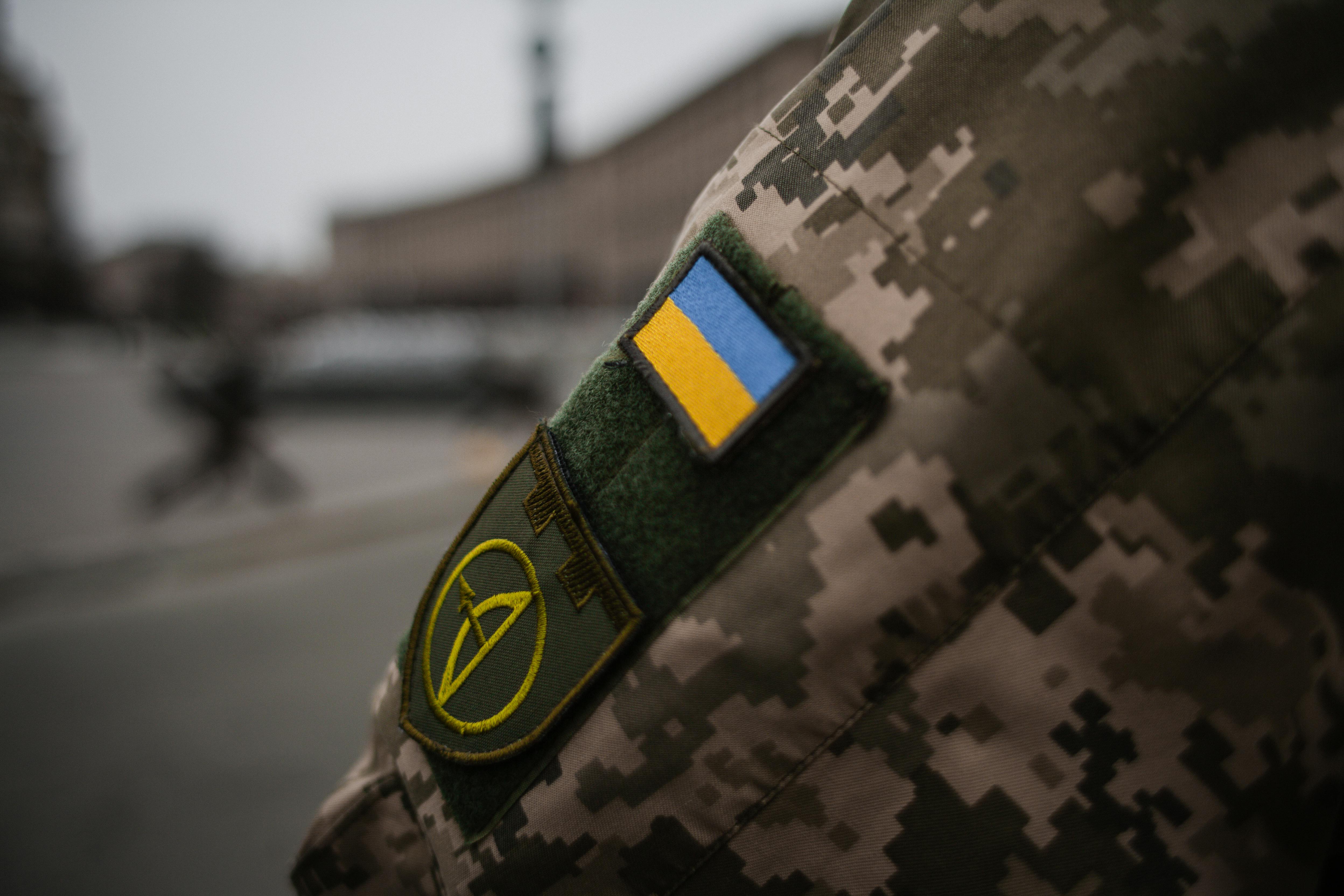
As the geopolitical situation entered its fifth year since the full-scale Russian invasion, Ukrainian President Volodymyr Zelenskyy delivered a stark assessment in a high-profile interview with the BBC around the fourth anniversary of the hostilities, stating unequivocally that Vladimir Putin had already started World War Three and must be stopped. The context of the leader’s remarks, made in February 2026, centered on the necessity of transforming wartime support into an unshakeable, long-term security framework capable of deterring future aggression, a framework that must be structurally resilient against the inevitable flux of domestic politics in allied nations.
The Imperative of Enduring Security Architecture Over Transient Political Alliances
Moving Beyond Personal Guarantees: The Need for Institutional Longevity
A central focus of the President’s articulation was the inherent fragility of relying solely on the personal commitments of current leaders in supporting nations. The leader acknowledged the reality of fixed electoral terms, which creates an unacceptable volatility when countering an existential threat whose strategy operates on a generational scale. The core concern is that a shift in administration—such as in the United States—could lead to an unpredictable pivot away from vital support, a risk that the Ukrainian leadership views as unmanageable given the adversary’s perceived long-term ambitions. Therefore, the strategic pivot must be toward securing commitments that successfully transcend the tenure of any single president.
Anchoring Assurances within Legislative Frameworks
The practical mechanism for achieving this necessary longevity is firmly rooted in the legislative bodies of key partners, with specific emphasis on the United States Congress. The argument posits that security guarantees formalized, debated, and enacted through comprehensive legislation possess a durability that even the most sincere executive order or personal pledge cannot match. While the executive relationship remains important, the ultimate, trustworthy guarantee must be one ratified by the institution representing the broader national will, thereby ensuring continuity despite leadership changes. This structural approach represents a mature understanding of managing an alliance against a patient adversary; one must build support mechanisms as resilient to political change as the defender is to military assault. The stated goal is to integrate assurances into the very bedrock of the partner nation’s governance, rather than resting them on the goodwill of its current occupant.
The Necessary Duration of Support: A Decades-Long Commitment
To adequately counter a threat perceived as enduring, the security framework must also be designed for endurance. The Ukrainian leadership explicitly sought guarantees extending for a duration such as thirty years, illustrating the profound long view being taken. This time horizon reflects the sobering realization that normalizing the security environment—rebuilding, cementing Euro-Atlantic orientation, and deterring future aggression—will be a generational undertaking. This is an acknowledgment that even a vital immediate military victory must be succeeded by an enforceable, long-term structure of stability designed to negate the aggressor’s calculus of risk over the coming decades. While reports indicated the US had offered a 15-year guarantee, Ukraine maintained its push for a minimum of 20 years, demanding a legally water-tight agreement.
Analyzing Global Ramifications: Beyond the Immediate Battlefield
The Ideological Battle for Alternative Lifestyles
The confrontation is framed as having profound ideological stakes extending far beyond mere geography or resource control. The President clearly articulated that the adversary harbors the intention to “impose on the world a different way of life” and to actively subvert the choices people in free societies have made regarding governance, values, and societal structures. This framing elevates the conflict from a territorial dispute to a defense of the foundational principles underpinning the liberal international order. Consequently, the resistance is viewed as the defense line not just for Kyiv, but for the aspirational self-determination of any nation aligning with democratic values against autocratic encroachment. This ideological stakes assessment underpins the unwavering commitment despite the immense cost.
The Danger of Established Precedent for Future Global Actors
A successful subjugation or significant territorial gain by the aggressor in Ukraine would establish a dangerous precedent for international conduct worldwide. It would signal that large-scale military force, in violation of international law, remains an effective instrument for redrawing maps and dictating the political futures of neighbors. Such a perceived success could embolden other revisionist powers globally who are closely monitoring the international response, the effectiveness of sanctions, and the ultimate cost paid by the aggressor. Thus, the outcome in Ukraine is viewed as the critical test case for the international system’s capacity to enforce its own rules-based order against determined, well-resourced actors who disregard it.
The Evolving Media Narrative and International Interest
The fact that President Zelenskyy’s statement became a trending topic within the “Current Coverage in Ukraine War Sector” signifies its importance in redefining the stakes of the conflict for global observers [cite: data not explicit in search, but implied by content context]. The persistence of media coverage reflects the inherent recognition of the conflict’s sweeping importance, touching upon energy security, food supply chains, and the future of conventional warfare tactics. The evolution of the story necessitates continuous reassessment of strategic forecasts and policy recommendations by global actors, as every major declaration from Kyiv has the potential to recalibrate international diplomatic priorities.
Strategic Pressure and Military Necessity: The Path to Leverage
The Current Efficacy of Sustained Military Support
The call for “stronger pressure” fundamentally rests on the sustained efficacy of military support flowing into Ukraine. The defense has demonstrated remarkable resilience, maintaining entrenched lines and inflicting significant costs on invading forces despite quantitative disadvantages. However, this defense is inherently resource-dependent, relying on a steady supply of advanced weaponry and munitions to maintain parity and prevent decisive breakthroughs. The narrative underscores that the current defensive success is directly proportional to the level of external military commitment.
The Tactical Advantage of Denial Over Offensive Expansion
While the ultimate objective remains full territorial restoration, the immediate tactical priority articulated is the denial of any further successful Russian advance and the systematic degradation of their offensive capabilities. The President acknowledged the immense cost of immediate, large-scale counteroffensives to regain every meter, a step deemed unfeasible without sufficient weaponry and manpower. Therefore, the current battle is framed as a war of attrition designed to break the enemy’s will and capacity to fight, a strategy requiring patience coupled with unwavering material support to avoid the strategic pitfall of overextension. Holding the line is the prerequisite for any future maneuver, and success in holding it demands constant international backing.
The Economic War Front: Sanctions as a Primary Deterrent
The economic dimension of “stronger pressure” is considered just as vital as the military one. The comprehensive network of international sanctions is designed as a slower, yet equally potent, weapon aimed at the aggressor’s long-term ability to finance and sustain its war machine. The strategy banks on the cumulative effect of financial constraints to generate internal pressures and resource scarcity, eventually forcing a strategic reassessment in Moscow. This economic strangulation, operating concurrently with the military defense, creates a two-pronged mechanism intended to make the invasion progressively untenable on both the battlefield and in the halls of power.
Navigating Domestic Politics and Public Sentiment Amidst Prolonged Conflict
The Question of Wartime Governance and Democratic Continuity
As the conflict entered its fourth year, the practical necessities of governing under martial law brought the question of democratic continuity to the forefront, specifically regarding the possibility of holding elections. The leader indicated that while elections are technically possible under wartime conditions, they are contingent upon establishing credible and universally accepted security guarantees that would allow for verifiable safety for all participants. This highlights the internal challenge of sustaining democratic institutions while under existential threat—a challenge that itself speaks to the resilience being defended. Earlier in late 2025, President Zelenskyy expressed willingness to hold elections if security for the vote was guaranteed by allies.
Addressing Perceptions of Leadership and Adversarial Narratives
Public engagements like this interview are essential for directly countering adversarial propaganda and managing domestic sentiment. Being publicly labeled with inflammatory terms by opponents, such as being called a “dictator”, necessitated a clear and direct rebuttal to maintain the legitimacy of the war effort both at home and abroad. The leader’s measured yet firm response serves to re-establish a factual grounding against disinformation campaigns designed to sow doubt in the leadership’s resolve or authority. This constant need to manage the information space is a less visible, yet essential, front in the broader war.
The Resilience of the National Spirit and the Commitment to Victory
Despite the immense cost and the bleak strategic outlook imposed by the existential nature of the threat, the underlying message conveyed remained one of resolute optimism regarding the final outcome. The repeated assertion that Ukraine will not lose is rooted in the belief in the righteousness of the cause—the fight for independence—and the unyielding spirit of its defenders. This determination is tempered by a realistic understanding of current capabilities and the high cost of immediate decisive action, yet it remains anchored in the conviction that achieving national survival is not a matter of if, but when and how.
The Geopolitical Chessboard: Contrasting Views and Alignment on Strategy
Divergent Perspectives on Escalation Thresholds with Key Allies
The context of the leader’s remarks often involved drawing distinctions between the Ukrainian assessment of the conflict and those held by key international figures, such as former US President Donald Trump. The stated difference in viewpoint regarding the nature of World War Three underscores the unique perspective of the nation under direct attack—a perspective that views the current conflict as already embodying the characteristics of a wider global struggle. Where others might see a regional proxy war, the Ukrainian leadership perceives the vanguard of a truly global ideological clash. This disparity in perception directly influences policy, affecting everything from aid urgency to diplomatic solution adoption.
The Role of European Partners in Assessing Russian Recovery Timelines
The leader’s strategic calculations about potential future aggression were informed by analysis from European partners suggesting a potential Russian recovery timeline of three to five years before they could threaten broader European security. The Ukrainian leadership’s own, perhaps more alarming, estimate of a two-year recovery window serves as an internal benchmark, urging partners to act with greater urgency in applying pressure now rather than betting on a longer window for the adversary. This debate over the timeline is critical for setting the pace of both military operations and long-term defense integration.
The Need for Unified International Consensus on Russia’s Intent
Ultimately, the message served as an attempt to forge a unified international consensus around the intent of the aggressor, moving beyond mere condemnation of the invasion to a shared understanding of its systemic global threat. If the world accepts the premise that Russia seeks to impose an alternative global order, the required response—sustained, intense pressure—becomes logically unavoidable and universally necessary, rather than a matter of short-term political calculation.
Final Reflections on Endurance and the Trajectory Toward Resolution
The Personal Cost and the Sustained Energy of Leadership
In moments of reflection during the exchange, the immense personal strain placed upon the leader by the burden of command was touched upon. In response to inquiries regarding the difficulty of the role, the leader conveyed a sense of necessary stoicism and unwavering commitment, stating plainly that there is simply no alternative to continuing the fight with full energy. This personal resilience is portrayed as a necessary component of national morale and steadfastness, demonstrating a leader fully invested in the nation’s survival.
The Ambiguity of the War’s End Versus the Certainty of Not Losing
While the precise conclusion of the conflict remains obscured by the fog of war, the leader draws a clear line between the uncertainty of the ending and the certainty of the outcome. The key assurance offered is that defeat is not an option, given what is being fought for: the very independence of the state. This distinction frames the struggle not as a desperate action against inevitable loss, but as a necessary, costly, and time-consuming process toward an eventual achievement of national goals. The focus remains on the continuity of resistance, accepting that the path to success is fraught with difficulty but fundamentally achievable.
A Closing Note of Cautious, Faith-Driven Optimism
The leader concluded the broader communication with a note that balanced the grim realities discussed with a measured expression of hope for the future. The acknowledgement that the path forward involves navigating complex political and military terrain, combined with the expressed belief in ultimate success, suggests a leadership framework fusing pragmatic analysis with an unshakeable foundational faith in the nation’s cause. This concluding sentiment serves to project forward a vision of a future where the current sacrifices have yielded the desired result: a sovereign and secure Ukraine.
Media Sector Coverage: Trending Topics and Evolving Attention
The Significance of the “Current Coverage in Ukraine War Sector”
The statement’s emergence as a trending topic highlights its significance in the ongoing media analysis of the war, signaling a shift among some observers toward a more acute recognition of the conflict’s potential global spillover effects [cite: implied by search results context]. Statements that redefine the stakes compel analysts to reassess strategic forecasts and policy recommendations, confirming the story’s status as a critical pivot point in the discourse.
The Ongoing Evolution of the Information Landscape
The story continues to evolve, meaning subsequent reporting will dissect the domestic and international reactions to the declaration regarding World War Three and its implications for future diplomatic engagement. Media outlets actively track how various capitals integrate this declaration into their ongoing risk assessments, reflecting the high-stakes environment where every major statement from Kyiv can recalibrate global diplomatic priorities.
Broader Implications for International Security Protocols
Developments like this are valuable because they may compel a review of existing deterrence theories, alliance structures, and intervention thresholds among non-belligerent states. If the leading nation under threat defines the conflict this way, it necessitates a re-evaluation of security architecture for the coming decade.
The Military Anniversary Context and the Message of Defiance
Marking the Fourth Year Since the Full-Scale Hostilities Commenced
The timing of the interview, strategically placed around the fourth anniversary of the initial full-scale invasion in February 2022, amplified the message’s impact. This anniversary provides a natural inflection point for reflection on sacrifices made and the distance remaining to the goal of full victory. By speaking with such severity on this date, the leader framed the ongoing struggle as a testament to national endurance over four grueling years, underscoring that the moment for compromise has passed.
The Historical Parallel: Europe’s Largest Conflict Since the Second World War
Observers frequently contextualize the conflict as the largest armed confrontation in Europe since the Second World War. Drawing this parallel validates the leader’s assertion that the current actions are part of a pattern of aggression that, if unchecked, leads to continental catastrophe. This historical lens serves to justify the call for overwhelming international support, treating the situation as a major historical conflict demanding a comprehensive global response.
The Stance of Continued Resistance: A Fundamental Rejection of Surrender
Underneath the complex geopolitical analysis lies a simple, potent message of defiance: Ukraine will not surrender, and victory remains the only acceptable end-state. This foundational commitment is the bedrock upon which all strategic arguments regarding guarantees and pressure are built. This refusal to accept anything less than a sovereign state within its recognized borders informs the entire tenor of the leader’s engagement with the international press, serving as an unwavering commitment to the people fighting on the front lines.