The War That Cracked the Postwar Order Illusion: Autonomy Born of Necessity and Systemic Realignment
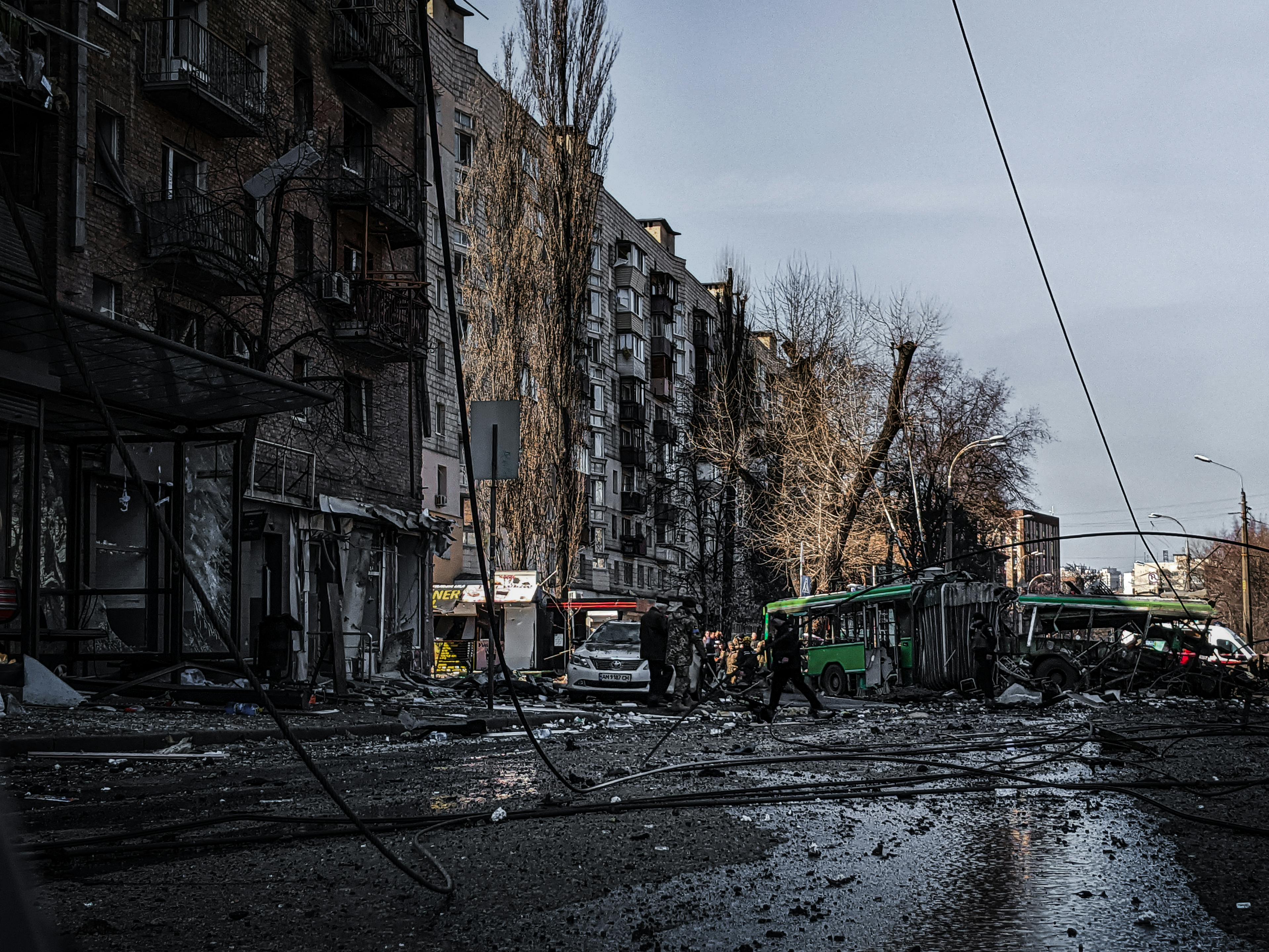
As of March 2026, the international system is operating within a radically redrawn architecture, one fundamentally shaped by the prolonged conflict in Ukraine that began in 2022. The initial assumption that the postwar liberal order possessed inherent shock-absorbing resilience has been shattered. What emerged from the geopolitical convulsions of 2024 and the operational realities of 2025 is an environment defined by managed instability, accelerated strategic competition, and a forced pivot toward national and regional autonomy born of necessity.
V. The Remaking of European Security: Autonomy Born of Necessity
The direct confrontation in Eastern Europe served as the primary catalyst forcing the European continent to internalize the cost of security dependence. The period since 2024 has marked a decisive shift from conceptual ambition to concrete, if painful, implementation regarding collective defense and financial sovereignty.
V.A. The Mandate for Defense Acceleration and Joint Capacity Building
Necessity, in this fractured environment, is proving to be the mother of urgent European integration on defense matters. The agreement reached at the mid-year summit to significantly escalate collective defense spending, committing major economies to a substantial percentage of Gross Domestic Product for military investment over the next decade, represents a direct, tangible response to the broken illusion of effortless collective security.
The most significant manifestation of this was the Hague NATO Summit in June 2025, where alliance members endorsed a new, decade-long investment framework. This framework established a commitment that member states would allocate 3.5% of GDP to core defense and an additional 1.5% of GDP to defense-related expenditure—such as critical infrastructure resilience, digital network defense, and industrial base enhancement—by 2035. This signifies a commitment to building independent, robust, and interoperable European military capabilities capable of sustaining prolonged security commitments without requiring constant affirmation from across the Atlantic.
This is not mere rhetoric; it signifies a commitment to building independent, robust, and interoperable European military capabilities capable of sustaining prolonged security commitments without requiring constant affirmation from across the Atlantic. In a stark illustration of this trend, estimated data suggested that by the end of 2025, total defense expenditure across the 27 EU Member States would reach approximately €381 billion in constant 2024 prices (2.1% of GDP), exceeding the long-standing 2% NATO guideline for the first time since data collection began. This upward trajectory underscores a fundamental re-prioritization of hard power within European political calculus.
V.B. Financial Statecraft and the Weaponization of Frozen Assets
Beyond military hardware, the European Union’s proactive development of mechanisms to leverage frozen Russian Central Bank assets for Ukrainian reparations signals a significant, unprecedented escalation in the use of economic tools as instruments of direct geopolitical coercion and long-term accountability.
Following a call from the European Council in October 2025, the European Commission presented proposals in December 2025 for a “Reparations Loan” to meet Ukraine’s 2026-2027 financial needs, estimated at up to €90 billion. This mechanism is designed to utilize the cash balances linked to immobilized Russian central bank assets—estimated at roughly €290 billion in the West, with over half held at Euroclear in Brussels—as collateral for the loan. The structure aims to secure the funds for Kyiv while maintaining the argument that the EU is not engaging in direct confiscation of sovereign assets, as repayment would theoretically derive from future Russian reparations upon conflict resolution.
This move, while aimed at Moscow, also demonstrates to other global actors a willingness to stretch the accepted norms of international finance for strategic ends. It establishes a new, potentially volatile precedent for how sovereign wealth and international reserves may be treated in future conflicts, adding another layer of systemic unpredictability to the global financial order. The very fact that the EU dedicated significant political capital in late 2025 to resolve the internal disagreements, particularly with Belgium regarding the legal and reputational risks, proves the strategic weight attached to this form of financial statecraft.
VI. Global Economic Contagion: Beyond the Initial Shockwaves
The conflict rapidly transitioned from a sudden geopolitical shock to a chronic structural impediment to global economic normalization throughout 2025, fundamentally reorienting the philosophy underpinning global commerce.
VI.A. The Persistence of Commodity Instability and Inflationary Pressure
The initial shock to global energy and food supply chains, precipitated by the invasion, has settled into a chronic state of managed instability in two thousand twenty-five. While supply chains have adapted, key producers remain entangled in the conflict’s aftermath, preventing a true return to pre-war price stability for essential goods like fertilizers and grains.
The disruption to grain and fertilizer exports continues to exert a tangible drag. Countries dependent on imports from the Black Sea region continue to face elevated food costs and economic instability, demonstrating the system’s lack of shock absorption. This persistent inflationary undercurrent—a shadow cost borne by developing nations far removed from the fighting—demonstrates the system’s lack of shock absorption. The order’s illusion included global economic resilience; the reality is a persistent fragility where geopolitical risk is inherently priced into every transaction, contributing to slower aggregate income growth, such as the rough 1% seen across the US in 2025, partially financed by dipping into household savings.
VI.B. The Re-evaluation of Globalization: Nationalism and Supply Chain Scrutiny
The accumulated shocks of the preceding years, with the Ukraine conflict serving as the apex event, have irrevocably tilted the global economic conversation away from pure efficiency toward resilience and security. The rise of protectionist sentiment and state-directed industrial policy, fueled by the exposed weaknesses in just-in-time global supply chains, directly challenges the foundational tenets of the pre-conflict globalization era.
By 2025, supply chains had become explicitly “geopolitical objects,” leading to the introduction of trade and industrial-policy measures at a rate 3.5 times the 2016 annual total. Businesses and governments alike are now prioritizing secure access to critical minerals and geographically diversified production bases, sacrificing the perceived efficiencies of the past for the perceived safety of onshoring or “friend-shoring” critical capabilities. This structural shift is clearly visible, for instance, in the thinning of the US-China trade corridor, with China’s share of US imports falling substantially by 2025. The new operational paradigm is one where security and strategic autonomy, rather than just the lowest cost, dictate sourcing decisions.
VII. The Crisis of International Norms: The Unraveling of Restraint
Perhaps the most perilous development is the stress placed on the unwritten rules governing great power conflict, specifically concerning the ultimate deterrent and the emerging domains of warfare.
VII.A. The Pressure on the Nuclear Taboo and Escalation Ladders
The prolonged nature of the conflict has tested the most fundamental deterrents of great power conflict. Veiled threats and the very proximity of a major war in Europe to the nuclear threshold place immense strain on established, albeit often unspoken, rules of engagement.
Moscow’s persistent nuclear signaling—including placing weapons on heightened alert and the movement of tactical nuclear weapons to Belarus (possibly completed in late 2024)—has forced a continuous strategic re-evaluation in the West. The use of a typically nuclear-armed missile type in combat by Russia in late 2024 further underscored the dangerous dynamics. The discussion surrounding the potential use of tactical nuclear weapons, even if remaining theoretical, risks normalizing the very concept of crossing that line, which irrevocably damages the decades-long taboo against such deployment. In a move indicative of the European response to this pressure, France and the UK issued the Northwood Declaration in July 2025, affirming that European nuclear forces could be coordinated to contribute significantly to alliance security. This erosion of the ultimate restraint is a profound crack in the international order’s self-preservation mechanisms.
VII.B. The Ascent of Cyber Warfare as an Accepted Domain of Conflict
The conflict has seen the rapid mainstreaming of offensive cyber operations as a regular, often preceding, element of kinetic warfare. According to security analysis from early 2026, 2025 served as an inflection point where cyberspace became inseparable from kinetic conflict.
From attacks on critical infrastructure to sophisticated disinformation campaigns, digital conflict is no longer a specialized niche but an integrated component of modern statecraft. In 2025, states synchronized cyber capabilities for reconnaissance, signaling, and disruption alongside kinetic escalation. Furthermore, the emergence of “cyber-enabled kinetic targeting,” where digital intrusions directly enabled physical destruction, dissolved the theoretical barrier between the two domains. The relative lack of clear, established international norms or punitive regimes for cyber-aggression means that this domain operates with fewer constraints, further lowering the overall barrier to aggressive state action and deepening the sense that global competition is now waged simultaneously across physical, economic, and digital spectra.
VIII. Prognosis: Charting the Fractured Landscape from the Vantage Point of Two Thousand Twenty-Six
From the vantage point of early 2026, the trajectory is one of consolidation around new, hardened realities rather than a return to the previous system.
VIII.A. Policy Recommendations for Navigating a Permacrisis Environment
The primary objective for responsible actors must shift from attempting to restore a vanished “post-war order” to effectively managing a persistent, complex, and multi-domain crisis environment. Policy in this new era requires acknowledging that systemic shocks are the baseline, not the exception.
This necessitates:
- Sustained, non-contingent support for partners facing aggression.
- A pragmatic approach to rivalry that incorporates managed competition where alignment is impossible.
- Aggressively building domestic resilience against the new frontiers of conflict, notably cyber vulnerabilities and supply chain dependencies.
Managing this environment demands agility; the success of a nation will now depend on its ability to orchestrate the future, aligning supply security and resilience, rather than simply forecasting based on old equilibrium models.
VIII.B. The Long Shadow of Ukraine: A Decades-Long Legacy of Systemic Realignment
Ultimately, the conflict’s most enduring legacy, already visible in the political and military adjustments of two thousand twenty-five, will be the accelerated fragmentation of global governance structures. The myths concerning unified democratic action, predictable great power restraint, and the stability of globalized economics have been functionally retired.
The world emerging from this prolonged struggle will be one characterized by hardened regional blocs, defensive economic nationalism, and a constant, low-boil state of geopolitical tension. Every major strategic decision—from defense budgets to supply chain mapping—is now viewed through the lens of potential conflict. This forces all nations to operate under the assumption that the rules-based order is not a given structure, but an increasingly contested and fragile achievement, one that must be continually defended across physical, financial, and digital spectra.