The Magnitude of the Mobilization: A Region Holds Its Breath
The sheer scale of this movement is staggering, forcing regional neighbors and adversaries alike to take serious stock of the situation. What we are seeing is not a standard deployment; it’s a strategic relocation of national combat power unprecedented in the modern era for this geographic sector.
A Deployment Unseen in Decades
The sheer scale of the accompanying military mobilization across the wider Caribbean region firmly places this event in the historical context of major power projection. Defense analysts and regional observers have quickly noted that this represents the most extensive and concentrated American military deployment in the area spanning several decades. The total number of U.S. military personnel operating across the Caribbean theater, encompassing naval assets, air squadrons, and ground forces, has now surpassed the ten thousand mark. To put this commitment into perspective within global naval strategy, this concentration of surface and subsurface assets reportedly accounts for nearly fourteen percent of the Navy’s total global combat fleet being actively engaged in this specific geographic sector. Such a significant allocation of resources away from other global theaters underscores the high-stakes nature of the current standoff with Caracas. This is not a minor exercise; it is a comprehensive strategic alignment of significant combat power, prepared for sustained engagement. This level of commitment suggests Washington is prepared for a protracted crisis, not a one-week standoff.
Naval Dominance and Logistical Flow
The air power centered in Puerto Rico is deeply integrated with a formidable naval presence marshaled just beyond the horizon. The force structure includes a formidable collection of eight major warships, whose specific tasking ranges from surface combat to electronic warfare support. Adding a significant layer of deterrent capability, a nuclear-powered submarine is also reported to be part of this maritime concentration, offering unparalleled covert surveillance and strike potential. The Roosevelt Roads reactivation itself is explicitly designed to function as the linchpin for this entire enterprise—a vital logistics hub that can sustain the high tempo of operations required for the deployed troops and aircraft. The consistent movement of supplies, fuel, and personnel through this reinstated facility ensures that the forward-positioned forces can maintain operational readiness without immediate reliance on more distant American shores. The movement of an entire aircraft carrier strike group toward the periphery of the region further amplifies this overwhelming display of combined arms capability, turning the Caribbean into a zone of heightened military tension. Analyzing this requires looking at the support chain—the logistical arteries of power projection.
Consider the components marshaled in the zone:
This isn’t just a show of force; it’s the physical establishment of an operational “city” in the sea, all sustained by the renewed functionality of that Cold War concrete in Ceiba. It’s a truly combined-arms approach, marrying the newest stealth jets with the largest surface combatant afloat.
The Stated Rationale Versus the Coercive Message
In any massive military deployment, the gap between the official press release and the strategic reality on the ground is often where the real story lies. Here, that gap is the defining feature of the current Caribbean standoff.
The Official Narrative: Countering Transnational Crime. Find out more about F-35 deployment to Roosevelt Roads Puerto Rico guide.
The official communications emanating from the executive branch have framed the entire military deployment primarily under the banner of counter-narcotics and regional security enforcement. The administration has maintained that the heightened activity is a direct response to the proliferation of transnational criminal organizations, specifically citing the designation of certain Venezuelan-affiliated syndicates, such as the Tren de Aragua, as terrorist entities. President Trump formally communicated to the legislative body in early October that the United States was engaged in a “non-international armed conflict” against these groups, thereby establishing a legal and operational framework for aggressive interdiction efforts. This legal justification was immediately followed by kinetic action, including a missile strike that resulted in the loss of life aboard a Venezuelan vessel allegedly transporting illegal narcotics, an event that served as the first known hostile action since the buildup began. The objective, as publicly stated, is the interdiction of these illicit networks that are perceived to destabilize the entire hemisphere.
This legal framing—a “non-international armed conflict” with a cartel—is critical because it allows for robust military action without the full diplomatic and legislative hurdles associated with a declaration of war against a sovereign state. However, the sheer military scale often dwarfs the stated mission. For example, deploying a full carrier strike group for drug busts seems, well, like overkill. This leads us directly to the second, less public narrative.
Undercurrents of Political Confrontation and Regime Pressure
While the anti-narcotics justification provides a publicly palatable framework, the structure and scale of the military positioning strongly suggest a far more direct political objective: the coercion, and perhaps ultimate displacement, of the current leadership in Caracas. Multiple independent military observers and analysts note that the arrangement of forces—positioning advanced strike assets within a few hundred miles of the Venezuelan capital—carries an unmistakable and deliberate coercive message to Nicolás Maduro and the military elites supporting his regime. This interpretation is reinforced by the sharp rhetoric from key American officials. Secretary of State Marco Rubio had previously alluded to the possibility of aggressive actions against international crime syndicates, and President Trump himself made initial public statements regarding the possibility of ordering strikes on land targets within Venezuela, though he later tempered this stance publicly. This ambiguity—the combination of a narrow, legally defined mission and a broad, aggressive force posture—creates a climate of profound strategic uncertainty in the region. The threat of escalation is real, especially given that President Trump has recently authorized the CIA to conduct covert operations within Venezuela, a significant escalation in the shadow war.
To gain perspective on how this ambiguity plays out in international relations, consider the strategic concept of coercive diplomacy. It’s less about what you say you will do, and more about what you show you can do. If you want to understand the doctrinal basis for this type of signaling, you might research the history of coercive diplomacy in the Cold War, which often relied on forward basing similar to what we see now.
The Diplomatic Fallout and Regional Instability
The deployment is a geopolitical earthquake, and the tremors are being felt across the entire Caribbean basin. No nation in the proximity of this massive military concentration can claim neutrality when the risk of miscalculation is this high.. Find out more about F-35 deployment to Roosevelt Roads Puerto Rico tips.
The Immediate Reaction from Caracas and Its Allies
The Venezuelan government has vehemently rejected the American narrative, viewing the military buildup and the preceding kinetic action as a thinly veiled pretext for imposing regime change and seizing control of the nation’s considerable oil reserves. In direct response to the maritime strike, Caracas lodged formal diplomatic protests, asserting that the individuals killed aboard the fishing vessel were simply ordinary, non-combatant mariners and that the boarding of a vessel in their Special Economic Zone by a U.S. destroyer constituted an illegal and hostile act of direct provocation. Furthermore, the Venezuelan Foreign Minister explicitly demanded that the United States immediately cease these escalating actions, warning that they imperil the security and peace of the entire Caribbean littoral. The political tension has spilled over into the diplomatic arena, with no indication of any personal rapport or constructive dialogue between the leadership in Washington and the incumbent government in Caracas, given the lack of formal diplomatic relations between the two nations for years. This diplomatic chasm means that every action carries magnified risk.
The situation is further complicated by international players. Reports indicate Russia has recently sent a military transport plane into Caracas, a clear signal of Moscow’s continued, albeit limited, support for the Maduro regime, adding a dangerous layer of potential superpower rivalry to what began as an anti-narcotics interdiction campaign.
The Ripple Effect: Neighboring Nations on Alert
The military maneuvers are not contained to the immediate vicinity of Venezuela; their proximity has triggered precautionary measures across the wider Caribbean island chain. The most visible external reaction has come from the twin-island nation of Trinidad and Tobago, situated geographically close to the Venezuelan mainland. Reports confirmed that the national military forces there were placed on a “STATE ONE ALERT LEVEL” on November 1st, prompting all personnel to report back to their respective bases and imposing immediate restrictions on all authorized leave. This alert status, which led to observable public anxiety and a rush on essential commodities in the capital, Port of Spain, demonstrates the region’s acute sensitivity to any major military escalation between the United States and Venezuela. While officials in Port of Spain urged calm and maintained active contact with the American Embassy, the fact that a sovereign Caribbean nation felt compelled to mobilize its defense forces underscores the pervasive sense of apprehension caused by the American display of overwhelming force just beyond its immediate maritime border. It’s a stark reminder that military pressure in the Caribbean generates immediate, tangible societal effects next door.
For context on regional security dynamics, examining the Trinidad and Tobago Defence Force posture provides excellent insight into the immediate regional perception of the crisis.
The Puerto Rican Context: Economics, Sovereignty, and Support. Find out more about F-35 deployment to Roosevelt Roads Puerto Rico strategies.
The decision to use Puerto Rico as the forward hub—the **Roosevelt Roads reactivation**—is not merely a tactical decision; it is steeped in the island’s complex political and historical relationship with the U.S. federal government. The facility is the physical manifestation of the tension between local aspiration and overwhelming national security strategy.
Local Political Figures Weigh In on National Security
The decision to utilize Puerto Rican soil as the staging ground has elicited strong, albeit varied, responses from the island’s political leadership. While the economic history of Roosevelt Roads is a sensitive topic, given the past protests that led to its closure, some influential local lawmakers have voiced robust support for the current military deployment. Puerto Rico’s Senate President, for instance, issued a widely circulated open letter addressing the American populace, employing unequivocal language to characterize the Venezuelan leader as an “illegitimate narco-leader, an international criminal, and a direct threat to the American nation and the Caribbean.” This perspective frames the issue not just as a distant foreign policy concern but as a direct issue of island security, positing that the drug trafficking problem is inherently linked to the safety and stability of the Commonwealth itself. This alignment of political sentiment within parts of the local government provides a degree of domestic reassurance for the basing operations.
The Historical Legacy and Economic Repurposing Efforts
The reactivation of the base brings back into sharp focus the complex legacy of military presence on the island, particularly the intense, decades-long activism surrounding military exercises on Vieques Island, which ultimately contributed to the base’s closure two decades ago. The vast eight thousand six hundred and fifty-acre site has remained largely fallow since its closure, the subject of numerous, ultimately unsuccessful, redevelopment proposals intended to transform the property into a civilian economic engine for the eastern region of the island. The current military necessity has abruptly shelved these long-standing civic aspirations. In recognition of the shifting geopolitical climate, Puerto Rican State Senators introduced a formal legislative measure—Senate Resolution Two Eight Six—in September, specifically aimed at evaluating the merits of repurposing the land for enduring national security purposes, a clear acknowledgment that the island’s strategic importance has been dramatically re-evaluated in the current environment. This shift highlights the tension between local economic desires and the overriding strategic demands of the larger federal government in times of crisis.
This legislative move is a crucial piece of actionable insight for those following the island’s trajectory. It suggests that the military necessity of November 2025 may fundamentally alter the decades-long debate over the land’s future use. If you are tracking local politics, keep a close eye on the progress of Senate Resolution Two Eight Six, as it represents a political recognition of the new strategic reality.
Technological Depth and Operational Planning for the Long Term. Find out more about F-35 deployment to Roosevelt Roads Puerto Rico overview.
The selection of the F-35 and the massive logistical footprint are not indicators of a short-term “show of force.” The planning clearly anticipates an enduring requirement for forward operational capacity, demanding a commitment that stretches well into the next calendar year.
The Endurance of the F-Three Five Platform
The selection of the F-Three Five as the leading aerial platform speaks volumes about the anticipated duration and complexity of any potential operations. Unlike older fighter jets, the F-Three Five fleet is designed for networked warfare, where data superiority is as critical as kinetic firepower. Each aircraft acts as a sophisticated sensor node, feeding unparalleled situational awareness back to command centers and other units across the joint force, including the naval components. The pilots and maintenance crews associated with these multi-billion dollar assets represent a highly specialized element of the expeditionary force. Their deployment requires an extensive support infrastructure for specialized maintenance, secure communications, and sustained fuel requirements, all of which the reactivated base is now tasked with providing. This commitment to deploying the most advanced, expensive, and technologically demanding aircraft suggests that the United States is planning not for a brief show of force, but for a sustained, high-intensity operational readiness stretching well into the following calendar year, as indicated by the extended temporary flight restrictions that extend until the end of March.
This points to a critical operational reality: maintenance. An F-35 requires specialized support equipment, classified communication circuits, and specific mission-data files—all of which must flow through this forward base. Any perceived flaw in the logistics chain here indicates the mission is intended to last. This preparation is far beyond what is needed for a simple “law enforcement” action.
Sustaining the Force: Beyond Immediate Reaction
Maintaining a force of this magnitude, with over ten thousand personnel and a significant portion of the global fleet positioned in the Caribbean, demands a complex logistical apparatus that extends far beyond the immediate airfield. The entire operation is predicated on the assumption of a protracted standoff, requiring the seamless movement of munitions, spare parts, medical supplies, and provisions. The F-Three Five squadrons, while powerful, are only one part of a demanding equation. The continuous operation of long-range surveillance platforms like the P-Eighteen Poseidons and the Reaper drones requires constant rotation and resupply of specialized personnel and time-sensitive components. The Navy’s ability to sustain its eight warships and the supporting vessels will rely heavily on the logistical throughput capacity of the newly energized Roosevelt Roads site, which is rapidly transforming into the essential artery for all forward operations. This massive logistical undertaking confirms that the strategic planning encompasses scenarios far more complex and enduring than a simple limited engagement, embedding a long-term forward presence into the heart of the Caribbean strategic map.
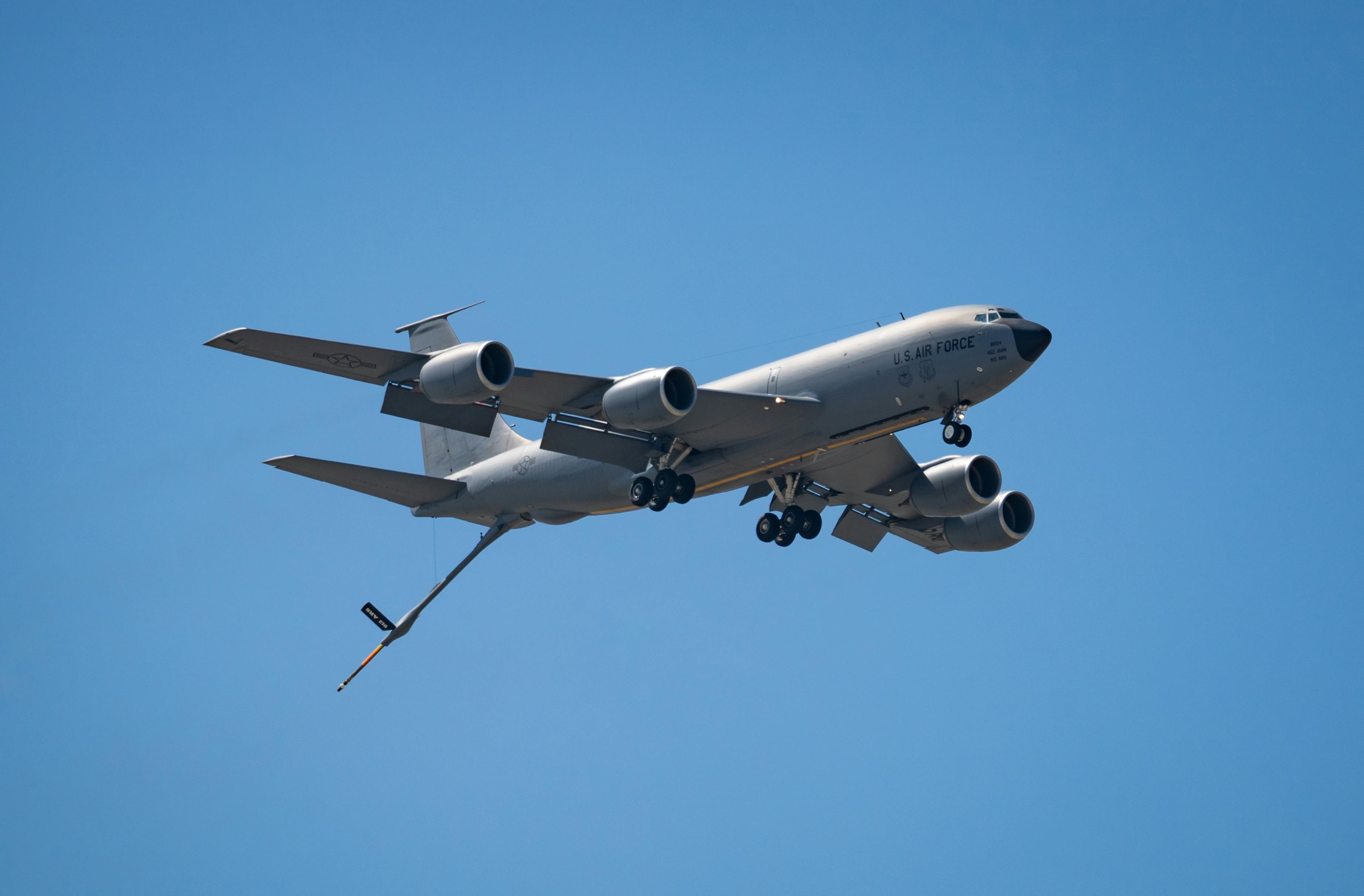
Actionable Takeaway for Observers: Track the C-17 and KC-46 flights moving into Ceiba and Aguadilla. Sustained, high-tempo cargo traffic—especially carrying specialized maintenance pallets and high-demand ordinance—is the metric that reveals long-term intent more clearly than any public statement. For a deeper dive into the hardware supporting this, you can review an analysis on airlift and air refueling in expeditionary operations.
Conclusion: A New Era of Caribbean Military Engagement
The stage is set. The players are in position. This moment in November 2025 is defined by the cold, hard reality of technological advantage applied to an old geopolitical flashpoint.
The Enduring Symbolism of Reawakened Infrastructure
The revival of the Roosevelt Roads Naval Station, a relic of the global struggle against Soviet communism, to confront modern transnational threats and a recalcitrant South American regime, creates a powerful historical parallel. The juxtaposition of the Cold War-era concrete with the radar-evading surfaces of the F-Three Five fighters encapsulates the nature of contemporary conflict: adapting old strategic locations to new technological and geopolitical imperatives. This immense military footprint, anchored by the stealth jets in Ceiba, serves as an undeniable marker for the year two thousand twenty-five, signaling a period of elevated risk and direct competition in the Western Hemisphere. The past protests against the base now seem almost quaint against the backdrop of this massive strategic re-basing.
Navigating the Precipice of Regional Conflict
As the United States continues to project this overwhelming, technologically advanced power near the Venezuelan maritime boundary, the entire region exists in a precarious state of tension. The immediate future hinges on whether the coercive pressure exerted by the concentration of air and sea power will force a diplomatic opening or if the miscalculation of intent—the conflation of counter-narcotics enforcement with regime change ambition—will lead to an unforeseen and potentially catastrophic military misstep. The deployment’s success, in the view of Washington, will be measured by the return to stability; for Caracas and its neighbors, it is a moment of existential anxiety, watching the most advanced instruments of American military might situated just a short flight away, a constant reminder of the volatile equilibrium that now defines the Caribbean geopolitical sphere. The world watches closely as this historical base assumes a central and deeply consequential role in the ongoing narrative of hemispheric security and confrontation.
What can we draw from this? The age of ambiguity in the Caribbean is over. The *intent* is clear from the assets deployed, even if the *stated mission* is narrow. The commitment to high-end deterrence, from the F-35s in the air to the submarine beneath the waves, is designed for one outcome: strategic compliance.. Find out more about F-35 Bravo short takeoff landing capability Caribbean insights information.
Key Takeaways for Stakeholders:
Where do we go from here? Will Caracas blink under the pressure, or will they misread the intent as purely regime-change, pushing toward a confrontation neither side publicly desires? The answer lies in the next diplomatic cable, or perhaps, the next missile launch from a destroyer. We will continue to track the deployments and the diplomatic signals that shape this volatile new reality.
Engage the Discussion: What element of this massive military realignment—the stealth tech, the carrier group, or the reactivation of Roosevelt Roads—do you believe carries the greatest psychological weight on the Maduro regime? Share your analysis in the comments below.