The Brink of Escalation: Analyzing Pakistan’s ‘Open War’ Warning Amidst the Afghanistan Crisis of October 2025
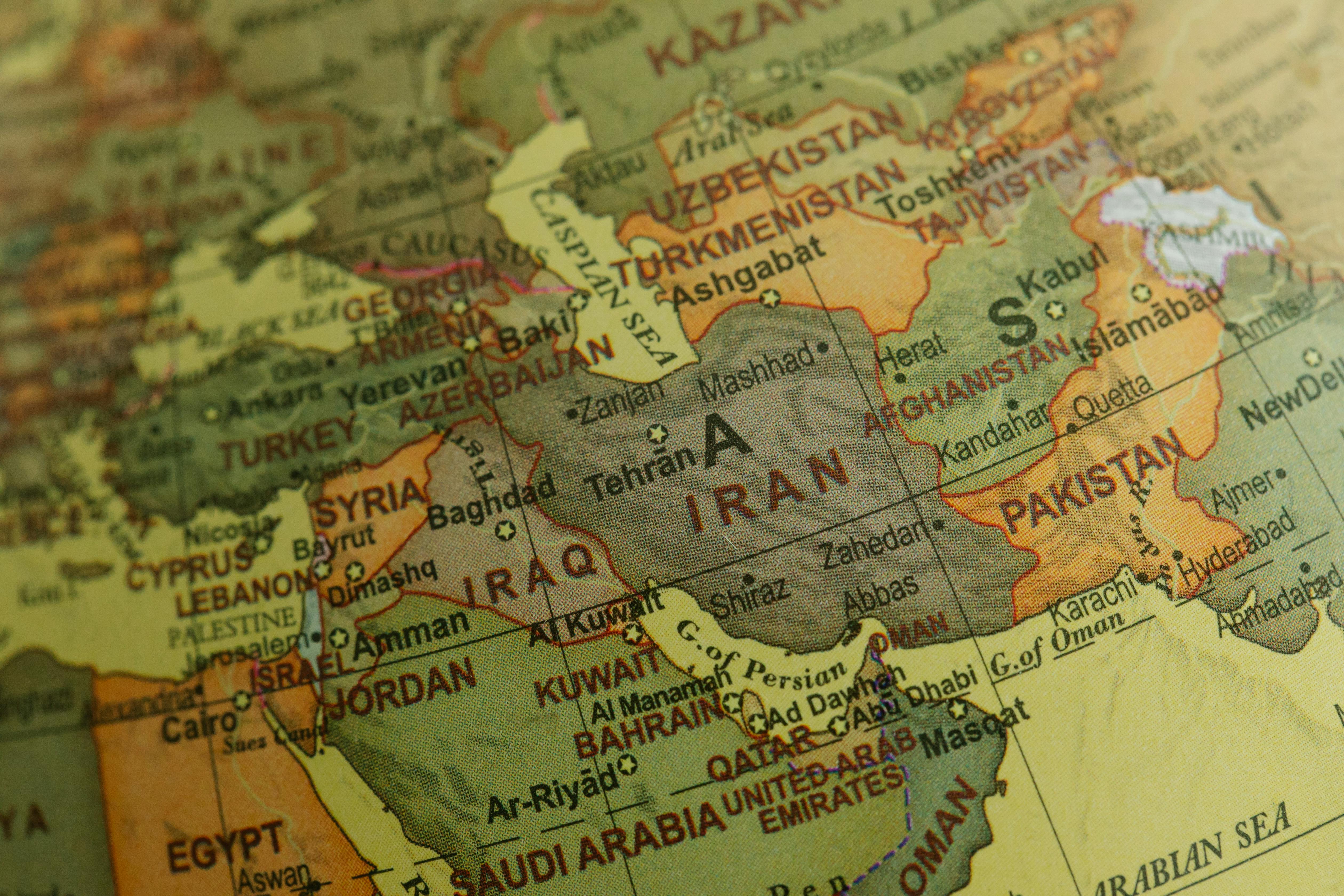
The fragile peace between Pakistan and Afghanistan teetered on the precipice in late October 2025, following a spasm of cross-border violence that threatened to shatter years of tentative engagement. The warning from Pakistan’s Defence Minister, Khawaja Muhammad Asif, delivered just as crucial negotiations convened in Istanbul, served as a stark ultimatum: secure a durable agreement, or face an “open war.” 4 5 The statement crystallized the deep-seated security and territorial disputes that have defined this crucial frontier for nearly a century, now exacerbated by the presence and activity of transnational militant networks.
This high-stakes diplomatic moment was necessitated by a period of acute military confrontation. In early October 2025, the relationship deteriorated into its worst bout of fighting since the Taliban’s return to power in 2021, with deadly skirmishes along the Durand Line 12. The conflict ignited after militants from the Tehrik-e-Taliban Pakistan (TTP) ambushed a Pakistani army convoy, resulting in significant military casualties for Islamabad 20. Pakistan responded with retaliatory airstrikes across Afghan territory, including strikes targeting Kabul and other locations 4 18. The Afghan Taliban government countered with its own attacks on Pakistani military posts along the border 12 18. This kinetic exchange, which resulted in dozens of casualties on both sides, prompted an immediate, though fragile, ceasefire brokered by Qatar and Turkey on October 19, 2025 12 13.
The subsequent talks in Istanbul, commencing on October 25, 2025, were designed not merely to reaffirm the truce but to devise a “long-term enforcement mechanism” to prevent a relapse into violence 6 8. Minister Asif’s explicit warning underscored the reality that without a robust agreement addressing Pakistan’s core security concerns—namely, the use of Afghan soil by militant groups—the diplomatic window could slam shut, opening the door to sustained, large-scale military conflict 4 5.
The reverberations of this tension—and the threat of further kinetic action—extend far beyond military barracks, striking at the very foundation of civilian life and regional geopolitical architecture.
The Humanitarian and Regional Repercussions
The Immediate Impact of Frontier Closure on Civilian Populations
The most visceral consequence of the intense October hostilities was the “sudden cessation of activity at major border crossings,” an economic hemorrhage felt immediately by the civilian populations dependent on the arteries of cross-border trade 10. This interdependency, fostered over decades, means that the blocking of transit points does not just halt commerce; it creates localized humanitarian stress by disrupting established supply chains for food, medicine, and essential trade goods flowing through key transit points like Torkham and Spin Boldak (implied by the conflict reports) 4.
The economic toll on livelihoods was immediate and devastating. Reports from late October 2025 indicated that a single border closure instantly cuts off the direct income for an estimated 11,000 daily wage workers, including porters, drivers, and handlers who rely on the crossings for their subsistence 10. This sudden loss of earnings pushes an estimated 55,000 of their family members in the impoverished border regions into severe hardship, exacerbating an already critical local poverty crisis 10.
For consumers, the disruption translated directly into inflationary pressures and shortages. The flow of essential Afghan agro-supplies (like fruits and vegetables) heading south and Pakistani goods (pharmaceuticals, cement, textiles) heading north was halted, leading to widespread spoilage of perishables and skyrocketing prices in local markets 10 11. For instance, a sharp spike in tomato prices, from PKR 100 to PKR 500 per kilogram, was documented in Pakistani markets following the closure 11. Afghan traders, in turn, faced significant losses as their produce rotted before export 11. Furthermore, the United Nations’ World Food Programme (WFP) had repeatedly warned that such closures directly impede the delivery of aid, worsening the humanitarian catastrophe within Afghanistan, which was already struggling with chronic food insecurity 10. The conflict, therefore, acts as a regressive tax, disproportionately punishing the most vulnerable populations on both sides of the Durand Line 10.
Broader Security Implications for Regional Stability and Global Concerns
The flare-up between these two major neighbors sends dangerous ripples across the broader geopolitical landscape, particularly given the volatile security environment in Central and South Asia in 2025 9. Instability along this strategic corridor heightens global concerns regarding the potential for transnational extremist ideologies to exploit the confusion and weakened security presence to regroup, plan, or expand their influence.
At the heart of this concern is the confirmed, ongoing presence of militant groups on Afghan soil. United Nations reports in 2025 cite the operation of over 20 terrorist organizations, including the Islamic State-Khorasan Province (ISKP) and the TTP, from Afghan territory 9. The very issue that triggered the October escalation—Pakistan’s demand for the Taliban to neutralize TTP sanctuaries—remains unresolved 5. The operational capability of the TTP, evidenced by deadly attacks in September 2025 across South Waziristan and Lower Dir 16, demonstrates that the ideological validation and operational confidence gained by the TTP following the Taliban’s 2021 takeover remain potent factors 16.
Furthermore, the crisis impacts the strategic calculations of other major regional players. Pakistan views any deepening of the Afghan Taliban’s relationship with India with deep suspicion, considering it a direct threat to its western flank 9 20. The tension thus transforms a bilateral security dispute into a multi-faceted regional challenge that complicates counter-terrorism initiatives and investment in regional economic connectivity projects, such as those supported by the Shanghai Cooperation Organization (SCO) 9. Any slide into a sustained, open conflict would undoubtedly overshadow these crucial international efforts, destabilizing security architecture far beyond the immediate vicinity of the Durand Line.
Historical and Territorial Undercurrents Driving Current Friction
The Shadow of Colonial Demarcation on Modern Statehood
To fully comprehend the intractable nature of the current security disputes, one must look to the very foundations of the shared boundary: the Durand Line 3.
The line itself is a historical artifact, a 1,640-mile demarcation drawn in 1893 by British diplomat Mortimer Durand to settle the border between Afghanistan and British India during the waning days of the Great Game 3. This demarcation was drawn without deep consideration for the socio-cultural and ethnic realities on the ground, particularly the settlement patterns of the large Pashtun population distributed across both sides of the line 3.
For Pakistan, having inherited the border upon its creation in 1947, the matter is considered settled and is not up for negotiation 3. Pakistan views the line as a fixed, international border, implicitly recognized through decades of trade and visa arrangements 14. Conversely, the Afghan government, including the current Taliban administration, has historically refused to formally accept the demarcation as an international border, viewing it instead as an illegitimate colonial imposition over shared ancestral lands and peoples 3 12. This deep historical narrative lends powerful political weight to Kabul’s current stance, making it a non-negotiable element of their foreign policy, a position that Pakistan contests vehemently as a direct challenge to its sovereignty 12 14.
The Complex Web of Affiliations Between Non-State Actors
The situation is further complicated by the intricate and often opaque relationships between various non-state armed groups operating across the divide, transforming the bilateral issue into a multifaceted counterinsurgency challenge 19.
The primary source of current friction is the Tehrik-e-Taliban Pakistan (TTP) 9. The TTP’s ideology aligns closely with that of the ruling Afghan Taliban, and its regrouping and enhanced operational capabilities since 2021 have allowed it to launch sophisticated, deadly attacks into Pakistan 16 20. Islamabad’s core demand is that the Afghan administration must control or extradite TTP militants using Afghan soil as a sanctuary 13. The Afghan administration, however, often frames the TTP as an independent entity and the resulting attacks as strictly “internal Pakistani matters,” a stance Pakistan rejects, pointing to the ideological and tribal linkages that suggest a failure or unwillingness to act decisively 9.
Adding another layer of complexity is the presence of the Islamic State in Khorasan Province (ISKP), a transnational threat that opposes both the ruling structures in Kabul and Islamabad 9 17. The existence and continued attacks by ISKP—from suicide bombings in Kabul to violence in cities like Peshawar—highlight the failure of either state to achieve full territorial control against all extremist elements 17. The blame-shifting concerning the locus of ISKP operations further deepens the rift, as both governments attempt to deflect scrutiny by claiming the other harbors the militants 17. This complex web necessitates sophisticated, and currently absent, levels of trilateral coordination between the two states to manage the security vacuum effectively.
Outlook Beyond the Diplomatic Horizon
Scenarios Following a Failure to Secure a Lasting Agreement
Should the efforts in Istanbul falter, and the Defence Minister’s warning of “open war” prove to be an accurate prediction of policy direction, the immediate future suggests a period of intense, kinetic military engagement along the frontier that would likely eclipse the scale of the earlier October exchanges 5 8. The scenario of a policy pivot away from dialogue implies a significant shift toward sustained, deeper military operations by Pakistani forces targeting perceived militant sanctuaries within Afghanistan 8.
This action would invariably be met by organized, state-level resistance from the Afghan forces, who would interpret such incursions as a violation of their sovereignty, leading to full-scale border clashes 19. The expectation would be:
- A rapid and comprehensive re-closure of all major transit and trade points, effectively paralyzing cross-border economic activity 10.
- A complete breakdown of all high-level communication channels, increasing the risk of miscalculation or unintended escalation into regions far from the immediate border posts 4.
- A renewed surge in humanitarian distress due to blocked aid and collapsed livelihoods, plunging the border regions into deeper crisis 9.
- Proactive Cooperation: Moving away from retaliatory strikes and ultimatums toward proactive, verifiable cooperation on counter-terrorism intelligence sharing 13.
- Joint Management: Establishing mutually beneficial, joint border management protocols that both sides can view as safeguarding their interests, rather than solely serving the demands of one party 9.
- Narrative Reconciliation: Addressing the core issues of sovereignty and territorial integrity (i.e., the Durand Line debate) in a manner that respects the deeply held historical and political realities of both sovereign entities 3.
In essence, the failure of diplomacy would hardwire the conflict into a low-intensity war characterized by proxy warfare and intelligence operations, a situation Pakistan has actively sought to avoid by engaging in the Istanbul talks 9.
The Necessity of Sustainable, Confidence-Building Measures
Ultimately, the long-term prognosis for stability rests not just on the signing of a procedural document in Istanbul, but on the establishment of genuine confidence-building measures that can survive political shifts and immediate military pressures 10. The Minister’s expressed belief that the Afghan leadership *desires* peace must be cultivated through sustained, patient engagement that moves beyond reactive measures.
The path forward requires a strategic shift:
The current high-stakes drama is less about a single incident and more about testing the viability of a shared, secure future along one of the world’s most historically contested dividing lines 9. For stability to hold, both Kabul and Islamabad must recognize that the mutual cost of conflict—economic strangulation, humanitarian catastrophe, and the empowerment of extremist groups—far outweighs the political capital gained from maintaining entrenched, adversarial positions 9 10.
***
Citations (Information Current as of October 28, 2025):
4 Hindustan Times, “Pakistan’s ‘open war’ warning amid peace talks with Afghanistan in Istanbul | World News” (October 25, 2025)
5 Modern Diplomacy, “Pakistan Warns Afghanistan of ‘Open War’ if Diplomacy Fails” (October 25, 2025)
6 The Hindu, “Pakistan Defence Minister warns of ‘open war’ with Afghanistan if Istanbul peace talks fail” (October 25, 2025)
7 Al-Monitor, “Pakistan defence minister warns of ‘open war’ with Afghanistan if peace talks fail” (October 25, 2025)
8 Mint, “Pakistan defence minister Khawaja Asif warns of ‘open war’ with Afghanistan if…” (October 25, 2025)
9 Eurasia Review, “Pakistan–Afghanistan Relations: The Shifting Contours Of Conflict And Cooperation – OpEd” (October 27, 2025)
10 Arab News PK, “Afghanistan-Pakistan tensions are strangling regional prosperity” (October 25, 2025)
11 Tribune India, “Pakistan’s border conflict with Afghanistan chokes food supply, punishes its own traders” (October 25, 2025)
12 The Friday Times, “Allies, Adversaries And Beyond: How Pakistan-Afghanistan Relations Were Forged In Conflict” (October 24, 2025)
13 Al Jazeera, “What do we know about Pakistan-Afghanistan ceasefire, will it hold?” (October 19, 2025)
14 Dawn, “The Durand border” (October 24, 2025)
16 SpecialEurasia, “Pakistani Security Forces Eliminated 35 TTP Militants” (September 14, 2025, detailing recent TTP capability)
17 The Diplomat, “Afghanistan, Pakistan Point Fingers Over Islamic State Presence” (March 17, 2025, providing context on ISKP)
18 Wikipedia, “2025 Afghanistan–Pakistan conflict” (Context of October 9-19, 2025 clashes)
19 MEPEI, “A Layered Analysis of the 2025 Afghanistan-Pakistan Crisis: History, Internal Politics, and the Return of Great Power Competition” (October 19, 2025)
20 WVIA, “Pakistan and Afghanistan agree to a ceasefire” (October 20, 2025, detailing events leading to the truce)
3 The Washington Post, “Line drawn by 19th-century Britain stokes Pakistan-Taliban tension” (October 26, 2025)