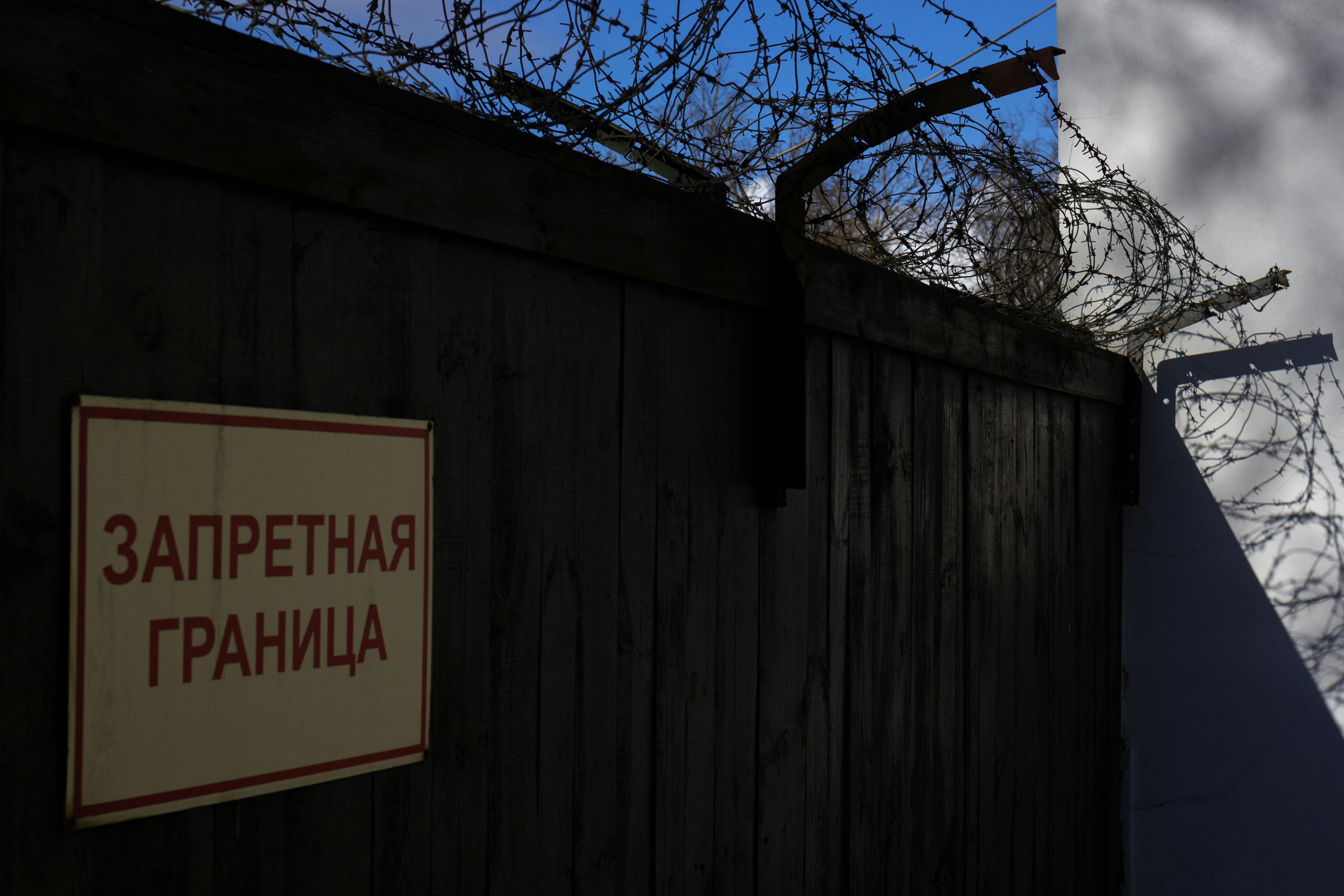
Assessment of the Initial Thrust into Russian Federation Territory: A Reactive Strategy Exposed
The foundational justification for this entire northern gambit—the lingering security fallout from the preceding year’s *Kursk incursion*—ultimately became its Achilles’ heel. While Kyiv’s military command confirmed in late two thousand twenty-four that its operations had successfully blunted the *initial* Russian plan to establish a broad buffer in Sumy Oblast, the subsequent, reactive Russian push further south and east into Kharkiv and other northern areas revealed a fundamentally flawed strategic posture. The forces deployed to create this *new* buffer zone were perpetually stretched thin. They were tasked with the impossible: offensive consolidation *and* immediate defense against relentless Ukrainian counter-thrusts. Intelligence assessments emerging throughout late two thousand twenty-five strongly suggested that the operational tempo required to maintain even partial control over these newly designated areas was unsustainable without massive reinforcement—reinforcements that would have to be stripped from other active fronts, thus sowing new vulnerabilities across the entire line of contact.
Contested Ground: The Battle for Kursk Oblast’s Periphery
Even within the Russian Federation’s border territories—the very areas the buffer was supposed to secure—the echoes of successful Ukrainian operations remained loud and clear as of early two thousand twenty-six. Military officials in Kyiv asserted throughout the spring of two thousand twenty-five that operations remained highly disruptive, if not actively contested, within Kursk Oblast itself. This persistent, low-level, high-impact presence was less about capturing vast swathes of land inside Russia and more about forcing continuous, panicked resource commitment to internal security. This was the clearest indicator that the buffer strategy had utterly failed to achieve its primary self-declared goal: to isolate the conflict and secure Russia’s own border areas. The reality was that the designated ‘security zone’ was proving to be a permeable membrane, not an impenetrable wall, a concept we explored in depth in our analysis of border leverage strategy in modern conflict.
Kyiv’s Surgical Retaliation and Territorial Recovery Momentum
Ukraine’s demonstrated resilience wasn’t accidental; it stemmed from a calculated strategic pivot. Instead of becoming bogged down solely defending against established lines in the Donbas, the General Staff made the deliberate choice to actively contest the new, aggressively defined buffer zones in the north. The approach wasn’t about a massive, sudden breakthrough everywhere. Rather, it was about applying precise, concentrated pressure—like a surgical probe—where Russian defenses were demonstrably weakest or most overextended, particularly along those new northern axes of advance. This calculated campaign of localized, successful reversals provided a much-needed surge of morale and projected an operational tempo that Moscow simply had not prepared for.
Analysis of the Shift in Military Focus to Offensive Operations. Find out more about Russian buffer zone strategy failure Ukraine 2025.
Military analysts widely attribute the pushback against the initial Russian buffer attempts to a dramatically refined approach to combined arms operations. This was crucially underpinned by the steady, increasing influx of advanced Western materiel—the systems designed not just to defend, but to actively dismantle entrenched positions. Forget broad, static defensive lines; Ukrainian units began methodically targeting Russian command nodes, critical supply routes feeding the northern salient, and exposed forward operating bases. The governing principle became making the cost of occupying the ‘buffer zone’ exponentially exceed the perceived strategic benefit for the aggressor. By surgically disrupting the logistical arteries supporting these new occupations, Kyiv effectively choked the Russian advance. This choking forced a strategic pause that rapidly turned into a tactical retreat across several key areas, reclaiming substantial swathes of land that Russia had, at best, only briefly held. This sophisticated logistical warfare is a key factor in understanding modern logistics warfare.
Restoration of Ukrainian Administrative Control in Contested Sectors
The tangible, concrete result of these successful localized offensives was the swift re-establishment of Ukrainian governmental and civil administration in numerous towns and villages along the northern frontier. This physical reclamation was immensely significant—it moved the situation beyond simple military repositioning. The sight of Ukrainian flags returning, the resumption of basic services under Kyiv’s authority, and the immediate documentation of Russian wartime abuses served to firmly anchor these territories back within the national framework. This, in turn, made any future Russian claim over that land significantly harder to sustain, whether diplomatically or militarily. This administrative normalization became a powerful counter-narrative to the Kremlin’s entire effort to consolidate and legitimize its seized lands as permanent security features.
The Repercussions for Moscow’s Domestic and International Posturing
The failure to solidify the initial buffer zone, compounded by the demonstrated capability of the Ukrainian military to fight its way back onto the offensive, created a glaring dissonance within the Russian political establishment and severely damaged its carefully curated external projection of strength. The foundational narrative—that this was a contained, defensive operation meant only to stabilize the border—had spectacularly backfired. The border remained porous, and now, internal Russian regions were feeling the friction of a conflict that was refusing to be neatly cordoned off.
Impact on Kremlin Narratives of Sovereign Security. Find out more about Russian buffer zone strategy failure Ukraine 2025 guide.
The central justification Moscow used for the buffer’s creation—protecting its sovereign territory from attack—was directly and publicly contradicted by the continued high-profile Ukrainian operations, including incursions within Russia’s internationally recognized borders. Every successful Ukrainian counter-move served as irrefutable proof that the strategy was not only failing to secure the border but was actively drawing the conflict deeper and creating new, unstable fronts further from the original contested areas. This exposed a fundamental weakness in the Kremlin’s framing: if the initial measures were insufficient, larger ones would only escalate the crisis, not resolve it. The public trust, so heavily reliant on the promise of promised security, began to fracture under the weight of continuous, unplanned military engagement. It’s a classic case study in political narrative failure under pressure.
Erosion of Credibility Among Sympathetic International Observers
Internationally, the narrative of a necessary defensive buffer quickly lost traction, even among nations that had maintained a neutral or ambiguously sympathetic stance toward Moscow. The successful Ukrainian reclamation efforts—such as the major counterattacks in late 2025/early 2026 in Dnipropetrovsk Oblast that liberated over 400 km²—shifted the perception entirely. The narrative changed from an aggressor merely securing its perimeter to an overextended force struggling to maintain illegal gains against a determined defender. The persistent Ukrainian diplomatic insistence that any genuine security buffer must be established *exclusively on Russian territory*, rather than Ukrainian soil, gained massive resonance precisely because the military facts on the ground now supported the Ukrainian position. Moscow’s efforts to secure diplomatic cover for its expansionist military actions were systematically undermined.
Deepening the Conflict: The Announcement of the Two Thousand Twenty-Six Expansion
Despite the clear, palpable setbacks experienced throughout two thousand twenty-five in holding those initial gains, the leadership in Moscow demonstrated a kind of strategic inflexibility that baffles many observers. The pivot was not toward consolidation or negotiation; it was toward an even more aggressive, formalized escalation of the buffer concept. By the end of two thousand twenty-five, reports confirmed that the Chief of the General Staff was issuing directives to plan for a formal expansion of this zone into new Ukrainian oblasts slated for early two thousand twenty-six. This signaled an entrenched commitment to prolonging the war based on the logic that more force, not less, was the answer.
The High Command’s Reaction to Field Setbacks. Find out more about Russian buffer zone strategy failure Ukraine 2025 tips.
The decision to mandate a formal expansion into the Sumy and Kharkiv regions for two thousand twenty-six, even as the previous year’s territorial acquisitions remained hotly contested, strongly suggested that the military high command viewed the recent failures not as a sign to recalibrate, but as definitive proof that *insufficient* force had been applied initially. This entrenched mindset led to the institutionalization of conquest under the thin veneer of security. The designation of a specific grouping—the so-called ‘North’ grouping—to execute this expansion signaled a formal, institutional prioritization of the northern front, treating the buffer zone as a permanent fixture of future military and political planning. This single move complicated any potential future diplomatic resolution by presenting an unyielding *fait accompli* of occupation.
Designated Targets: The Sumy and Kharkiv Vector Escalation
The specific targeting of Sumy and Kharkiv oblasts for this planned two thousand twenty-six expansion indicated a clear strategic broadening of war aims, moving beyond the initial focus on the eastern industrial heartland. By aiming for a much wider swath of territory stretching along the entire northern border, Moscow was signaling its intent to tie down significant Ukrainian reserves and establish deep defensive layers to shield its own border regions in a far more comprehensive manner than before. This move directly contradicted any suggestion that this was a localized, limited-objective operation. Instead, it cemented the perception that Russia was preparing for a multi-year conflict designed to systematically dismantle Ukrainian sovereignty in its northern and eastern regions. For a deeper dive into the stated goals of this new phase, see our analysis on Russia’s 2026 strategic goals.
The Military Reality on the Ground in Northeastern Ukraine: Logistical Strangulation
The logistical and human cost of attempting to solidify these expanding buffer zones became increasingly evident throughout the latter half of two thousand twenty-five. The Ukrainian military, galvanized by their successes elsewhere and bolstered by consistent Western materiel, effectively turned the proposed Russian security corridor into a new, protracted zone of intense military friction. The core lesson here is that occupying land is much easier than *holding* it when your supply lines are constantly under duress.
Challenges to Russian Logistics in Extended Front Lines. Find out more about Russian buffer zone strategy failure Ukraine 2025 strategies.
The geographical expansion of the Russian operational footprint—the very act of trying to push that 20-kilometer line—meant that supply lines stretching into the newly claimed sectors of Sumy and Kharkiv became significantly more vulnerable. They were now exposed to long-range Ukrainian artillery and drone strikes that were simply out of reach when operations were closer to established Russian logistical hubs. Maintaining a sufficient, consistent flow of fuel, ammunition, and reinforcements across hundreds of kilometers of hostile or contested territory proved to be a crippling drain on Russian resources. The forward units tasked with establishing the ‘buffer’ found themselves increasingly isolated, forced into constant defensive maneuvering rather than deep offensive consolidation—a textbook indicator of operational overextension. This challenge is often overlooked, but it’s the reality of modern artillery range and control.
Ukrainian Defensive Fortification and Preparation for New Thrusts
In direct response to the publicly signaled expansion plans for two thousand twenty-six, Ukrainian forces in the contested northern oblasts were reportedly engaged in the rapid construction of layered, modern defensive fortifications. Unlike the more fluid, mobile defensive operations of earlier years, these new positions were specifically designed to absorb and channel the anticipated Russian advances. The goal was to turn any new incursion into a costly, slow-moving battle of attrition before it could even gain traction. Furthermore, Kyiv was careful to link its military preparations not just to defense, but to the readiness to launch further preemptive strikes into Russian-held territory to disrupt the very foundations of the planned buffer expansion *before* it could fully materialize on the ground.
Diplomatic Impasse: Contrasting Peace Frameworks
The military realities—Kyiv’s successful reclamation of territory in the south and its stabilization efforts in the north versus Moscow’s declaration of future expansion—created a cavernous gulf in the realm of potential diplomatic resolution. As the year concluded and two thousand twenty-six dawned, the very definition of a prerequisite for peace had become the central point of contention, illustrating the deep, irreconcilable objectives of the two warring parties.
The Stagnation of International Mediation Efforts. Find out more about Russian buffer zone strategy failure Ukraine 2025 overview.
The repeated Russian rejection of proposals for a complete, verifiable ceasefire—particularly those brokered by Western partners—became increasingly untenable on the international stage. This was because Russia’s own declared security measures appeared to be purely offensive in nature. When Ukraine, in contrast, began floating concepts for mutually agreed-upon demilitarized zones *within the Donbas*—a significant move signaling conditional flexibility—Moscow’s refusal to engage seriously on these terms was viewed internationally as confirmation: their true goal was not security, but maximal territorial acquisition. The diplomatic window, which may have been slightly ajar earlier, appeared firmly shut due to Moscow’s perceived unwillingness to halt its military encroachment.
The Divergence Between Russian ‘Security Zones’ and Ukrainian DMZ Concepts
The fundamental philosophical clash between the two proposed buffer concepts truly highlighted the depth of the divide. Russia demanded security through the *physical occupation* and forced separation of Ukrainian land, framing it as an unnegotiable *fait accompli*. Ukraine, conversely, offered a pragmatic path toward de-escalation through mutual, verifiable withdrawal and the creation of neutral strips governed by international oversight in already contested areas, such as parts of the Donbas. This contrast—conquest versus negotiation—defined the diplomatic paralysis of the late two thousand twenty-five period. It serves as a stark illustration of why the war was poised to enter yet another year of high-intensity fighting, despite the failure of the initial buffer concept.
Looking Ahead: The Protracted Nature of Border Warfare and Takeaways
As the calendar flipped to March 2026, the evidence overwhelmingly suggested that the conflict was shifting into a new, sustained phase. This phase is characterized by intense, localized border warfare across the northern sector, moving away from the sweeping front-line movements that defined earlier years. The failure of the initial buffer concept did not signal an end to Russian aggression; rather, it signaled a hardening of its strategy, guaranteeing continued high-intensity conflict along the newly extended, vulnerable front lines.
Forecasting the Next Phases of Cross-Border Confrontation. Find out more about Kyiv systematic dismantling of Russian forward positions definition guide.
The strategic outlook for the immediate future suggests a grim cycle of action and reaction along the Russian-Ukrainian border, particularly surrounding the areas targeted for the two thousand twenty-six expansion—Sumy, Kharkiv, and the already contested regions. Ukrainian forces will likely continue their successful strategy of disruptive counter-strikes against Russian lines of communication and logistics, aiming to impose an unsustainable operational burden on the Moscow-controlled forces. Russia, meanwhile, will continue to commit massive, grinding resources, aiming to secure *any* defensible terrain that can be presented as a non-negotiable reality at any future negotiation table, effectively aiming to prolong the conflict indefinitely.
The Long-Term Implications for European Security Architecture
The persistent, unresolved nature of this conflict—rooted in Moscow’s insistence on redrawing borders under the guise of security—carries profound implications for the broader European security framework beyond the immediate combat zones. The concept of inviolable borders, a cornerstone of the post-Cold War order, is fundamentally being tested in real-time. The international community is left grappling with how to deter or contain a major power that views aggressive territorial engineering as a legitimate tool of statecraft. This precedent promises years of heightened tension, increased military expenditures across NATO nations, and a fundamental reshaping of geopolitical alliances well into the next decade. The failure of the buffer zone to secure peace instead guaranteed the continuation of a high-stakes, long-term confrontation on the continent’s eastern flank.
Key Takeaways and Actionable Insights for Understanding the Path Ahead
The collapse of the initial buffer zone objectives in 2025 provides crucial lessons for anyone analyzing the current state of play as of March 11, 2026.
- Logistics is the Center of Gravity: Ukraine’s success in pushing back on the northern axes, while simultaneously liberating territory in the south, was built on starving the Russian advance, not just winning field battles. The tactic of targeting supply arteries is proving more effective than static defense against incremental advances.
- Narrative Over Reality: The Kremlin’s primary failure was its inability to align its stated security objectives with on-the-ground results. When the *justification* for the buffer (security) is negated by the *consequence* (deeper, more contested fighting), domestic and international credibility is lost rapidly.
- Inflexibility Breeds Escalation: Moscow’s response to setbacks in 2025 was not negotiation, but a formalized plan for further expansion in 2026. This reveals a strategy geared toward maximizing territorial *fait accompli* rather than seeking a swift resolution.
- The Power of the Small Win: Kyiv’s focus on localized, surgical reversals—like those in Dnipropetrovsk Oblast—provided tangible morale boosts and forced Russian redeployments, disrupting their larger strategic planning, such as the anticipated spring offensive.
For those interested in tracking this volatile situation, understanding the current tactical environment in Sumy and Kharkiv is paramount. The key question moving forward is whether the logistical strain on the expanded ‘North’ grouping will force a strategic reconsideration, or if Russia is indeed prepared to commit to the multi-year grind that the current situation implies. For ongoing analysis, consult trusted sources tracking the Ukraine military updates. What are your thoughts on Moscow’s decision to double down on the buffer concept despite the setbacks of 2025? Drop a comment below and let’s discuss the potential trajectory for the rest of this year.