The Calculated Cost: Repercussions of the Ukrainian Strike on Russia’s Tuapse Oil Port
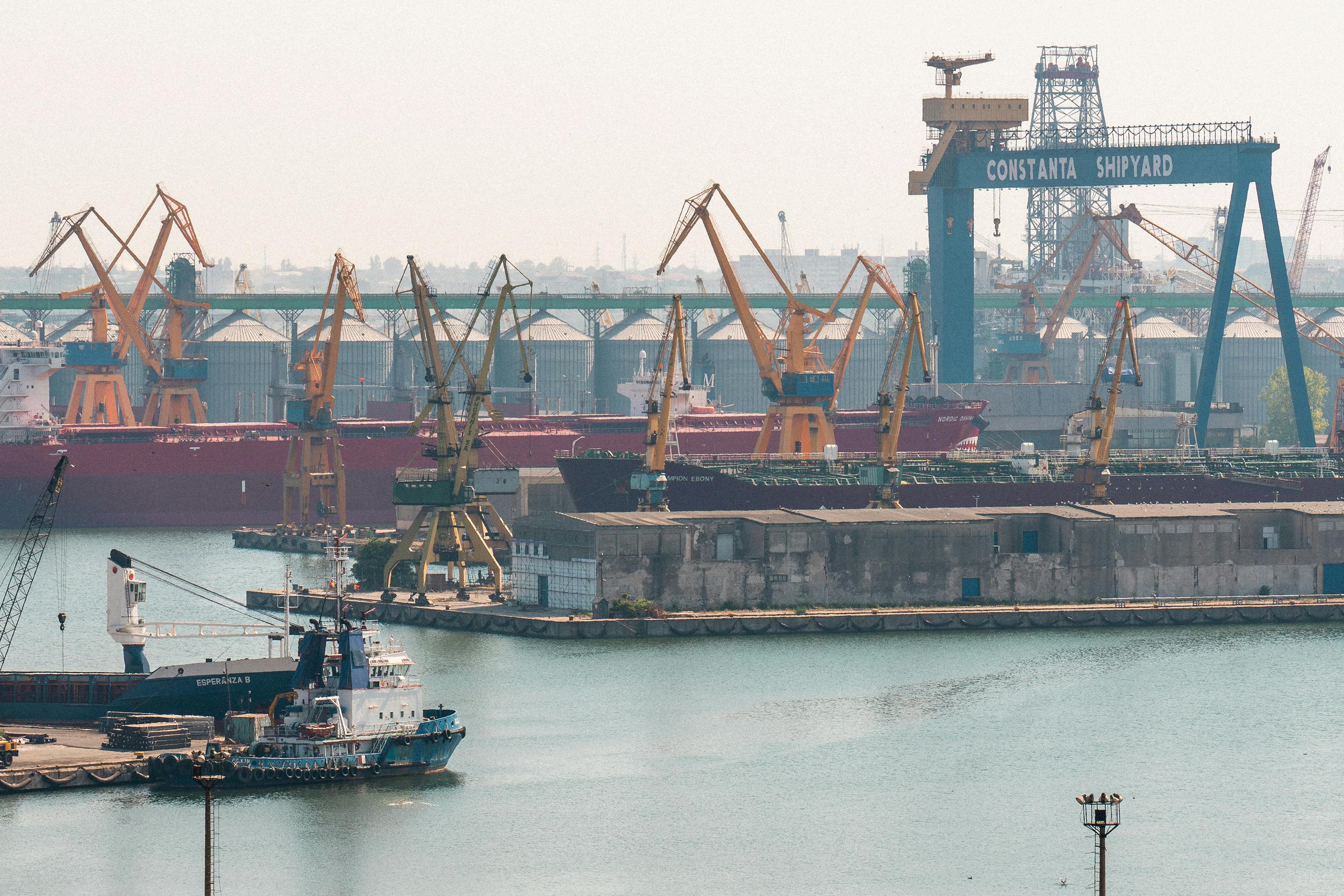
The early morning hours of Sunday, November 2, 2025, saw kinetic action penetrate deep into Russia’s established energy export architecture, as a reported Ukrainian drone strike targeted the critical Black Sea port of Tuapse in Krasnodar Krai. Initial reports, confirmed by regional authorities and corroborated by Ukrainian security service sources, detailed damage to a moored oil tanker, disruption to oil-loading infrastructure, and subsequent fire outbreaks. This event, far from being an isolated incident, represents a calculated continuation of Kyiv’s long-running campaign against Russian energy assets, carrying immediate, volatile consequences for global commodity markets and long-term implications for maritime risk assessment and Russia’s ability to fund its protracted military objectives.
Immediate and Anticipated Economic Repercussions
The consequences of such a targeted strike on a critical energy export hub extend rapidly from the physical damage reports into the volatile sphere of global commodity markets and the specialized world of maritime risk assessment. The reaction in these sectors often precedes any official statement from the affected nation’s finance ministry. The Tuapse port, home to the Tuapse Black Sea oil terminal and the Rosneft-controlled Tuapse oil refinery, is a vital conduit, channeling crude oil and refined products to international markets, including key customers in Asia and Europe. Any disruption here directly threatens supply chain reliability.
Impact on Planned Export Schedules and Market Confidence
The timing of the strike was particularly resonant, having occurred shortly after trade sources had indicated an anticipated increase in shipments from the Tuapse seaport for the upcoming month of November. The successful attack instantly cast doubt on the realization of those projected November export volumes. When a major loading hub is taken offline, even temporarily, crude oil and refined products that were scheduled to depart from that location must be rerouted, a complex and often expensive logistical maneuver.
This necessity to reroute shipments threatens the reliability of supply contracts and introduces volatility into the immediate spot market. Market analysis from late October 2025 showed Brent crude futures recovering to approximately $65 a barrel, partly buoyed by anticipation of modest OPEC+ output increases and concerns over Russian supply disruptions. An operational threat to a key export node like Tuapse immediately pressures this fragile stability. The perceived inability of a key supplier to guarantee consistent throughput, even due to kinetic action, erodes market confidence in the stability of that supply, which often manifests as sharp price fluctuation across benchmark indices for crude and its derivatives.
Furthermore, the damage was specific: a tanker’s deck superstructure was hit, and at least four oil loading stands were reportedly disabled. Loading stands are the direct bottleneck for moving product from storage to ship. If these key pieces of terminal infrastructure are rendered unusable for an extended period—a common outcome following such strikes on refineries—the cumulative impact on Russia’s overall export capacity is magnified, putting upward pressure on global prices for distillates, which have already been tight.
Insurance Market Sensitivity and Future Operational Risk Perception
A less visible but equally potent economic effect is the shift in the risk perception held by the maritime insurance industry. The ongoing campaign of strikes against Russian energy infrastructure forces underwriters to constantly reassess the vulnerability profile of ports like Tuapse and Novorossiysk, which are essential to Russian Black Sea exports.
When a successful strike occurs, demonstrating a clear and present danger to docked vessels and operational infrastructure, insurance premiums for vessels calling at that port are almost certain to rise. This increase in operational overhead is directly absorbed by the Russian energy sector or its buyers, ultimately raising the landed cost of Russian energy exports or decreasing the profit margin for the exporter. A Ukrainian Navy spokesperson, Dmytro Pletenchuk, highlighted this specific implication, suggesting that the event would discourage many shipping companies from utilizing those ports due to the increased financial burden of coverage, thereby creating a sustained, non-kinetic form of economic friction against Russia’s trade mechanisms. This forces Rosneft and other operators to either absorb higher costs or attempt to secure insurance in less traditional, potentially higher-cost markets, further complicating their commercial calculus.
The Adversarial Response and Counter-Narrative
In response to the confirmed attack, the Russian Federation’s defense apparatus issued counter-claims regarding their defensive capabilities, while local and regional government bodies confirmed the observable physical damage to the infrastructure. This dynamic created a dual narrative in the information space, characteristic of kinetic engagements deep within Russian territory.
Claims of Mass Interception and Air Defense Efficacy
The Russian Ministry of Defense issued statements claiming a significant overall success in neutralizing the threat, reporting the interception or destruction of a substantial number of unmanned aerial vehicles overnight across the broader region. Figures cited in initial Russian military briefings ranged into the hundreds of destroyed or neutralized drones. These claims serve the dual purpose of demonstrating the supposed robustness of their air defense network and simultaneously attempting to minimize the perceived success of the incursion by suggesting that the vast majority of the incoming assets were destroyed before reaching their objective.
Such official figures are often treated with skepticism by external analysts, especially when juxtaposed against direct visual evidence of successful strikes on critical infrastructure within the claimed interception zone. For instance, reports on October 29, 2025, noted the Russian MoD claimed to have downed 100 drones across 12 regions and Crimea, yet other reports from the same period confirmed damage to chemical plants and energy assets. The discrepancy between the reported scale of defense action—suggesting near-total saturation—and the observable damage at a high-value target like Tuapse constitutes a key point of contention in the post-event analysis. The successful strike validates Ukraine’s persistent technical capability to evade layered defenses and reach strategic inland and Black Sea targets.
Moscow’s Official Acknowledgment of Infrastructure Harm
Despite the overarching claims of defensive success, the regional operational headquarters in Krasnodar Krai were compelled by the visible reality to issue confirmations of the damage sustained within the port complex. These acknowledgments, often relayed through localized messaging applications like Telegram, served to validate the core fact of the attack. The official statements confirmed that port infrastructure had indeed suffered damage, which led to subsequent ignition events. They specifically specified damage to the deck superstructure of a vessel and the general harm to terminal buildings and associated infrastructure.
The official narrative typically framed the incident as a “drone crash” or the result of “fragments,” a common attempt to de-emphasize the coordinated nature of the hostile incursion. While confirming infrastructure harm, Russian confirmations often sought to immediately reassure regarding personnel, stating that the crew of the hit tanker was evacuated and that, according to preliminary information, there were no casualties. This acknowledgment, while perhaps downplaying the extent or the cause, confirmed the kinetic reality on the ground, serving as the factual anchor point around which the broader strategic narrative was debated. The confirmed damage to the railway station’s glass facade and a nearby apartment building further underscored the power of the explosive payload and the proximity of the military-economic target to civilian life.
Historical Precedent and Future Trajectory of Energy Attacks
The strike on Tuapse in late two thousand twenty-five did not occur in a vacuum; it fits into a documented, evolving pattern of targeting energy infrastructure that has been ongoing for a significant duration of the conflict. This context is essential for projecting the future direction of this aspect of the war.
Comparison with Previous Strikes on the Tuapse Facility
Crucially, the November incident was reportedly not the initial engagement with this specific facility. Reports from Ukrainian military intelligence sources indicated that the Tuapse port had been subjected to a previous incursion, specifically noting a naval drone attack targeting the oil-loading piers at the end of September of the same year.
This historical data suggests that the latest, more extensive drone attack might represent an escalation in technique or intensity against a known, vulnerable target, rather than the introduction of a new one. The September strike, utilizing naval drones against the piers, suggested a focus on stopping loading operations. The November attack, involving five recorded drone strikes, appears to have been more comprehensive, disabling both the tanker and multiple loading stands (at least four) critical for transferring products to ships. The repetition against the same location suggests a strategic emphasis on completely crippling that specific export route, possibly because previous, less severe strikes failed to render the facility entirely non-operational for a sufficient duration. The fact that the terminal is tied to the Tuapse oil refinery further implies a persistent, strategic focus on dismantling the entire processing and distribution chain managed by the state enterprise Rosneft. Since the beginning of 2025, Ukraine has been estimated to have struck over 150 oil facilities across Russia, with refineries being the focus of 42% of drone attacks in the preceding months.
Broader Context of Concurrent Attacks Across Russian Territory
To fully grasp the significance of the Tuapse event, it must be situated within the wider tapestry of simultaneous or near-simultaneous drone activity across Russia. The same timeframe that saw the Black Sea attack also saw reports of drone incidents and resulting damage in entirely different regions, such as the Rostov region, and reports of Ukrainian Navy strikes using Neptune missiles against infrastructure in the Oryol and Bryansk regions.
This pattern of wide-ranging, multi-vector strikes—hitting an oil port in the south one night, and targeting other industrial or military-adjacent facilities elsewhere—demonstrates a comprehensive operational strategy. In late October 2025, prior to the Tuapse strike, Russian authorities reported downing drones over numerous regions, including Bryansk, Voronezh, Rostov, and Kursk, while simultaneously, Ukrainian forces were reportedly striking chemical plants in the Stavropol region. The overarching objective is not just to stop oil exports but to strain Russian air defense resources across vast distances and create a sense of constant, unavoidable threat across the entire national territory, thereby increasing the overall psychological and logistical burden of the ongoing hostilities. This continuous pressure across multiple domains, from energy supply to domestic security, represents the overarching objective of the current phase of the campaign, designed to sap the economy that fuels the war effort. The developments in this sector are clearly worth following, as they directly correlate with the kinetic tempo and economic endurance of the conflict.