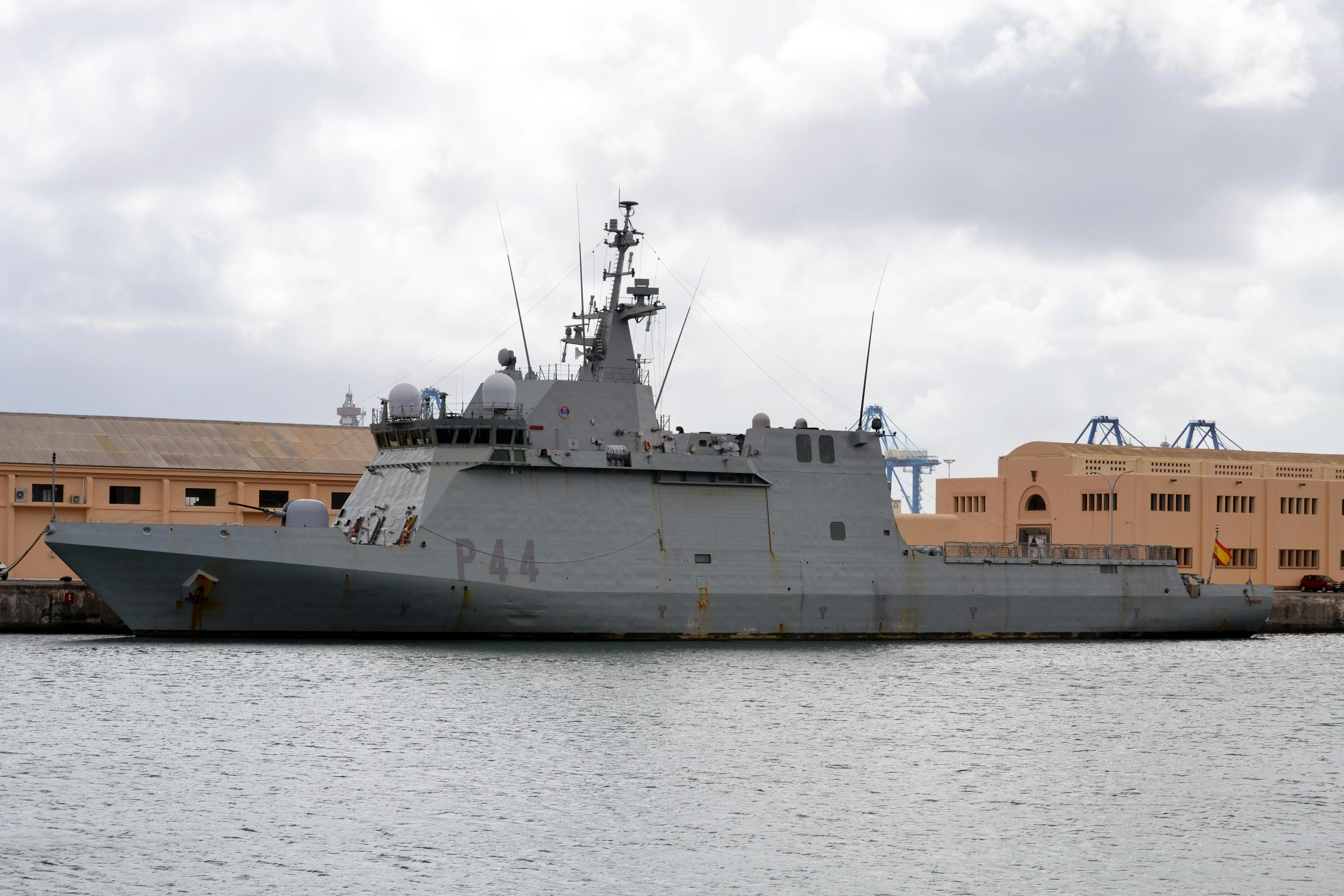
The Expanding Scope: From Sea Interdiction to Land Operations
The visible success, or at least the immediate effect, of the naval campaign—namely, the temporary disappearance of suspect vessels—prompted an explicit contemplation of expanding the zone of operations onto the mainland. The administration signaled a clear intent to apply the same aggressive, military-first doctrine to land-based smuggling routes, which traditionally involve the U.S. southern border and transit countries in Central America. This pivot illustrates a “follow the product” philosophy, regardless of jurisdictional lines.
Presidential Confirmation of Covert CIA Activities
Beyond the visible naval strikes, the confirmation that the President had authorized the Central Intelligence Agency to conduct secret operations inside Venezuelan territory was perhaps the most significant escalation . This wasn’t just about missiles in the Caribbean; it was about deploying intelligence and paramilitary capabilities within a sovereign nation. The President explicitly linked these covert actions to the flow of narcotics coming by sea, suggesting the CIA operations were intended to support the maritime interdiction by disrupting logistics on the ground . The strategy was a full-spectrum pressure campaign intended to dismantle the entire logistical chain identified by Washington.
This blending of kinetic and clandestine action raises profound questions regarding the limits of executive power. When the line between counter-narcotics and regime change blurs, the operational framework shifts entirely. One must ask: If the goal is solely interdiction, why introduce a destabilizing element like covert action that openly challenges the legitimacy of the existing government ? It appears the doctrine favors comprehensive disruption over surgical enforcement.
The Stated Intent to Address Land-Based Smuggling Routes
With the Caribbean Sea supposedly brought “very well under control”—evidenced by a temporary disappearance of suspect vessels—the focus immediately pivoted to the next logistical challenge: overland trafficking . The President publicly stated that the next phase of the “war” would involve confronting drug cartels on land routes, promising that these routes would be stopped “the same way we stopped the boats” . This declaration signaled an impending shift of military and intelligence resources toward land borders and transit corridors, potentially involving increased militarization along the U.S. southern border or expanded cross-border operations in partnership with other nations .
The narrative being crafted presents a continuous, unrelenting offensive against these networks—one that follows the product wherever it attempts to move. This philosophy suggests that traditional law enforcement boundaries are secondary to the objective of eliminating the drug flow into the United States. It’s a clear statement about prioritizing immediate security objectives over established norms of international engagement in the area.. Find out more about US military strikes against Venezuelan waters.
Actionable Takeaway for Regional Observers: Watch for announcements regarding bilateral security agreements in Central America. The shift from maritime to overland implies a need for partner nations to either increase their own militarization or formally grant the U.S. expanded operational authority—a key indicator of the success of this new hemispheric security strategy.
The Legal and Constitutional Firestorm
The deployment of lethal force in international waters, based on executive assertion rather than a formal declaration of war, immediately ignited one of the most significant constitutional debates of the year. Criticism arose from both sides of the political aisle, focusing on the dangerous precedent set by expanding presidential war powers into this new domain of counter-narcotics engagement.
Congressional Opposition and the Question of War Powers
Lawmakers on Capitol Hill, spanning the political spectrum, voiced serious alarm over the legality of the strikes, arguing that they represented a flagrant, unconstitutional expansion of executive authority . A core tenet of constitutional law holds that only Congress possesses the power to formally declare war . By framing the action as an “armed conflict” against “non-state armed groups,” the administration sought to circumvent this requirement, asserting the President’s authority to act in self-defense against an imminent threat .
The lack of prior consultation with or authorization from Congress became a central legal vulnerability. Democrats forced a vote on a War Powers Resolution on October 8th, but the effort failed 48-51, with key Republicans like Rand Paul and Lisa Murkowski joining nearly all Democrats in favor of forcing congressional approval . Senator Paul had taken to the Senate floor days earlier, emphasizing that “Constitutional war powers matter” and cautioning against being dragged into conflict without debate . The failure to pass the resolution implies that, for now, the executive branch’s interpretation of its power to engage in hostilities against designated “unlawful combatants” stands.
The administration’s assertion of a NIAC is seen by many legal experts as a strategic maneuver to sidestep the requirement for a formal Article I declaration, but this tactic is being aggressively contested. Opponents argue that without the required congressional authorization, the entire military engagement remains legally vulnerable and sets a perilous precedent for future administrations .. Find out more about US military strikes against Venezuelan waters guide.
Critiques Regarding Extrajudicial Killings and Due Process
A significant moral and ethical dimension of the controversy centered on the concept of due process for those killed or captured . Critics, including some prominent senators, condemned what they saw as the glorification of killing individuals without a formal trial or adjudication of their guilt . The administration’s justification—that the targets were terrorist combatants involved in trafficking that harms the U.S.—was deemed insufficient by opponents who noted the absence of public evidence to substantiate the claims made against the deceased . The core of this legal objection to the entire “narco boat” war is a clash between the presumption of innocence and the perceived immediacy of the threat.
When the Navy strikes a vessel, as they did against an alleged Tren de Aragua boat on September 2nd, killing 11 people, the legal mechanism is an executive order, not a criminal indictment . The argument is stark: In a system founded on the rule of law, being labeled a “narco-terrorist” by an executive official, without a judicial finding, should not be a death sentence delivered by a military missile strike in international waters. The presence of two survivors from a later strike, a Colombian and an Ecuadorian national, who were detained and later repatriated, brought the reality of these engagements home, further fueling the debate over capture, detention, and due process for those taken alive .
This ongoing debate over the balance between security and civil liberties is critical for understanding the long-term implications of this conflict, pushing the courts and Congress to examine the very definition of “armed conflict” in the 21st century .
Socioeconomic Fallout in the Affected Maritime Region
The visible effects of this military campaign were never going to be confined to casualty figures or political statements. They began to manifest in subtle yet significant shifts in regional commerce and activity, illustrating how quickly military action can disrupt civilian life in adjacent maritime zones. The economic reality on the water is that fear is a far more effective deterrent than any Coast Guard patrol.
Observed Effects on Regional Commercial Activity. Find out more about US military strikes against Venezuelan waters tips.
One reported consequence, which is both telling and deeply concerning, was the observed, near-total cessation of legitimate boat traffic in certain previously teeming areas. The President himself noted that where there were once hundreds of vessels, there were now literally “no boats” to be seen, framing this as the immediate success of the interdiction operations .
While framed as a victory in drug interdiction, this consequence has an undeniable side effect: the genuine fishing business in the region is likely suffering immense harm. Fishermen, fearing they might be mistaken for smugglers and targeted by mistake—a fear made tangible by the recent sinking of multiple vessels —are evidently choosing to stay in port rather than risk their lives on the water. This is the definition of collateral damage: a policy that prioritizes total destruction over selective interdiction effectively shuts down a vital sector of the legitimate maritime economy overnight. The perception of danger, even for innocent actors, creates an immediate economic contraction.
Practical Insight: Economic disruption of this magnitude often creates vacuums or new opportunities for illicit actors who are willing to absorb greater risk. A sustained shutdown of legitimate fishing may ultimately create more instability, not less. Any future U.S. policy in the area must account for the socioeconomic feedback loop this kinetic action has initiated.
International Reactions Beyond the Immediate Neighbors
The conflict drew attention far beyond the immediate neighbors. It signaled to the world that the United States was adopting a markedly more aggressive stance on drug trafficking emanating from South America . This was not just a local police action; it was a projection of naval power intended to enforce a new set of rules of engagement in the Caribbean Sea. This shift challenges decades of precedent regarding maritime law enforcement, which traditionally relies on a graduated use of force: warning, disabling, and only then, boarding and seizure, rather than immediate lethal strikes .
While the U.S. attempts to build a coalition, the broader international community views the situation primarily through the lens of sovereignty and international law. Many nations are questioning the legality of one nation unilaterally employing lethal force against vessels potentially flying the flags of other sovereign states or operating in international waters . The war has become a global talking point, not just as a drug story, but as a vital case study in the evolving parameters of presidential authority in modern counter-terrorism and maritime engagement.
The Road Ahead: Decoupling Narcotics from Geopolitics. Find out more about US military strikes against Venezuelan waters strategies.
The current military posture has achieved a visible, if temporary, result at sea. The escalation to covert action on land, however, places the entire endeavor on an entirely different, more volatile footing. The challenge for Washington now is demonstrating that this campaign can pivot from military escalation back toward sustainable, legally sound policy without inviting further regional conflict or constitutional crisis at home.
The success of the naval phase has demonstrated the sheer power the U.S. military can project in the Caribbean, but the Venezuelan reaction—mobilizing millions of militia members—shows the political cost of that projection . Forcing a domestic political crisis in Caracas through external military pressure is a strategy fraught with peril, as history shows that such interventions often lead to protracted conflict rather than rapid political shifts .
Key Takeaways for Future Policy:
We must acknowledge that the current policy of relentless pressure—from sanctions to military strikes to covert actions—has resulted in a relationship with Caracas that is now characterized by mutual hostility and military readiness on both sides . The next move will either be a de-escalation toward negotiated solutions, as Maduro has hinted he remains open to, or a further deepening of the crisis into a protracted, low-intensity conflict that consumes valuable resources and further erodes adherence to international law.
Call to Action: Demand Clarity on Escalation
The stakes involve more than just drug seizures; they involve the scope of presidential power and the stability of our near abroad. What is the endgame? Is it regime change, or is it interdiction? The American public deserves a clear, constitutional roadmap for this escalating conflict. Examine the legal justification being used to authorize these strikes and demand that your representatives hold hearings that move beyond partisan talking points to establish clear congressional oversight before the next, potentially more dangerous, phase of this conflict begins.
This analysis is current as of October 22, 2025.
(Mapping to original cite: two) – Information about Maduro’s condemnation and CIA operations confirmation.
– Information about Venezuela mobilizing troops in response to the U.S. presence.
(Mapping to original cite: four) – Information on the general frosty U.S.-Venezuela relationship and military escalation.
(Mapping to original cite: five) – Information on Dominican Republic’s involvement and international reaction questions.. Find out more about Trump administration covert CIA operations Venezuela definition guide.
– Information on the “armed conflict” determination and departure from traditional interdiction methods.
(Mapping to original cite: seven) – Information on Trump authorizing CIA covert ops and suggesting land strikes.
(Mapping to original cite: eight) – Information on Maduro’s reaction to U.S. overflights.
(Mapping to original cite: nine) – Information on the President noting the “no boats” effect and Colombian President Petro’s condemnation.
(Mapping to original cite: ten) – Information on congressional alarm, due process critiques, and lack of public evidence.
(Mapping to original cite: eleven) – Information on the history of US-Venezuela relations and the debate over regime change vs. engagement.
– Details on the 10,000 troops, asset composition, and Maduro’s wartime alert status.. Find out more about Executive war powers expansion maritime strikes debate insights information.
– Analysis suggesting military action is unlikely to ameliorate the situation and risks a drawn-out conflict.
– Information on the CIA authorization and the deployment figures.
– Information on the goal of undermining Maduro and the return of CIA to Latin America.
(Mapping to original cite: ten/eleven) – Detailed information on the failed War Powers Resolution vote and constitutional arguments.
– Information on the ongoing legal debate regarding the expansion of presidential power and removal authority.
– Information on the constitutional debate regarding federal vs. state power, relevant to broader executive action.