Trump Announces ‘Invasion Of Venezuela’, Maduro Puts Air Force On High Alert | War In US Backyard
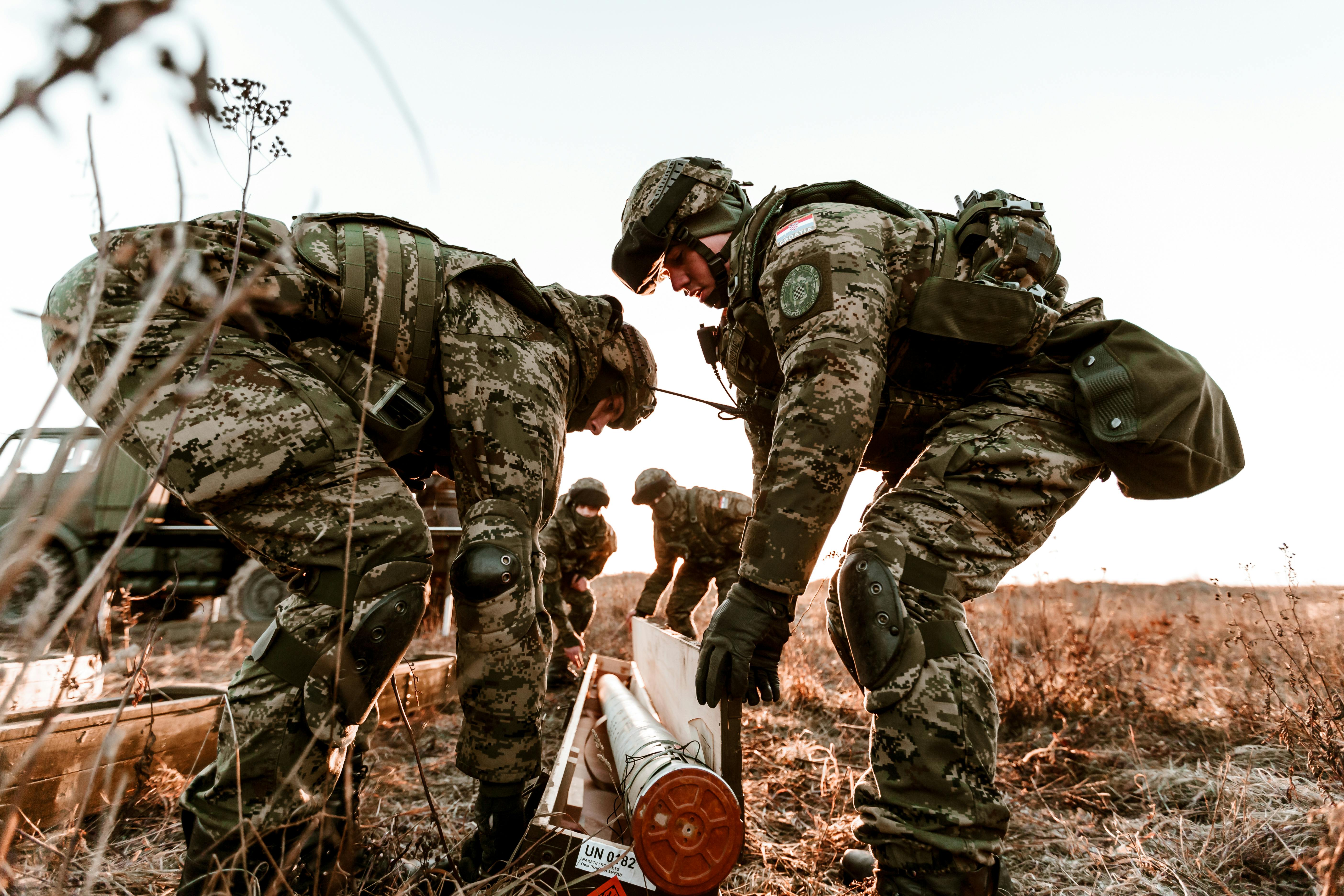
As of November 28, 2025, the Western Hemisphere stands at a precipice, balanced on the brink of a major military confrontation. Following a series of escalating actions, most recently President Trump’s suggestion that efforts to halt Venezuelan drug trafficking “by land” would commence “very soon,” the simmering tensions between Washington and Caracas have reached a critical flashpoint. The massive, months-long military buildup in the Caribbean, officially framed under the banner of Operation Southern Spear, now presents an overwhelming projection of American power, forcing a global recalculation of regional security and geopolitical alignments.
The situation is defined by stark contrasts: the tactical visibility of the world’s largest warship operating near Venezuelan waters on one side, and President Nicolás Maduro’s declaration of a nationwide, high-alert posture on the other. While the declared mission remains the dismantling of transnational criminal organizations, notably the US-designated Foreign Terrorist Organization (FTO) Cartel de los Soles, analysts and regional leaders alike perceive the underlying calculus to be one of regime change, drawing parallels to past US interventions in the region, such as the 1989 operation in Panama. The deployment is unprecedented in its scale for a “counternarcotics” effort, suggesting a readiness for kinetic action that could fundamentally redraw the political map of the Americas.
Naval and Aerial Dominance Projection
The centerpiece of the American military presence was the carrier strike group, anchored by the world’s largest warship, the USS Gerald R. Ford (CVN 78). Its deployment to the Caribbean, entering the U.S. Southern Command (SOUTHCOM) area of responsibility in mid-November 2025, was a masterclass in the projection of overwhelming sea power. The group represented not just a few dozen aircraft, but a floating airbase capable of sustained, multi-domain operations across a vast theater of action.
The Carrier Group’s Strategic Position and Capabilities
The Ford Strike Group, comprising over 4,000 sailors, is designed to generate a high volume of strikes against land targets, should the President give the order. This immense concentration of naval power served a dual purpose: it was the primary instrument for any potential kinetic action, and simultaneously, it acted as the ultimate bargaining chip, a constant, tangible reminder to the Venezuelan leadership of the overwhelming material disparity between the two nations.
- Air Power: The group brought with it dozens of tactical aircraft, featuring the supersonic F/A-18E/F Super Hornet fighter jets for air superiority missions. Electronic warfare capabilities were provided by the E/A-18G Growlers, critical for jamming hostile communications and sensor networks. Airborne command and control rested with the E-2D Advanced Hawkeye platforms. The sheer visibility of the carrier group was a political statement as much as a military one, designed to provoke a desired capitulation.
- Unseen Deterrent: Submarines equipped with advanced sensors and precision strike capabilities provided an unseen layer of deterrent. The larger deployment package also included at least one nuclear-powered attack submarine, augmenting the pressure campaign.
- Joint Force Integration: The carrier group joined other assets, including the Iwo Jima Amphibious Ready Group (ARG) and Marine Expeditionary Units (MEU), signaling a layered, ready response force capable of various contingencies.
The Deployment of Long-Range Strike Assets and Reconnaissance Platforms
Beyond the immediate maritime screen, the operation, dubbed Operation Southern Spear, included the deployment of strategic air assets capable of striking targets deep within Venezuelan territory without ever entering hostile airspace. The inclusion of heavy strategic aircraft, conducting deliberate flybys near the recognized maritime boundaries, signaled an intent to strike high-value targets with impunity.
- Strategic Bombers: Supersonic B-1B Lancer bombers, nicknamed the “Bone,” took off from Dyess Air Force Base in Texas to conduct missions near Venezuela’s coast. These bombers are capable of carrying more ordnance than any other plane in the US inventory and can execute standoff cruise missile strikes against land targets. B-52H Stratofortress crews have also participated in “bomber attack demos” in the region.
- Reconnaissance and Surveillance: Complementing these strike platforms was a sophisticated array of unmanned aerial systems and specialized maritime patrol aircraft. The deployment included MQ-9 Reaper drones, tasked with persistent surveillance and ready precision strike capability. Crucially, US Air Force RC-135V Rivet Joint electronic surveillance planes were reportedly used to test Venezuelan sensors and responses, mapping their network architecture in preparation for potential direct action.
- Forward Air Power: A squadron of Marine Corps F-35B Lightning II fighter aircraft was stationed at the re-opened Roosevelt Roads naval base in Puerto Rico, providing a forward-deployed, fifth-generation air presence ready to support the task force.
- Allied Concerns: Even allies such as the United Kingdom raised doubts about the legality of the US military moves. The primary concern across established capitals was the potential for catastrophic unintended consequences, chief among them the sudden creation of a massive refugee crisis that would inevitably spill over into neighboring, already fragile, economies.
- Regional Opposition: Neighboring nations felt the pressure most immediately. Regional countries including Mexico, Colombia, and Brazil have publicly voiced opposition to the use or threat of force, recognizing the immediate impact on their own security and stability. The UN has followed the tensions with “grave concern,” with the Secretary-General urging dialogue and compliance with international law following the extrajudicial nature of the prior maritime strikes.
- Russia and China Solidarity: Both Russian President Vladimir Putin and Chinese President Xi Jinping issued separate letters to President Maduro, expressing solidarity and stressing firm opposition to foreign interference in Venezuela’s internal affairs. The US buildup is interpreted by some analysts as a signal intended to challenge the influence of these actors.
- Material Support: Russia, in particular, has significantly bolstered Caracas, having reportedly sold the country arms worth approximately $14.5 billion, including advanced S-300VM air defense systems, with Russian personnel present in the country. China has also been reported to be providing riot control and digital surveillance equipment to the regime.
- Geopolitical Flashpoint: For these global actors, the potential conflict represented an opportunity to expose perceived overreach by the American administration, escalating the crisis beyond a bilateral dispute into a significant flashpoint in the broader contest for global strategic advantage. A US attack would be aimed not just at Venezuela but at driving China and Russia out of the entire Western Hemisphere.
- Internal Instability: The entire Venezuelan economy is built around Maduro’s patronage networks, with the military elite controlling key economic sectors and criminal enterprises. Analysts warned that removing the regime without a clear plan for governance transition, economic revitalization, and security sector restructuring would simply create a power vacuum, leading to a near-certain slide into internal chaos or civil strife.
- External Spoilers: Experts noted that any post-Maduro Venezuela would likely be undermined by competing external influences from US adversaries like China and Russia, especially if internal divisions within the opposition persist. The cooperation of regional heavyweights like Colombia, Brazil, and Mexico would be critical to stabilization, yet they have already expressed opposition to the US threat of force.
- Migration Crisis: Venezuela has already generated nearly 7.9 million refugees, the second-largest displacement crisis globally as of late 2025. Military operations would trigger massive new flows into neighboring countries already struggling with the existing diaspora, creating an unmanageable strain on regional resources and goodwill.
- Economic Blowback: Any action damaging single points of failure in the energy system, such as ports, could have severe global repercussions. If a war cut off Venezuela’s oil supply, which, despite falling production, still holds the world’s largest proven reserves, it could trigger a global oil panic, potentially driving prices above $150 per barrel and triggering severe inflation and recessionary risk in the US and globally. The humanitarian and diplomatic burden of a displaced population seeking sanctuary northward would directly offset any short-term security gain achieved through force.
The integration of these long-range assets into the operational plan demonstrated a capability not just to invade, but to systematically degrade the nation’s capacity to respond across its entire geographical scope, indicating a plan for comprehensive military dominance, rather than a limited incursion.
Geopolitical Repercussions and Global FissuresThe announcement and subsequent military mobilization sent immediate shockwaves through the established network of global powers, eliciting a range of responses that fell short of a unified Western consensus.
Reactions from Traditional Allies and Hesitation in the Hemisphere
Key European and North American partners expressed profound alarm, focusing their public statements on the danger of unilateral military action in a region already plagued by instability.
The Positioning of Adversarial Global Powers
The situation was immediately seized upon by nations positioned as strategic rivals to the United States, who viewed the crisis as an opportunity to solidify their influence in the Western Hemisphere.
The Unanswered Questions of Intervention
The sheer scale of the military commitment has led policy experts and former officials to press the White House on the clarity of its objectives and its strategy for the aftermath of any kinetic action—a plan that has remained conspicuously absent.
The Critical Absence of a Comprehensive Post-Conflict Strategy
Commentators pointed out that while overwhelming military force might achieve short-term objectives—such as regime removal—the inherent fragility of the Venezuelan state demanded an immense, sustained commitment to stabilization and reconstruction. The historical precedents of nation-building efforts that devolved into protracted, costly quagmires were frequently cited as dire warnings.
The Human Cost and the Unmanageable Refugee Surge
Underpinning the strategic concerns was the profound and immediate humanitarian calculus. The prospect of triggering a massive internal displacement—millions fleeing active combat—was described as an unmitigated crisis waiting to happen.
The Threshold of Conflict and the Path Forward
As the specified timeframe of the President’s implied ultimatum drew to a close, the world settled into an agonizing period of nervous anticipation on November 28, 2025. Military readiness levels across the Caribbean remained at peak alert, with every movement of air and sea traffic meticulously tracked by global intelligence networks.
The Final Hours Before the Assumed Deadline
Official bravado from Washington mingled with defiant resolve from Caracas, with the fate of the region hanging precariously on the final decision made in the Oval Office. The preceding days saw major disruptions, with six international airlines suspending flights following FAA warnings about the “worsening security situation and heightened military activity” near Venezuela, an action Caracas labeled as an endorsement of “state terrorism”. Every minor shift in naval positioning was scrutinized for clues as to whether the political calculus had changed or if the invasion was indeed imminent.
The Contingency for De-escalation and the Legacy of the Brinkmanship
Despite the forceful declaration of intent to begin land operations “very soon,” the outline of potential de-escalation remained a theoretical possibility, though one growing dimmer with every passing hour. Such a retreat would require the Venezuelan leadership to make significant, verifiable concessions framed as a victory for the President’s strong-arm diplomacy.
However, even if the invasion were averted at the absolute last minute, the legacy of the crisis would be permanent. This episode of brinkmanship, regardless of the final outcome, would be remembered as a stark demonstration of the administration’s willingness to rapidly escalate to the edge of war in its own backyard. This action fundamentally alters the security calculus for every nation in the Americas, setting a new, far more precarious standard for geopolitical maneuvering in the region for the foreseeable future.