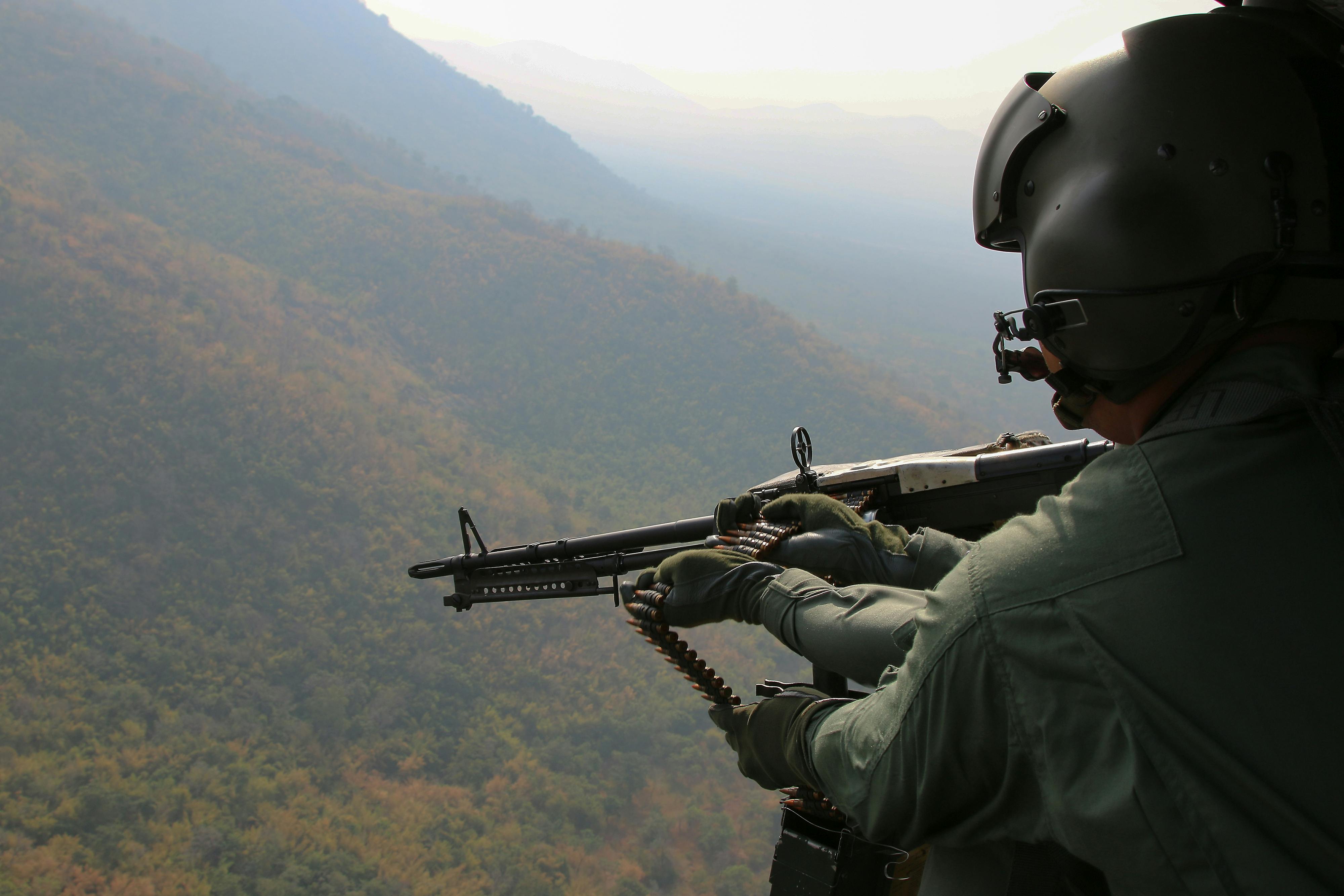
The Spectrum of Future Potential Actions: Beyond the Line in the Sand
The administration’s strategy appears to be one of calculated, relentless escalation using an ambiguous spectrum of options. The proposed leaflet drop—a subject of intense internal deliberation—sits at a fascinating strategic inflection point. It is clearly below the threshold of kinetic engagement (like an airstrike) but significantly above mere economic sanctions or diplomatic statements. It is psychological warfare with high visibility.
Presidential Posture on Direct Military Intervention
When faced with the ultimate escalation question—the direct deployment of American ground forces onto Venezuelan soil—President Trump adopted a posture of total openness, refusing to foreclose any option whatsoever. His reported response, “No, I don’t rule out that,” followed by the emphatic declaration, “I don’t rule out anything. We just have to take care of Venezuela,” is a textbook strategic signal designed to maximize uncertainty for the target government.. Find out more about US considering dropping leaflets in Venezuela.
This strategic ambiguity is a deliberate tool. It forces the Venezuelan defense apparatus to prepare for every eventuality—from air and sea strikes to a potential ground operation—stretching their resources and command structure to their breaking point. Defense Secretary Hegseth echoed this by saying nothing was “off the table,” though he qualified that nothing was “automatically on the table” either. This tightrope walk is complicated by domestic sentiment; a recent CBS News/YouGov poll indicated that a staggering 70% of Americans oppose U.S. military action in the South American country. This domestic reality likely tempers the speed of any ground troop deployment, even as the legal justification for it has been strengthened.
The Psychology of the Leaflet Drop: Unconventional Warfare
Consider the planned leaflet operation. It is a classic, low-risk, high-impact move. It is a form of covert action that generates maximum psychological impact without risking immediate casualties that would trigger a full-scale international condemnation or domestic backlash associated with a full invasion. It’s a message dropped from the sky: We are watching, and the regime’s control is not absolute.
The intention, as emphasized by officials familiar with the planning, is *at this point* not to invade or physically capture the leader. Instead, the strategy is a systematic exhaustion of the regime. This campaign is layered:. Find out more about US considering dropping leaflets in Venezuela guide.
- Military Buildup: Positioning naval and air assets in the Caribbean (the largest build-up since the Cuban Missile Crisis, according to some reports).
- Kinetic Action: Deadly strikes against vessels linked to illicit activities, killing dozens since early September.
- Legal Designation: The FTO branding to unlock financial and military tools.. Find out more about US considering dropping leaflets in Venezuela tips.
- Psychological Messaging: The impending leaflet drop to sow internal doubt.
The goal of this relentless, multifaceted pressure is to create an environment where the existing structure of power simply becomes unsustainable. It’s about creating enough internal stress and external isolation that the system cracks from within, achieving a political outcome without the catastrophic downside of an overt, internationally recognized war. The entire sequence—from the naval exercises to the potential dropping of paper messages—paints a picture of a sustained, unconventional effort to engineer regime change via systemic corrosion.
Actionable Insights: Navigating the New Geopolitical Reality
For anyone observing the region, whether in finance, diplomacy, or logistics, the designation of the Cartel de los Soles as an FTO is the pivot point. The political and military tension is now backed by the full weight of U.S. counter-terrorism law. What does this mean for you right now, on November 25, 2025?. Find out more about US considering dropping leaflets in Venezuela strategies.
Practical Takeaways for Stakeholders
- Assume Maximum Scrutiny: Any transaction, shipment, or communication touching individuals or entities previously linked to the Maduro government should be treated as potentially involving a sanctioned terrorist organization. Conduct enhanced due diligence—the legal risk has increased exponentially.
- Monitor Aviation Protocols: Continue to adhere strictly to the FAA advisories, even if they are extended beyond the initial Feb. 19 deadline mentioned in some reports. Assume overflights will remain costly and complex due to continued electronic interference and heightened military activity.
- Watch the Maduro Offer: Pay close attention to the sustainability of Maduro’s call for “face-to-face” talks. If the U.S. side agrees to high-level talks while continuing military pressure, it suggests the primary goal may still be political concession rather than immediate kinetic removal.. Find out more about US considering dropping leaflets in Venezuela overview.
- Track Internal Security Vacuums: In a post-intervention scenario (which remains a distant but officially “un-ruled-out” possibility), the biggest danger is not the initial conflict but the resulting security vacuum. Analysts worry that defecting military officers or aligned armed groups, the so-called “colectivos,” could seize localized power, creating chaos that far outstrips the current drug-trafficking issues.
The Legal Weight of ‘Terrorist’
Remember, the difference between a criminal organization and a terrorist organization in international law is vast. It affects everything from jurisdiction for military action to the compliance requirements for international banks. The U.S. government has placed its highest level of legal opprobrium on the group, and this is backed by visible military force in the Caribbean. The move signals a commitment to a long-term strategy of containment and pressure, using the FTO designation as the primary legal engine.. Find out more about Formal designation of Cartel de los Soles as terrorist definition guide.
The designation itself is published in the Federal Register, the official repository for such determinations, solidifying the move for all legal entities to reference: Foreign Terrorist Organization Designation of Cartel de los Soles.
Conclusion: The High-Stakes Tightrope Walk
November 25, 2025, finds the situation in Venezuela at a critical, legally defined flashpoint. The formal designation of the Cartel de los Soles is the lynchpin of the current U.S. strategy, providing the legal mandate for actions that have already begun to ripple through the region, most notably disrupting aviation safety and risk management across South America.
The administration is applying pressure across all fronts: legal, military, and psychological. They are walking a very thin line, balancing the desire to apply overwhelming force against the reality of domestic political opposition—where 70% of the country opposes military intervention—and the need to maintain the possibility of a diplomatic off-ramp. The dual strategy of aggressive escalation while keeping channels open for dialogue with Maduro creates maximum uncertainty for Caracas.
The next few weeks will be telling. Will the pressure campaign succeed in fracturing the regime, or will the international isolation simply harden its resolve? The legal foundation has been set; now we watch to see which of the ‘un-ruled-out’ options the administration chooses to deploy next.
What Are Your Thoughts?
Does the FTO designation provide the necessary clarity for international actors, or does it simply raise the risk profile for everyone operating near the Venezuelan coast? Share your analysis in the comments below on how this legal classification will shift the immediate future of the regional security environment. Let us know what you see happening next.