Ukraine War Live: Trump Envoy to Meet Putin as Kyiv Welcomes ‘Fine-Tuned’ Peace Plan
As of November 26, 2025, the diplomatic efforts to conclude the nearly four-year conflict in Ukraine have reached a critical juncture, characterized by a significant US push to finalize a negotiated settlement. Following intensive talks in Geneva and Abu Dhabi, President Donald Trump announced that his peace proposal had been “fine-tuned,” prompting the dispatch of high-level envoys to both Moscow and Kyiv in what appears to be a final sprint toward a comprehensive agreement. While Ukrainian leadership has expressed cautious welcome over the revised framework, the process remains shadowed by ongoing military pressure and underlying skepticism from key European partners.
The Russian Posture Amidst Heightened Negotiations
The Kremlin’s Reserved Acknowledgment and Expectation Management
The response from Moscow has maintained its characteristic measured and somewhat opaque tone, reflecting a strategy aimed at preserving leverage until the final documentation is sealed. While Russian Foreign Minister Sergey Lavrov confirmed that communication channels remain open with American officials, he signaled a conditional readiness, stating that Moscow awaits the updated version of the proposal from its American counterparts to coordinate with European and Ukrainian inputs. This public restraint functions to manage domestic hardliners who might perceive any swift settlement as insufficient to Russia’s stated war aims. High-ranking Russian officials have refrained from detailing the specifics of the “fine-tuned” plan, though previous commentary from the Kremlin indicated that any acceptable proposal must align with the “spirit and letter” of the understanding allegedly reached between President Trump and President Putin during their August summit in Alaska.
Underlying Tensions Regarding Territorial Acquisitions
The fundamental friction point remains the disposition of occupied territories, a core demand from the Russian side that has historically shaped the negotiation backdrop. Reports stemming from earlier internal communications involving the US Special Envoy, Steve Witkoff, suggested that a viable peace deal, in his estimation, would necessitate Russia securing control over the entirety of the Donetsk region and potentially other territorial exchanges, including a “land swap”. The current diplomatic movement unfolds against a reality where Russian forces continue offensive operations, implicitly seeking to solidify their military control de facto before any de jure agreement is signed. While President Trump played down the territorial concession element by suggesting the land Russia seeks “might be gotten by Russia anyway” in the coming months, this underlying expectation continues to define the sensitive negotiation area. The Kremlin has historically shown an unwillingness to negotiate an end that does not recognize its territorial claims, and ultranationalist voices within Russia have already rejected the revised US-proposed peace plan drafts for not conceding to all of Moscow’s maximalist demands.
The Context of Continued Military Exchanges
Sustained Strikes on Ukrainian Civilian and Energy Infrastructure
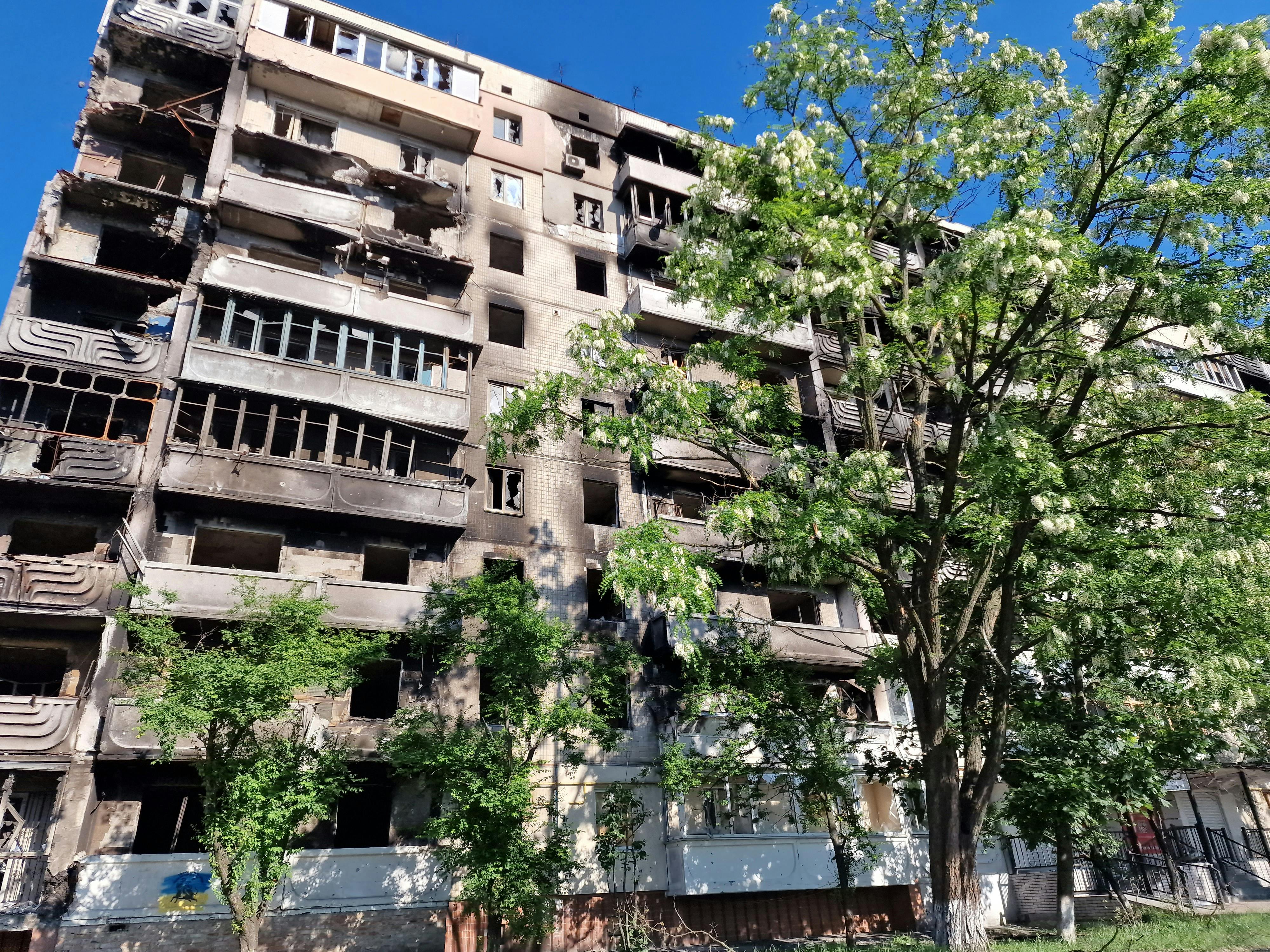
The high-stakes diplomatic maneuvering is sharply juxtaposed against the continued kinetic reality of the conflict, illustrating the immense pressure under which negotiators are operating. Over the most recent period, the Ukrainian capital, Kyiv, endured a renewed and significant wave of nighttime attacks involving both aerial drones and missile barrages. These strikes reportedly targeted and caused damage to residential areas and crucial energy grid infrastructure, resulting in civilian casualties. Such actions serve as a potent reminder to all parties that any successful peace deal must immediately enforce the cessation of such destructive capabilities. The operational tempo suggests that the military component of the Russian strategy is not pausing its pressure campaign while political talks advance.
Reciprocal Cross-Border Military Actions
The conflict’s escalation dynamic is not entirely unidirectional. Reports have confirmed reciprocal military actions originating from Ukrainian forces striking targets within Russian territory, specifically in the southern border regions. The most recent confirmed engagement involved one of the longest and most massive Ukrainian drone attacks on Russia’s southern region of Krasnodar, reportedly wounding six people, with Russian air defenses claiming to have destroyed 249 drones overnight across various regions and occupied Crimea. These confirmed cross-border engagements underscore the continued operational capacity and will of the Ukrainian military to impose costs for the ongoing invasion. The presence of such reciprocal action further complicates the narrative, emphasizing the high-stakes, integrated military situation that the final peace plan must definitively resolve, including robust security guarantees for both sides’ internationally recognized borders.
The Global Coalition and European Reservations
Unified Stance from Key European Allies on Territorial Integrity
The European dimension of this diplomatic exercise is marked by a united, principled stance designed to act as a necessary counterweight to any perceived concessions embedded within the US-backed framework. Following a recent “coalition of the willing” meeting, leaders from major European powers, including the French, German, and British administrations, jointly reaffirmed a non-negotiable tenet of their collective foreign policy: the categorical rejection of border changes achieved through military force. This unified declaration functions as a baseline for their support, signaling that foundational principles of European security architecture cannot be unilaterally dismantled for the sake of a quick cessation of hostilities. This unified front is a strategic move to prevent the final agreement from setting a dangerous precedent for future conflicts across the continent.
Scrutiny of the Diplomatic Process and Perceived Sidelining
Despite the shared overarching goal of ending the fighting, the European bloc has articulated understandable concern over the perceived unilateral nature of the high-level US diplomatic push, which was built upon a framework that initially provoked strong negative reactions in Europe for echoing key Kremlin demands. There is an underlying apprehension that the most critical elements of the peace formula are being negotiated primarily between Washington, Moscow, and Kyiv, potentially marginalizing the direct input of European capitals that have heavily invested in supporting Ukraine’s defense. European Commission President Ursula von der Leyen publicly criticized Moscow’s attacks while emphasizing that pressure will continue “until there is a genuine willingness to engage on a credible path toward peace”. Furthermore, European concerns center on the sustainability of any plan lacking robust, forward-looking deterrence mechanisms against future Russian aggression, with some figures asserting that without such guarantees, the conflict risks a cyclical return. The European position remains one of active engagement, tempered by a clear desire to ensure any resolution reflects a collective, durable security outcome for the entire continent.
Internal American Political Dynamics Influencing the Negotiations
The President’s Immediate Advisory Circle and Briefing Structure
The ultimate responsibility for advancing this ambitious peace initiative rests squarely with the incumbent American President, who has made its resolution a central pillar of his current political mandate. The President has publicly detailed the structure for receiving updates on the complex negotiations, confirming that he will be thoroughly briefed by a designated team of top-tier administration officials. This inner circle is notably comprehensive, including the Vice President, the Secretary of State, the Secretary of War, and the White House Chief of Staff, signifying the cross-departmental importance assigned to the process. This structure—comprising Vice President JD Vance, Secretary of State Marco Rubio, Secretary of War Pete Hegseth, and Chief of Staff Susie Wiles—is designed to ensure the President possesses a complete, multifaceted understanding of all developments—diplomatic, military, and political—before engaging with foreign principals. The reliance on this cadre of trusted advisors underscores the significant political capital being invested in this diplomatic sprint. However, this White House-led approach has generated internal political friction, with some Republican colleagues in Congress expressing worry over the pressure being exerted on Kyiv.
The Conditional Summit and the “Final Stages” Requirement
A key element underpinning the President’s public stance is his carefully worded commitment to meeting both President Putin and President Zelenskyy. This commitment is explicitly conditional, resting on the fulfillment of a high prerequisite: the peace deal must either be entirely finalized or demonstrably in its concluding, “final stages”. This condition serves a dual purpose: it avoids a premature summit that could legitimize an incomplete or unstable agreement, and it sets a clear, high bar for the envoys on the ground. The President is signaling that while he seeks an end to the conflict, he will not rush a signature on an incomplete document, preferring to exert his ultimate influence at the moment of definitive closure. The envoys’ mandate is thus to return with a framework so near completion that only the principals’ formal assent remains required, maximizing the chances of a durable, ratified outcome rather than a temporary cessation of hostilities. The President has also walked back an earlier Thanksgiving deadline, stating clearly: “The deadline for me is when it’s over”.
Charting the Future Landscape Post-Agreement Hope
The Long Road to Post-Conflict Stabilization and Rebuilding
Even should the current diplomatic efforts conclude successfully with a signed cessation of active combat, that event will only mark the commencement of an even more arduous and resource-intensive phase: the stabilization and long-term rebuilding of the conflict-affected regions. The finalized agreement must contain clear, actionable mechanisms for international oversight of territorial transitions, the safe return of displaced populations, and the massive infrastructural and economic recovery required across Ukraine [cite: 5, as it relates to the need for a clear roadmap]. The nature of the security guarantees enshrined in the final document will directly dictate the speed and scale at which international financial support can be mobilized. Any lingering ambiguity over security provisions will translate directly into reluctance from international donors and investors, effectively prolonging the economic recovery long after the last shot is fired. Therefore, the true success of the current negotiations will ultimately be measured not just by the signing ceremony, but by the clarity and enforceability of the implementation roadmap attached to that signature.
Implications for the Broader Geopolitical Order
The final outcome of these US-brokered negotiations carries profound implications extending far beyond the immediate conflict zone, set to shape the global geopolitical landscape for the foreseeable future. A successful settlement, even one that necessitates difficult territorial compromises, will re-establish a significant, albeit potentially fragile, precedent for negotiated conflict resolution in the twenty-first century, emphasizing diplomacy over attrition. Conversely, a complete diplomatic failure at this critical juncture, following such high-profile engagement, could signal the entrenchment of current lines of control and a return to a prolonged, frozen conflict, possibly leading to escalations in other geopolitical flashpoints as underlying tensions remain unaddressed. The manner in which the security environment is recalibrated—with or without robust multilateral guarantees—will heavily influence the defense postures of NATO members and non-aligned nations alike. The entire international community is closely observing this final act of negotiation, recognizing that the peace achieved, or the failure to secure it, will set the operational tone for international relations for years to come. The framework that the envoys are currently presenting, refined from the initial twenty-eight points down to a core nineteen, represents a critical juncture in the post-Cold War European security architecture, and its resolution will be analyzed for decades as a case study in high-stakes, multi-party crisis management in a volatile world. The hopes of millions currently living under the shadow of continued conflict rest on the delicate compromises being hammered out in these final, tense hours.