The Crucible of Winter: Concluding Assessment on the Conflict’s Trajectory and the Long Shadow of Reconstruction
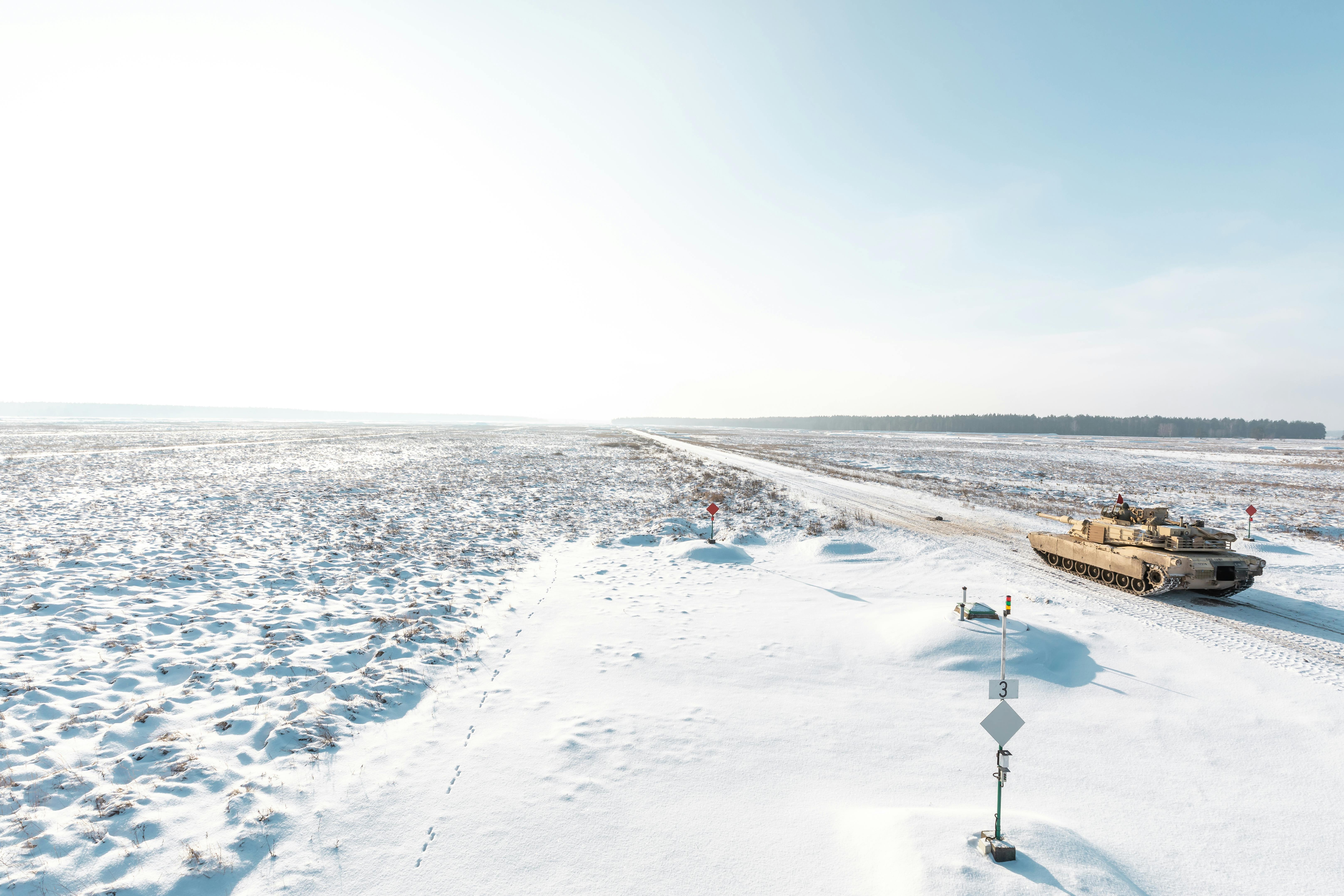
As the calendar turns to December 2, 2025, the world watches a conflict that has metastasized from a localized invasion into a defining geopolitical crisis of the early century. The operational tempo on the ground is not slowing; it is merely shifting its character, pressed by the annual constraint of advancing winter weather. To understand where this protracted struggle is headed, we must look beyond the immediate, claimed tactical victories and analyze the deeper currents shaping the battlefield, the negotiating tables, and the very structure of future European security. This assessment is anchored in the realities of today, December 2, 2025, immediately following a day of significant—though fiercely contested—reports from the front lines, punctuated by a tragic civilian strike in Dnipro and a strategic thrust in the Black Sea. What we find is a landscape defined by military attrition, intractable political positions, and an accelerating international pivot toward post-conflict frameworks that must be built while the fighting continues. The developments of the last 48 hours are not an end point, but a crucial nexus marking the transition into a new, colder, and more politically complex phase of the war.
The Immediate Operational Outlook Post-Territorial Shifts
Day one thousand three hundred seventy-seven, and the surrounding period, has seen a significant operational development, although the full confirmation remains subject to ongoing combat assessments. The primary anchor point for this immediate outlook is the claim by Russian military commanders to President Putin on Monday that they had seized the key Donbas logistics hub of Pokrovsk, alongside the city of Vovchansk in the northeast Kharkiv region.
Solidifying the Line: Winter’s Inevitable Grip. Find out more about Long-term security guarantees for Ukraine post-conflict.
When major territorial claims are made, the immediate operational tempo invariably slows as the seizing force attempts to “declare and defend” while the losing side scrambles to reorganize and counterattack. With winter weather now truly upon the region, this pattern is magnified. The focus for both belligerents must pivot sharply: * **Defensive Fortification:** The emphasis shifts from deep maneuver warfare to deep defense. Frontline units will be digging in deeper, reinforcing winter positions, and prioritizing the protection of personnel and equipment from extreme cold, which can be as debilitating as enemy fire. * **Logistical Overhaul:** The advance of heavy mechanized forces in deep mud or snow is notoriously difficult. The immediate priority for both command structures is resupplying forward depots with winter-grade fuel, specialized lubricants, warm gear, and medical supplies. Any gains made now—like the claimed capture of Pokrovsk, a major road and rail hub—must first be made logistically viable for the long term. * **The Lull and the Surge:** History teaches us that extreme cold often forces lulls in mechanized activity, but this is often punctuated by intense, localized surges of activity, particularly involving lighter, more adaptable units or concentrated artillery/drone strikes where mobility is less of a factor. This period is a test of industrial capacity just as much as battlefield courage. For Kyiv, the pressure following any confirmed loss of a hub like Pokrovsk is immense, immediately complicating supply lines for garrisons further west. This tactical reality underscores why the next point is so critical: the battlefield gains are meaningless without a shift in political will.
The Persistent Obstacle of Political Reconciliation
Military developments, even significant ones like the claimed capture of a key city, only serve to re-illuminate the fundamental political deadlock. The war grinds on because the maximalist objectives of the primary actors remain mutually exclusive, turning the conflict into a stark **war of attrition**. On one side, Ukraine’s foundational red line remains non-negotiable: territorial concessions are unacceptable as they invite future aggression and constitute a capitulation. On the other, the asserted military objectives by the Russian side demand recognition of annexed territories—a demand that has only hardened following recent advances. The current diplomatic flurry—epitomized by President Zelenskyy’s recent diplomatic outreach in Paris while US envoys were traveling to Moscow—reveals this gulf. While necessary, these talks expose the vast distance separating what *can* be achieved diplomatically from what *is* being fought for militarily. The path to peace remains obscured not by a lack of proposals, but by a lack of political flexibility on the core issues of **territory and security guarantees**. The developments of this particular day are a microcosm of this larger struggle: localized military action juxtaposed against a seemingly intractable diplomatic deadlock.
The Enduring Nature of the Conflict’s Internationalization. Find out more about Long-term security guarantees for Ukraine post-conflict guide.
The war has long since ceased to be a purely bilateral affair; it is now deeply interwoven with the political, economic, and security fabric of the entire international system. This internationalization is both the source of Ukraine’s defense and its greatest strategic vulnerability.
The Lifeblood of External Commitment
For Ukraine, support from external partners is not merely assistance; it is the essential component of the defense equation itself. The sustainability of that commitment—in terms of materiel, intelligence, and financial backing—remains the single most decisive variable in the conflict’s long-term trajectory. Kyiv’s strategy must, therefore, be two-pronged: defend the front line and constantly manage the **external pipeline of resources**. This involves the constant diplomatic outreach—seen in President Zelenskyy’s recent high-level meetings—to maintain the flow of aid and secure binding, long-term frameworks. The world’s focus on the front lines must be matched by an equivalent focus on the diplomatic corridors that keep those front lines supplied.
The New Calculus of Asymmetric Warfare: The Black Sea. Find out more about Long-term security guarantees for Ukraine post-conflict tips.
The recent, highly effective Ukrainian naval drone operations against Russia’s so-called “shadow fleet” in the Black Sea—targeting tankers like the *Kairos* and *Virat* far off Turkey’s coast—demonstrates this internationalization in an asymmetric form. These strikes are not just tactical wins; they are an extension of economic warfare aimed at choking off Russian oil revenue streams, which help fund the conflict. This action forces the international community to reckon with the future of **Black Sea security dynamics**. The region is now confirmed as a major strategic chokepoint. Future stability will necessitate carefully negotiated international frameworks addressing freedom of navigation and maritime trade corridors, irrespective of the final land border arrangement. The drone campaign, while enhancing Kyiv’s leverage, simultaneously ratchets up the pressure on international partners to ensure stability in vital shipping lanes.
The Unresolved Question of Final Resolution
As the conflict grinds deeper into its successive year, the path toward a definitive conclusion remains frustratingly obscured. Every localized military victory or setback is immediately absorbed by the entrenched political positions held by the primary actors. It is essential for observers and policymakers alike to internalize this key insight: until the military cost of continuing the war exceeds the political cost of compromising, the fighting will continue. The events of December 1st—the territorial claims, the civilian casualties, the diplomatic overtures—are all symptoms of a system straining under an unresolved mandate. For the world, this means continued, profound concern, but for stakeholders, it demands action on multiple tracks simultaneously. The military situation determines the negotiating *leverage*; the political will determines the *speed* of any resolution; and the long-term frameworks—security and reconstruction—determine the *viability* of any peace that might eventually be forged.
Summary of Key Day Events Anchor Points (As of December 2, 2025). Find out more about Long-term security guarantees for Ukraine post-conflict strategies.
To consolidate the immediate situation, the most salient updates defining this critical nexus of military action and diplomatic pressure are: * **Territorial Claims:** Russian forces claimed the capture of the key logistical center of **Pokrovsk** (Donetsk region) and the city of **Vovchansk** (Kharkiv area). * **Civilian Toll:** Ukraine reported a tragic ballistic missile strike on **Dnipro** on December 1, resulting in four confirmed civilian deaths and dozens injured. * **Maritime Pressure:** Ukrainian **naval drone operations** targeted Russian maritime assets in the Black Sea, striking sanctioned oil tankers operating outside the immediate conflict zone. * **Diplomatic Action:** President Zelenskyy engaged in high-level diplomatic meetings, such as his visit to **Paris**, while a US delegation prepared for talks with the Russian leadership in Moscow. These anchor points define the day: a potential shift on the eastern front, a fresh tragedy striking the home front, and the continued high-stakes maneuvering at the international level.
Reconstruction Planning and Long-Term Security Frameworks
While the soldiers fight for the next kilometer of territory, a parallel, silent campaign is underway: planning the post-conflict architecture. This planning is critical because the legitimacy and longevity of any future peace settlement will depend on the security and economic viability of a post-war Ukraine.
The Precedent Setting for Post-Conflict Security Guarantees. Find out more about Long-term security guarantees for Ukraine post-conflict overview.
Even as the fighting rages, allied nations are actively moving beyond temporary battlefield support to architect a viable, long-term **security architecture for Ukraine**. This process is fraught with the same political challenges that paralyze peace talks. Ukraine insists on *binding* guarantees—assurances that actively deter future aggression, not just promises of post-conflict assistance. The discussions are distinguishing between weaker security commitments and the robust, *positive security guarantees* Kyiv is seeking. Crucially, the US position, as communicated to allies, is that long-term security guarantees will be addressed *after* a negotiated peace agreement is signed, a stance that troubles Kyiv, which sees guarantees as a prerequisite for any major concession. A key concept emerging from European planning, sometimes termed the “reassurance force,” involves the potential deployment of tens of thousands of ground troops from a Coalition of the Willing to stabilize a future ceasefire, though this would need a clear definition of scope and would be opposed by Moscow if it involved NATO forces. The final framework must be robust enough to bridge the gap between US conditional support and European willingness to take on greater direct security responsibility. **Actionable Insight on Security:** For any observer tracking the conflict’s end-state, the *specifics* of these security guarantees—who guarantees, what action is triggered upon violation, and whether they are enacted *before* or *after* a ceasefire—will be more telling than any battlefield report.
Initiatives for Economic Recovery and Infrastructure Rebuilding
The sheer scale of destruction—estimated at over $524 billion as of mid-2025—necessitates a multi-stage national reconstruction plan spanning decades. Planning is no longer abstract; it is focused on concrete, investment-ready projects designed to accelerate Ukraine’s path toward EU accession. The current focus areas, backed by massive international financing mechanisms, are highly specific: * **Energy Grids:** Repairing and stabilizing the energy system is paramount, with plans for importing gas and rebuilding renewable capacity. The EBRD’s pilot loan to Ukrnafta for dispersed gas generation is a direct response to this need for resilience. * **Transportation Networks:** Rebuilding key corridors is essential for economic life and military logistics alike, with international institutions like the EBRD and EIB preparing technical assistance for these large projects. * **Housing and Municipal Services:** Significant funding, such as the €520 million for municipal infrastructure, is being targeted at war-affected areas for housing, healthcare, and urban mobility. The construction of new residential buildings, complete with integrated shelters, shows a direct adaptation to the threat environment. A significant logistical priority woven into these initial recovery phases is the integration of **demining and unexploded ordnance clearance**. Large areas cannot be returned to civilian use or begin construction until this hazardous work is completed. This is where international technical assistance, like that channeled through the World Bank’s PREPARE Project, becomes crucial.
Accountability Mechanisms for War Crimes and Atrocities. Find out more about Planning for Ukraine infrastructure reconstruction financing definition guide.
A foundational demand from the Ukrainian state and its allies, a non-military component that will prove politically charged and protracted, is establishing accountability for alleged violations of international law. The sheer volume of documented incidents—over 140,000 war-related complaints registered nationally as of early 2025—is staggering. The framework for justice is multi-layered: 1. **International Criminal Court (ICC):** The ICC has already issued arrest warrants for senior Russian officials. Ukraine’s passage of domestic legislation to ratify the Rome Statute, albeit with limitations, marks a major step toward full membership and jurisdiction. 2. **National Trials:** Domestically, Ukraine has pursued justice rigorously, conducting 292 war crime trials between late 2024 and mid-2025, focusing on transparency and rigor in evidence gathering, often with EU and US support. 3. **Civil Society/NGO Efforts:** Groups like The Reckoning Project work alongside Ukrainian authorities to meticulously document atrocities, fight disinformation, and prepare evidence for international proceedings, focusing on crimes like torture, deportation, and sexual violence. Ensuring justice remains a core part of the narrative, designed to ensure that any negotiated peace does not grant amnesty for high-level crimes.
Integrating Lessons Learned for Future Defense Policy
The experience of this large-scale conflict is already being studied intensely by defense ministries globally, fundamentally altering long-term defense spending and procurement. The core lesson learned centers on the complete obsolescence of assumptions regarding the cost-exchange ratio of warfare. The battlefield laboratory of Ukraine has demonstrated that cheap, mass-produced, often improvised systems can inflict crippling damage on high-value, expensive targets. Key takeaways being rapidly incorporated into global doctrine include: * **The Drone Imperative:** Global military powers now recognize that drone production must scale to industrial levels. Ukraine’s own reported aim of producing 4 million drones annually by 2025 highlights the new baseline. * **Electronic Warfare (EW) Dominance:** The prevalence of sophisticated EW systems has rendered reliance on standard GPS-dependent systems dangerous. Future defense doctrines must prioritize development in autonomous navigation and jamming-resistant communications (e.g., fiber-optic links). * **Logistical Resilience and Supply Chains:** Centralized manufacturing is now seen as a high-value target. The resilience demonstrated by decentralized, volunteer-supported production networks in Ukraine is forcing NATO allies to map and harden their critical supply chains, focusing on distributed manufacturing and forward maintenance hubs to maintain **logistical resilience** under sustained attack. This conflict is not just changing *what* weapons are used, but *how* industrial bases and R&D cycles must operate to support modern mechanized warfare.
The Future of Black Sea Security Dynamics
The aggressive naval actions—both the defensive drone strikes by Ukraine and the continued strategic maneuvering by Russia—confirm the Black Sea’s status as a critical geopolitical chokepoint. Future stability is inextricably linked to maritime freedom. The drone attacks targeting the shadow fleet have exposed vulnerabilities in sanction evasion efforts and in Russian naval logistics. Any final security arrangement will need to directly address these dynamics: * **Freedom of Navigation:** Ensuring that commercial shipping can move safely and reliably, especially for grain and energy exports, will be a primary international concern. * **Naval Balance:** The success of asymmetric, low-cost naval drones against larger, state-of-the-art vessels forces a re-evaluation of naval power projection and defense expenditures across the entire Black Sea community of nations. This necessitates a carefully negotiated international presence or the establishment of clearly enforceable demilitarized or monitored zones in key sectors to prevent further escalation over contested waters. The precedent set by these drone campaigns will weigh heavily on any future maritime treaty.
Conclusion: The Grind Continues, But the Future is Being Built Now
The narrative on December 2, 2025, is one of high-stakes military tension layered over an even more complex political and reconstruction effort. The immediate battlefield, influenced by the bitter cold and reported tactical shifts around Pokrovsk and Vovchansk, remains unpredictable, yet the larger trajectory is clear: this conflict will not yield to a single decisive battle. The path forward is defined by three concurrent, necessary efforts: 1. **Political Realism:** The international community must continue to push for a diplomatic off-ramp, but it must do so while recognizing that Ukraine will not surrender its core sovereignty for a temporary pause. 2. **Ironclad Guarantees:** The real measure of a future peace will be the **security architecture** put in place. Without binding, credible commitments to deter future aggression, any ceasefire will be merely a brief intermission. 3. **Industrial and Infrastructural Will:** The global partnership supporting Ukraine’s reconstruction—focusing on energy, housing, and the digital/defense industrial base—is as vital as any military aid package. This sustained commitment demonstrates the West’s stake in a stable future for the region. The lessons of the drone war—agility, decentralized production, and EW resilience—are already being written into the defense doctrine of tomorrow’s militaries. This conflict, for all its tragedy, is a brutal, real-time laboratory for modern **future defense policy**. We must continue to monitor the front lines, but to truly understand the evolution of this crisis, we must pay equal attention to the drafting rooms where the blueprints for enduring **security guarantees for Ukraine** and the reconstruction of a modern nation are being finalized. What part of the post-conflict framework—security, justice, or reconstruction—do you believe is the most difficult to agree upon while active hostilities continue? Share your analysis below.