Global Ramifications of a Proven Counter-Drone Ecosystem: Ukraine’s Interceptors Reshape Middle East Defense Dynamics
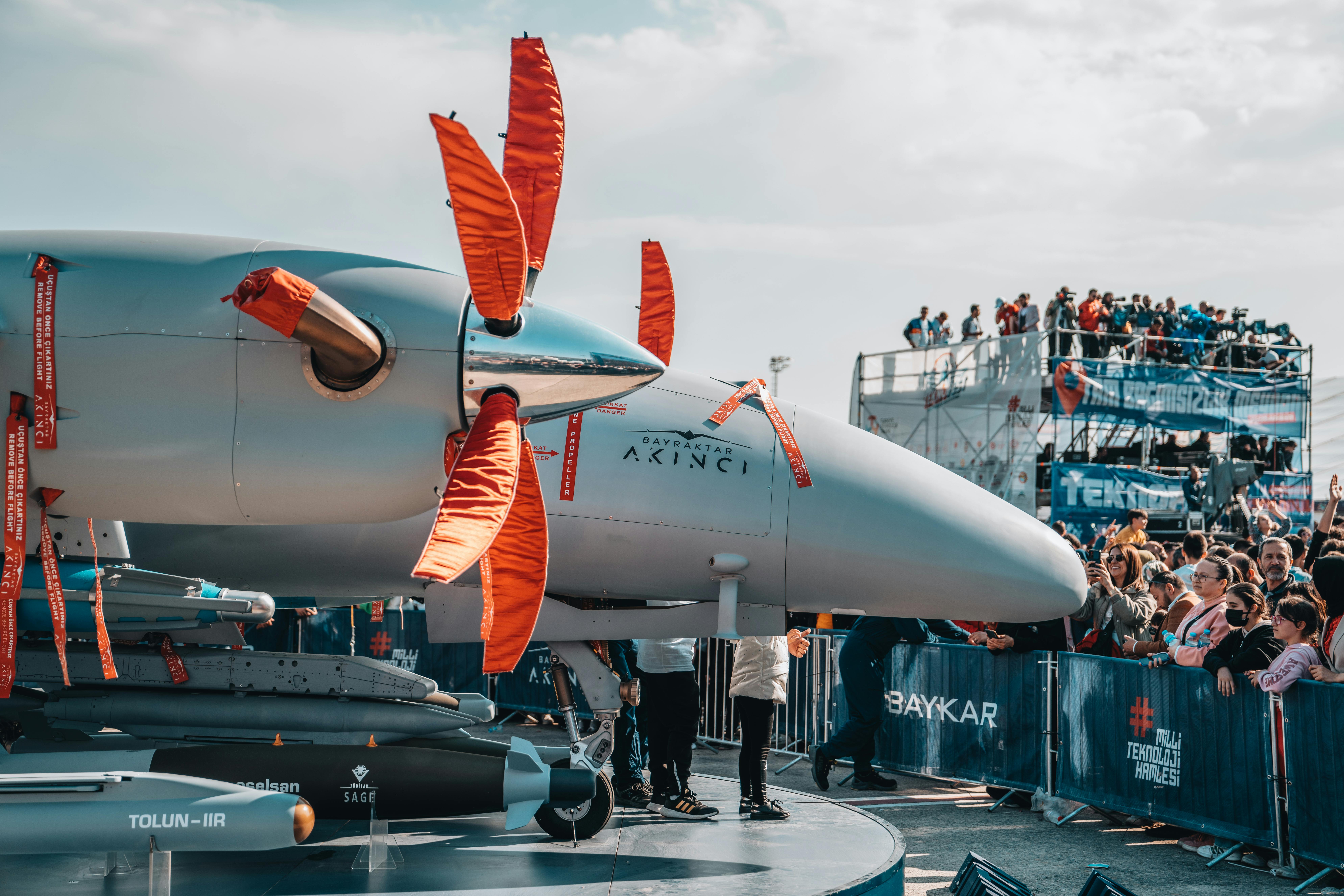
The global defense calculus is undergoing a fundamental reassessment, catalyzed by the battlefield proven, asymmetrical technological advantage demonstrated by Ukrainian counter-drone systems. As demand for these interceptors surges across the Middle East—a nexus of current aerial threats—the ripple effect of this Ukrainian success story is already forcing a long-term restructuring of how military powers approach low-end aerial threats and technological innovation. What began as an existential necessity for Kyiv has rapidly evolved into a critical supply point for strategic allies, positioning Ukraine at an unconventional epicenter of modern defense exporting.
Implications for Western Defense Posture
For established Western military powers, the current situation in the Middle East serves as a stark, real-time laboratory demonstrating the limitations inherent in relying solely on legacy, high-cost solutions against the rapidly developing spectrum of asymmetric threats. The operational context underscores the economic unsustainability of defending against massed drone swarms with advanced munitions.
The Patriot-Heavy Model Challenged
The extensive use of high-end air defense systems in the Middle East against inexpensive attack drones has provided a potent, if unwelcome, validation for the necessity of developing equivalent, scalable, and economical counter-drone capabilities within NATO inventories. Reports from early March 2026 indicate that Middle Eastern nations expended over 800 Patriot interception missiles in just three days during recent hostilities—a quantity President Zelenskyy noted Ukraine has never held in reserve throughout the entire four-year war. This dramatic expenditure highlights the Achilles’ heel of multi-million-dollar missile systems against threats like the Iranian-designed Shahed drone, which costs an estimated $30,000. Conversely, Ukrainian interceptor drones, such as SkyFall’s 3D-printed P1-Sun, are priced around $1,000 to $2,000.
Supply Chain Resilience and Strategic Procurement
The operational successes of Ukrainian firms have direct implications for strategic thinking regarding the defense technology supply chain. The ability of Ukrainian manufacturers to locally produce nearly all necessary drone hardware signals a resilience and rapid scaling capability that Western defense procurement models, often characterized by long lead times and high reliance on a few large contractors, may struggle to emulate quickly. As of August 2025, the number of active firms in Ukraine’s unmanned systems sector exceeded 800, showcasing a diversification that mitigates single-point-of-failure risks. This agility is now attracting attention, with the United States and several Gulf partners engaging in discussions with Kyiv about potential technology transfers and system acquisition.
The Reversal in Global Arms Trafficking Flow
Perhaps the most historically significant ramification of this trend is the notable reversal in the global flow of military expertise and technology concerning the domain of low-end aerial defense. For decades, advanced defense technology primarily flowed eastward or southward from established Western and Russian producers to client states in volatile regions like the Middle East.
Kyiv as the New Epicenter of Counter-Drone Innovation
In this contemporary development, the epicenter of immediate, actionable, and affordable counter-drone technology has decisively shifted to Kyiv. A nation once primarily a recipient of military aid is now actively serving as a crucial defense partner and technology exporter to technologically advanced, wealthy nations, including the United States itself. Companies like TAF Industries and SkyFall are fielding international requests—the UAE has reportedly requested 5,000 interceptors, and Qatar 2,000—indicating a concrete shift in market dynamic. This emergent role positions Ukraine as a pivotal, though unconventional, security provider, whose battlefield innovations are now shaping the defense strategies of major powers across multiple continents. Furthermore, President Zelenskyy confirmed in early March 2026 that 11 countries, including the US and states neighboring Iran, have expressed interest in Ukraine’s expertise regarding interceptors, electronic warfare systems, and operator training. The European Union is also reportedly preparing an initiative to act as an intermediary, or “matchmaker,” between Ukraine’s industrial outputs and Middle Eastern military needs.
Case Study in Rapid Industrial Adaptation
The story of these specialized interceptor drones is not merely a tale of military hardware; it is a profound case study in how existential pressure can force a rapid, almost instantaneous, evolution of an entire national industrial base, compressing decades of typical development cycles into mere months.
From Prototype to Global Export in Under Four Years
The speed at which these specialized systems transitioned from conceptual necessity to mass-producible export goods is staggering. When the full-scale conflict began, Ukraine’s domestic arms industry was widely considered rudimentary. Yet, driven by the specific needs of the conflict, the nation has become a global leader in this key area of modern warfare. Manufacturers achieved the difficult feat of moving systems from the initial prototype stage to fielding combat-ready, mass-produced units within a timeframe often shorter than the planning phase for a single major Western defense program. For instance, SkyFall’s P1-SUN interceptor has reportedly shot down over 2,500 drones in just four months of recent operations. This incredible acceleration speaks to an agile engineering culture willing to embrace iterative design based on immediate, unforgiving feedback from the front lines—a methodology that stands in sharp contrast to traditional bureaucratic defense acquisition processes. By late 2024, Ukraine had largely localized its unmanned systems industry, with 96 percent of military drones being domestically produced.
The Role of State-Level Technical Collaboration
This industrial explosion was not solely a function of private enterprise; it involved close, synergistic coordination between civilian innovators, defense enterprises, and government bodies, most notably the technical teams working alongside the Ministry of Defense. This tight feedback loop ensured that market demand was perfectly aligned with combat utility, immediately prioritizing systems capable of countering the most persistent threats, such as Iranian-designed loitering munitions. The state played a vital role in facilitating rapid testing, standardization, and the allocation of resources necessary to ramp up production lines to meet unprecedented domestic and now international demand, effectively creating a fast lane for validated military innovation. The *Brave1* defense cluster, launched in 2023, was instrumental in helping small teams secure grants to transition Minimum Viable Products (MVPs) into working, field-tested products.
Future Trajectories for Drone Warfare Countermeasures
As the current wave of demand for interceptor drones is addressed, the focus will inevitably shift toward the next evolutionary steps in counter-drone defense, ensuring that current solutions do not become obsolete in the face of future adversary adaptation.
Evolving Defensive Layers Beyond Interception
While the drone-on-drone kinetic intercept remains paramount—with Ukrainian interceptors accounting for 70 percent of drones shot down near Kyiv in February 2026 alone—the experience gained by partners in the Middle East, facilitated by Ukrainian teams, will undoubtedly lead to the development of more comprehensive, multi-domain defensive postures. Analysts suggest that future strategies will increasingly rely on more sophisticated, integrated layers. These will incorporate advanced acoustic sensors (which the US has reportedly requested information on), low-cost radar nets, and specialized electronic warfare techniques to either disable or confuse incoming swarms before they ever need to be engaged kinetically. The challenge of covering large territories effectively, which even advanced interceptor drones with tactical radii of ten to fifty kilometers struggle to achieve alone, will drive sustained investment in these complementary, non-kinetic detection and neutralization methods.
Anticipated Market Response to Ukrainian Success
The clear success of the Ukrainian model is already exerting significant pressure on established defense exporters and potentially shifting research and development priorities globally. Competitors will be forced to accelerate their own programs for low-cost, high-volume interceptors to avoid being permanently sidelined in this burgeoning market segment. Furthermore, the strategic partnership between Ukraine and its new defense clients opens avenues for co-development and technology sharing in other critical defense sectors. For example, the ongoing dialogue includes the possibility of Ukraine exchanging interceptor drones for much-needed Patriot PAC-2 and PAC-3 interceptor missiles, suggesting a dynamic of mutual technological exchange rather than a simple buyer-seller relationship. This dynamic interaction is set to redefine military procurement patterns for the remainder of the decade, centering on adaptability and cost-efficiency in the face of massed drone threats. Ukraine’s most valuable non-hardware export may be its combat-experienced experts, with SkyFall already operating a training academy and ready to deploy instructors abroad pending government approval.