Can Pakistan and Afghanistan Walk Back from War?
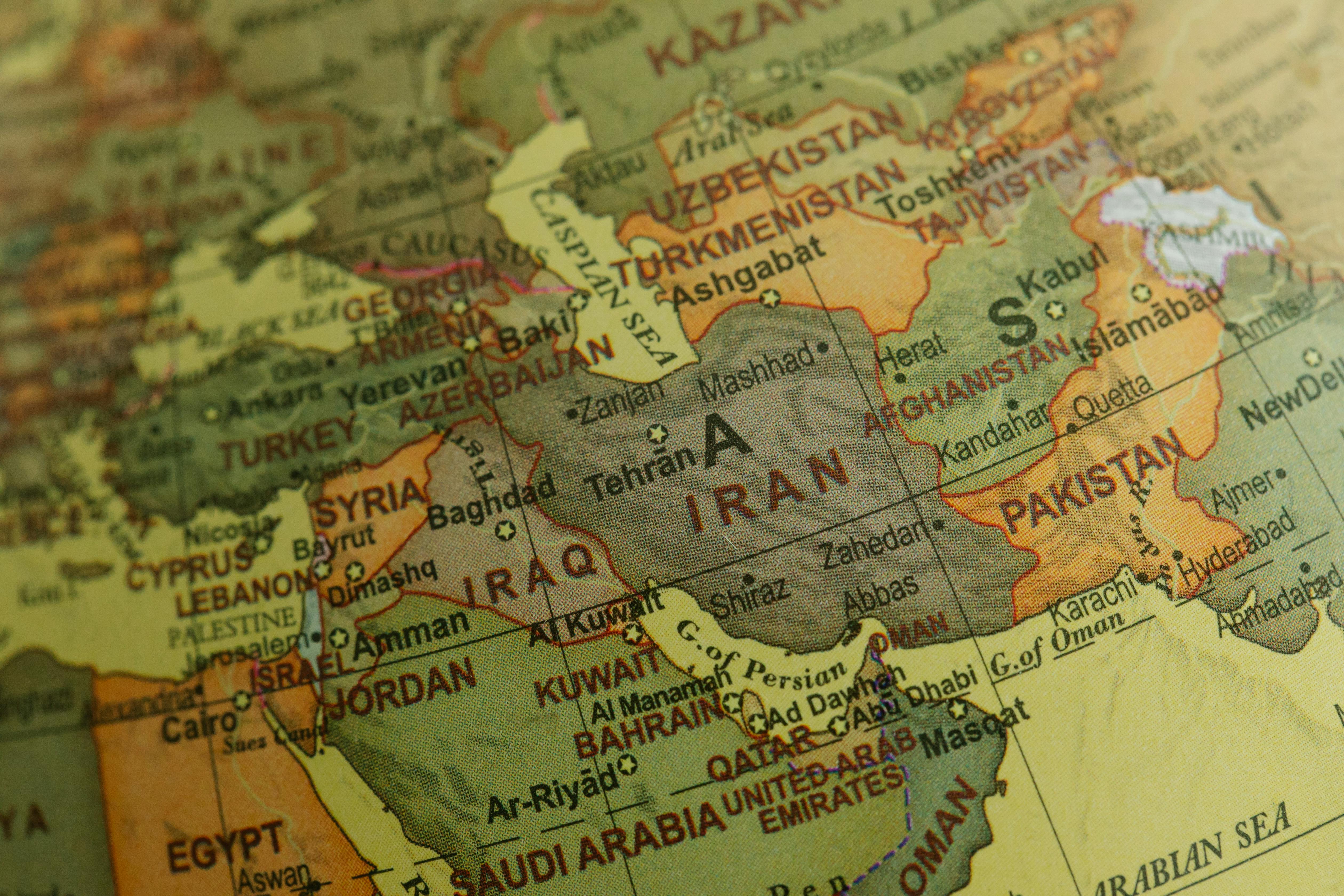
The relationship between Pakistan and the Taliban-led administration in Afghanistan has devolved from one of uneasy patronage to open military confrontation, marking the most severe crisis since the Taliban’s return to power in August 2021. As of early March 2026, despite repeated international pleas and the declaration of “open war” by Pakistan’s Defence Minister, the dynamics of mediation, geopolitical maneuvering, and overwhelming internal vulnerabilities continue to compel both capitals to seek an off-ramp from full-scale conflict. The path back from the brink is fraught with concessions, yet the recognition of mutual self-inflicted danger may ultimately prove to be the strongest incentive for de-escalation.
V. The International Response: Mediation Efforts and Great Power Dynamics
The gravity of the escalation, which saw tit-for-tat military operations including Pakistani airstrikes on Kabul and Afghan counter-strikes throughout February 2026, has triggered a decisive diplomatic response. Regional and global actors are actively engaged, though their interventions are clearly filtered through pre-existing strategic interests in a volatile post-withdrawal Afghanistan.
V A. The Role of Regional Mediators: Doha and Ankara’s Evolving Influence
The initial, high-stakes efforts by Qatar and Turkiye to broker a ceasefire in October two thousand twenty-five highlighted their perceived importance as trusted intermediaries capable of communicating with both deeply suspicious parties. These efforts, which secured a tenuous truce on October 19, 2025, following Pakistan’s initial strikes, demonstrated a regional preference for containment over uncontrolled escalation. Subsequent meetings in Istanbul in late October, mediated by the same nations, aimed to consolidate this peace, yet the collapse of sustained negotiations in November two thousand twenty-five clearly indicated the limits of their influence when core sovereignty and security issues—specifically the TTP threat—remained unresolved. Despite this setback, the continued, albeit constrained, engagement by these nations, alongside recent Saudi-led diplomatic drives in February 2026, demonstrates a persistent regional preference for managing the crisis to avert catastrophic spillover risks.
IV B. The Pressure from Global and Regional Powers
International bodies have reacted with alarm to the renewed violence. The United Nations Human Rights Chief has issued urgent pleas for an immediate cessation of hostilities, focusing heavily on the documented civilian toll in both nations, particularly in Afghanistan, where civilian casualties from cross-border attacks had already reached alarming highs in the preceding year. Concurrently, major global powers are maneuvering based on their established economic and security stakes:
- China: With vested economic interests tied to regional stability and the continuation of its Belt and Road initiatives, China has become an active participant, engaging in trilateral diplomatic forums and explicitly offering mediation channels to facilitate a ceasefire as of late February 2026. China views unfettered conflict as detrimental to the China-Pakistan Economic Corridor (CPEC).
- Russia: Moscow also prioritizes stability to consolidate its diplomatic outreach to Kabul, having been the sole government to officially recognize the Taliban regime in July 2025. Russia maintains a public distance from the direct conflict while vigorously encouraging a general cooling of tensions through diplomatic channels.
VI. The Shadow of Geopolitics: India’s Re-Engagement as a Strategic Variable
A critical element reshaping the strategic calculus in two thousand twenty-five and two thousand twenty-six is the evolving relationship between New Delhi and the Taliban administration, a development viewed with extreme apprehension by Islamabad and one that directly feeds into the ongoing bilateral tensions.
VI A. The Rapprochement and Pakistan’s Strategic Nightmare
The reported rapprochement between India and the Afghan government, cemented by the visit of Afghan Foreign Minister Amir Khan Muttaqi to New Delhi in October two thousand twenty-five and the upgrading of India’s technical mission to an embassy in Kabul that same month, has fundamentally altered the strategic landscape for Pakistan. Islamabad views any significant diplomatic or aid footprint from India in Kabul as an existential threat, fearing a strategic encirclement with a potentially hostile government on its western flank aligned with its primary regional rival. This perception strongly feeds Pakistan’s narrative that Afghanistan is acting, at least partially, as a proxy in this broader regional rivalry.
VI B. Counter-Narratives and Leverage Building
The Taliban leadership, in turn, appears to be leveraging India’s engagement, alongside overtures to other regional actors, to deliberately reduce their overwhelming dependence on Pakistan, which they now increasingly view as an unreliable and coercive partner. Cultivating ties with India and other nations serves to enhance Kabul’s diplomatic leverage, allowing them to push back more forcefully against Pakistani security demands, knowing they possess alternative lines of communication and potential economic conduits that bypass Islamabad. This strategic geopolitical hedging—choosing pragmatic engagement over absolute alignment—significantly reduces the internal pressure on the Taliban to fully capitulate to Pakistani security dictates regarding the Tehreek-e-Taliban Pakistan (TTP).
VII. Incentives for Disengagement: The Brake on Full-Scale War
Despite the fiery rhetoric—with a Pakistani Defence Minister labeling the situation an “open war”—several powerful, overriding factors compel both capitals to actively seek an off-ramp, even if the political cost of publicly admitting error remains high. Neither state possesses the appetite for a sustained, conventional conflict, given their respective internal vulnerabilities.
VII A. Pakistan’s Internal Security Overstretch and Military Capacity Limits
While possessing superior conventional military might, Pakistan’s armed forces are deeply committed to managing multiple, simultaneous internal security challenges. This includes persistent militant activity in Balochistan and ongoing counter-insurgency operations elsewhere, particularly following a surge in TTP attacks throughout 2025, which was the deadliest year for terrorism-related fatalities in Pakistan since 2016. A prolonged, conventional war across the entire Durand Line against a determined, asymmetric adversary like the Afghan Taliban risks military overextension and imposes an unsustainable financial burden on an already fragile national economy. The immediate military objective must therefore be tempered by the broader strategic imperative of maintaining domestic stability.
VII B. The Taliban’s Economic Vulnerability and Need for Recognition
The Afghan Taliban regime presides over an impoverished, heavily aid-dependent economy that has yet to achieve meaningful international recognition or unlock significant non-aid-based revenue streams. A sustained campaign of bombardment against key infrastructure, as witnessed in the late February 2026 escalation, directly threatens their capacity to govern, maintain order, and deliver even minimal public services. This profound economic fragility provides a strong, practical incentive for the Taliban leadership to de-escalate and return to dialogue, as an extended military conflict jeopardizes the very power they fought two decades to regain. Furthermore, the compounding humanitarian crisis, with high levels of acute food insecurity and the burden of millions of returnees from neighboring countries, adds further domestic pressure for a return to relative stability.
VIII. Pathways Back from the Brink: Requirements for Durable De-escalation
Walking back from the current declared war necessitates painful concessions and the establishment of durable mechanisms that address the root security and political fissures, moving beyond the temporary ceasefires based on exhausted diplomatic rounds.
VIII A. Re-establishing Credible Security Cooperation Frameworks
The only long-term solution involves crafting a verifiable, trust-based security architecture that Pakistan is willing to support and the Taliban can realistically implement. This requires Kabul to undertake concrete, transparent, and sustained action against the TTP and other anti-Pakistan militant networks operating from Afghan soil, perhaps tied to specific, measurable benchmarks rather than vague assurances. In exchange, Islamabad must demonstrate restraint, cease unilateral kinetic operations such as the February 2026 airstrikes, and provide measurable incentives, such as the reopening and facilitation of major border crossings and the resumption of essential transit trade, to reward tangible security improvements from Kabul.
VIII B. The Political Cost of Concession and Domestic Legitimacy
A significant hurdle remains the highly charged domestic political environment in both nations. Pakistani leadership utilizes a hardline stance against Afghanistan to bolster legitimacy amid internal political volatility, portraying the conflict as a necessary defense of national honor against foreign-backed enemies. Similarly, the Taliban leadership relies on framing resistance to Pakistani pressure as a continuation of jihad and the defense of Afghan national sovereignty. For either side to offer meaningful concessions—such as Pakistan accepting a less restrictive interpretation of the Durand Line, or the Taliban actively dismantling militant sanctuaries—the political cost of appearing weak to hardline domestic elements must be managed, likely requiring stronger back-channel assurances from regional mediators about other strategic gains.
VIII C. The Necessity of Sustained, High-Level Bilateral Dialogue
Ultimately, the management of this volatile relationship relies on sustained, direct engagement that outlives the immediate crisis. The temporary ceasefires of the past, mediated by outside parties, failed because they did not evolve into a permanent, institutionalized mechanism for dispute resolution. Future diplomatic efforts must transition from crisis management to the establishment of joint border committees, intelligence-sharing protocols that build minimal confidence, and a framework for addressing the grievances of the shared Pashtun population in a manner that recognizes the realities on the ground without infringing upon core state sovereignty. The path to peace is arduous, demanding that both nations choose long-term regional stability over short-term political point-scoring, an outcome that current military realities suggest is the only rational, though perhaps most politically difficult, choice. The continuous evolution of this developing story remains the most critical area for regional security analysis as the year two thousand twenty-five’s geopolitical pressures transition into the volatile landscape of two thousand twenty-six. The world watches to see if the mutual recognition of self-inflicted danger will finally compel a substantive walk back from this dangerous precipice of war.