Ukraine War Briefing: Nationwide Air Alert Issued Following Deadly Strikes on Kharkiv and Dnipro
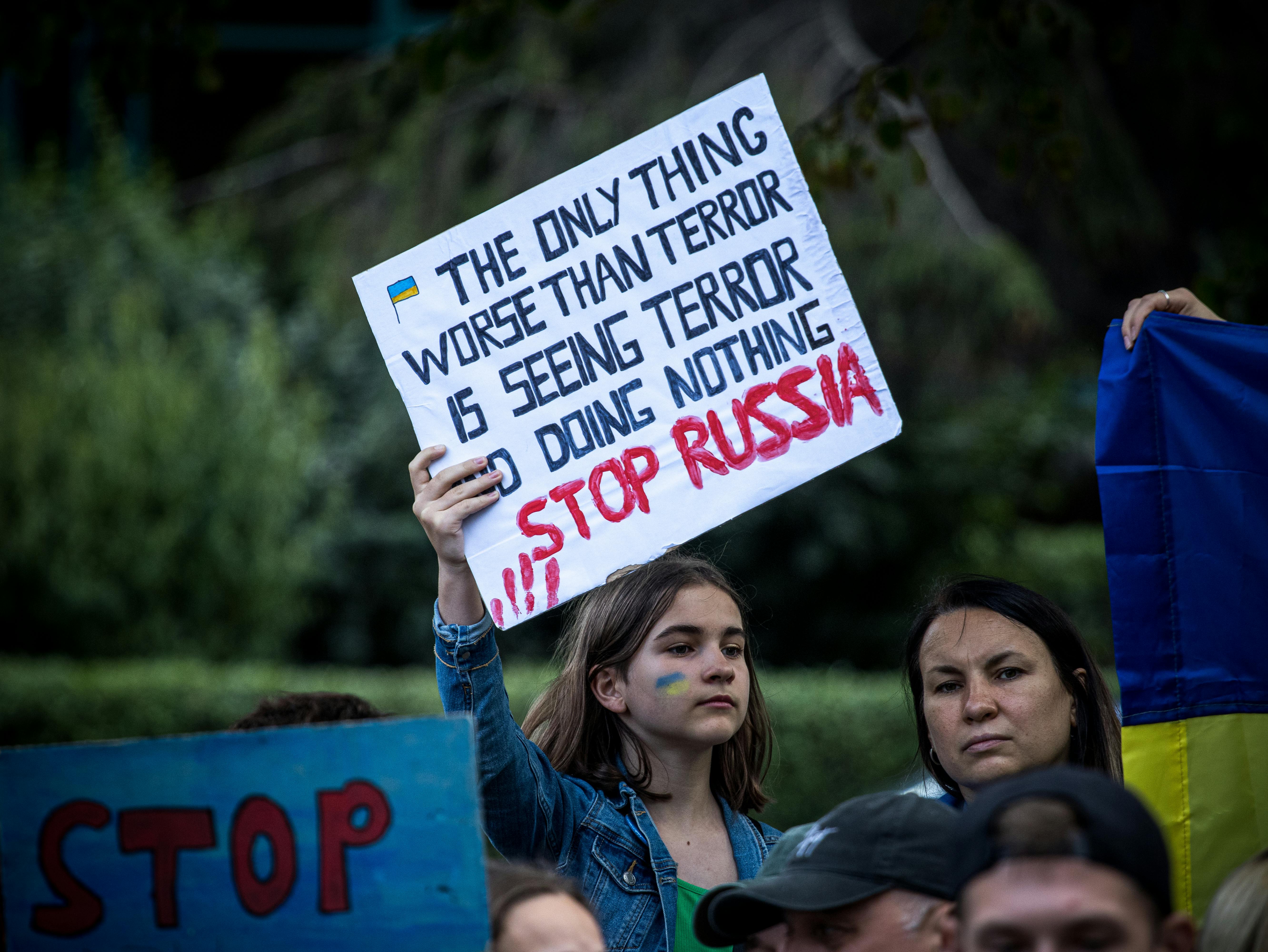
The early hours of Saturday, March 7, 2026, marked another dark chapter in the protracted conflict, as a coordinated aerial assault struck key population centers across Ukraine, specifically targeting the eastern metropolis of Kharkiv and the central city of Dnipro. These attacks, which authorities confirmed resulted in the deaths of at least six civilians initially, precipitated a swift, nationwide air alert, underscoring the pervasive and indiscriminate nature of the threat currently facing the nation’s populace and infrastructure. The events of this morning serve not merely as isolated incidents of violence, but as a potent, immediate manifestation of the high-intensity phase of the war continuing into its fourth year since the full-scale invasion began in February 2022.
Initial reports, disseminated via regional military chiefs and later compiled in comprehensive briefings, painted a grim picture of destruction concentrated in civilian zones. In the Kharkiv region, the focus of the immediate recovery efforts, the destruction of a residential apartment block was the primary tragedy. As search operations commenced under the rubble of the multi-story structure, the confirmed fatalities mounted significantly. Simultaneously, the violence was not confined to the east; a separate strike in the Dnipro region also claimed at least one life, confirming the widespread application of aerial weaponry across significant swaths of the country. The immediate strategic reality is one of constant vulnerability, where the search for survivors in Kharkiv’s wreckage must proceed in parallel with heightened defensive postures nationwide.
Immediate Aftermath and the Human Toll of the Morning Attacks
The sheer brutality of the strikes became most apparent in the direct human cost. The search and rescue missions in Kharkiv became the immediate operational priority. Regional military chief Oleg Synegubov reported that rescue teams were actively searching for as many as ten other individuals believed to be trapped beneath the debris of the five-story building, which was described as being “practically destroyed” by the impact. The initial confirmed death toll was later updated: by mid-morning, reports indicated the death toll in Kharkiv had climbed to seven, with the body of a child—a boy—being recovered from the wreckage, marking a particularly harrowing loss. This updated figure suggests a minimum of eight fatalities across the two regions, surpassing the initial assessment of at least six.
Beyond the fatalities, the number of wounded underscored the indiscriminate nature of the bombardment. Reports cited ten individuals injured in the strikes, a group that tragically included young civilians: two boys, aged six and 11, and a 17-year-old girl. The Kharkiv Mayor, Ihor Terekhov, confirmed that the event involved a direct ballistic missile hit on the high-rise building, a method of attack that maximizes structural devastation and civilian casualties. A 65-year-old woman was also confirmed among the victims in Kharkiv. In Dnipropetrovsk Oblast, in addition to the fatality, an infrastructure facility sustained damage, leading to a large-scale fire that required the deployment of almost 200 rescuers and 60 pieces of equipment.
Infrastructure Disruption and Systemic Strain
The coordinated assault extended beyond residential areas, impacting critical national arteries. The damage sustained to railway infrastructure in the region forced the national carrier, Ukrzaliznytsia, to reroute a number of trains across the Rivne, Vinnytsia, and Zhytomyr regions. This simultaneous targeting of civilian life and transport logistics presents a dual-pronged strategy aimed at eroding both national morale and the country’s capacity for internal movement and resilience. The utilization of ballistic missiles against residential areas, reportedly countered by Western-supplied Patriot systems, emphasizes the relentless pressure on Ukraine’s air defense capabilities, a system it is simultaneously sharing expertise on for use in the Middle East against Iranian drones.
Escalation Dynamics and Immediate International Reaction
The severity of the early morning attacks was formally recognized by the issuance of a nationwide air alert across Ukraine, signaling a threat assessment that spanned all territories and necessitated immediate protective measures for the entire population. This systemic response highlights the operational tempo of the conflict, where attacks on major cities like Kharkiv—which has endured near-nightly drone assaults—escalate to involve more destructive weaponry, provoking significant geopolitical responses.
The aggression elicited a direct response from a key regional partner. Poland, a neighboring NATO member, confirmed it was scrambling military aircraft in response to the strikes on Ukrainian territory. The Operational Command of the Polish Armed Forces issued a statement noting that “military aviation has begun operating in our airspace” due to the missile attacks, illustrating the direct spillover effect of the conflict on NATO’s eastern flank.
Concurrently, the economic dimension of the conflict saw movement in Washington. The Treasury Secretary for the administration of President Trump indicated that the United States was considering lifting further sanctions on Russian oil. This consideration, framed publicly as being linked to surging global oil prices amid the US-Iran conflict and shipping disruptions in the Strait of Hormuz, nevertheless occurs in the context of ongoing negotiations concerning the war in Ukraine. The administration stressed that any easing would target supplies already in transit and was not intended to undercut sanctions imposed over the conduct of the war itself. This dynamic introduces a complexity where geopolitical pressures in the Middle East influence the economic constraints placed upon Moscow regarding its actions in Ukraine.
The Broader Strategic Context of Early 2026 Warfare
To fully appreciate the significance of the March 7 strikes, one must view them against the backdrop of the conflict’s evolution throughout 2024 and 2025, a period marked by fluctuating territorial control and deepening diplomatic chasms. As of the most recent comprehensive assessments from late February 2026, Russia continued to occupy approximately 20 percent of Ukraine’s territory, territory it had largely consolidated during 2025. However, the narrative of Russian advances has been significantly complicated by recent Ukrainian actions.
Shifting Battle Lines and Attrition Rates
Intelligence reports and analysis from early March 2026 indicated that momentum on the battlefield was, in fact, growing in favor of Ukrainian forces in several sectors. Counterattacks, which exploited temporary disruptions to Russian communications systems, have reportedly led to the liberation of territory in southern Ukraine, including in the Oleksandrivka direction. These Ukrainian advances were reportedly substantial enough to force the Russian Eastern Grouping of Forces to commit operational reserves, potentially disrupting their planned offensive preparations for the Spring and Summer of 2026.
This dynamic is intrinsically linked to the staggering attrition rates documented throughout 2025. Analysts suggest that Russian forces incurred an average of nearly 35,000 killed or wounded per month in 2025. Furthermore, reporting indicated that the casualty ratio favoring Ukraine had increased substantially, reaching a point where Russian recruitment efforts were allegedly insufficient to replace combat losses—a critical threshold in the protracted conflict. As of late February 2026 estimates, Ukrainian military casualties (killed, wounded, and missing) were placed in the range of 500,000 to 600,000, with Ukrainian President Zelenskyy estimating 55,000 Ukrainian soldiers killed as of February 2026. Russian military casualties, according to some February 2026 estimates, were approaching or exceeding one million killed and wounded. The strikes on Kharkiv and Dnipro, while targeting civilian areas, occur within this context of high-intensity attrition and fluctuating front-line stability.
The Diplomatic Chessboard under the Trump Administration
The conflict’s resolution remains tethered to the diplomatic efforts spearheaded by the United States. The Trump administration had reportedly pledged to seek a settlement, putting forth a twenty-point draft peace deal with a June deadline, a proposal that Ukraine reportedly accepted following discussions. However, key terms, notably regarding territorial concessions and security guarantees, remained a point of contention and ambiguity.
This diplomatic uncertainty was evident in recent high-level exchanges. German Chancellor Friedrich Merz, during talks with President Trump in Washington in early March 2026, reportedly stressed the principle that Ukraine should not be compelled to accept further territorial concessions. Concurrently, public statements from Russia suggested an intent to use any perceived US military actions in the Middle East to condition or blame the US for any future negotiation failures regarding Ukraine. Ukrainian President Zelenskyy, meanwhile, hosted a significant gathering of European leaders in Kyiv, where partners reaffirmed their commitment to prevent future Russian aggression, including the potential deployment of troops should the US-brokered peace talks ultimately fail. The population’s continued defiance, even amid winter assaults on energy infrastructure, remains a critical, albeit unquantifiable, factor in these high-stakes deliberations.
The Economic Front: Sanctions Efficacy and Energy Warfare
The economic strangulation strategy, heavily reliant on Western sanctions, continued to be a central theme of the conflict’s progression through 2024 and 2025. Ukrainian efforts, primarily through drone attacks on Russian oil infrastructure, sought to degrade Moscow’s war-making capability by targeting revenue streams.
By October 2025, Ukrainian drone strikes were reported to have forced nearly 40 percent of Russia’s oil refining capacity offline, with a significant majority of those shutdowns directly attributed to these attacks, according to Russian energy market data. While some later estimates suggested a more modest impact on overall annual oil processing, the localized damage to refinery capability represented a significant strategic blow that complicated Russian war financing. The sanctions regime, which included measures against major state-owned entities like Rosneft and Lukoil, and the seizure of “shadow fleet” oil tankers, added to the growing economic pressures facing the Kremlin. The potential partial easing of these sanctions in March 2026, as discussed by the US Treasury Secretary, must be assessed against the significant cumulative damage inflicted over the preceding two years.
The Technological Arms Race: Drones and Advanced Defense
The conflict has become synonymous with technological competition, a trend that has only accelerated. The March 7 strikes highlight the persistent, deadly effectiveness of drone warfare. Russia continues to deploy a variety of unmanned aerial vehicles, including Shahed-type drones, and has reportedly begun increasing its use of Unmanned Ground Vehicles (UGVs) and heavy bomber drones, some of which are copied from Ukrainian designs. The intensification of Shahed-type strikes against settlements 20 to 30 kilometers behind the frontline suggests a shift toward broader area saturation tactics.
Conversely, Ukrainian innovation has been critical for defense and offense. The successful deployment of Western air defense systems against these threats is vital, as is the development of indigenous solutions. Ukraine has been noted for its work on an analog to the Patriot system, dubbed the “Shershen,” though it was not reported to be on the battlefield as of this briefing. Furthermore, Ukraine shares its expertise in countering Iranian drone designs with partners in the Middle East, leveraging its combat experience against a global proliferation of similar threats. This sharing of defense knowledge reflects an ongoing effort to maintain technological parity in crucial defensive domains.
Humanitarian Consequences and The Long War
The cumulative effect of continuous strikes on urban centers across Ukraine—Kharkiv, Dnipro, and others—continues to deepen the humanitarian crisis. Since the February 2022 invasion, estimates suggest nearly 56,000 civilian casualties have been inflicted by fighting and air strikes. The internal displacement crisis remains staggering, with 3.7 million people internally displaced and 5.9 million registered as refugees globally as of February 2026. Moreover, according to the UN, the total civilian death toll across the war surpassed 15,954, although this figure is widely considered an undercount given the difficulty in assessing casualties in occupied or heavily contested zones.
International support remains a cornerstone of Ukraine’s ability to sustain the fight and absorb these shocks. Since the start of the full-scale invasion, the United States has provided approximately $188 billion in aid, while the European Union has contributed around $197 billion. In a recent positive indicator for Kyiv, eleven European leaders gathered in the capital in early March 2026 to announce a €920 million aid package specifically earmarked for the nation’s damaged energy system, demonstrating continued, targeted support against Moscow’s winter campaign strategy.
Concluding Summary of the Morning’s Events
The coordinated aerial assault targeting Kharkiv and Dnipro in the early hours represented a grim milestone in the extended conflict. With confirmed fatalities in both key eastern and central regions, and the ensuing nationwide alert illustrating the pervasive threat, the event serves as a stark reminder of the relentless pressure exerted upon the nation’s civilian core. The immediate focus remains fixed on the search for survivors in the Kharkiv wreckage and the critical international diplomatic and security responses necessitated by the bloodshed, all while the population steels itself for the inevitable continuation of this brutal campaign.
The strategic analysis reveals that while Ukrainian forces have achieved measurable success in forcing Russian military repositioning and imposing unsustainable casualty rates through late 2025 and early 2026, Moscow retains the capability and intent to inflict terror and damage upon civilian centers. The interplay between the ongoing search for a negotiated settlement under the Trump administration and the demonstrated willingness of Russia to escalate lethal strikes—even as NATO allies like Poland react directly—defines the critical juncture at which the war stands on March 7, 2026. The efficacy of long-term economic pressure through sanctions will continue to be tested against the immediate, visceral impact of kinetic strikes on Ukrainian cities, forming the core strategic challenge for Kyiv and its partners moving forward into the spring campaign season.